The Science Behind Smartwatch Antioxidant Tracking
Samsung's latest wearables use multi-wavelength spectroscopy to estimate carotenoid levels through skin scans, but the feature raises questions about consumer health metrics versus clinical accuracy.
A New Frontier in Wrist-Worn Sensing
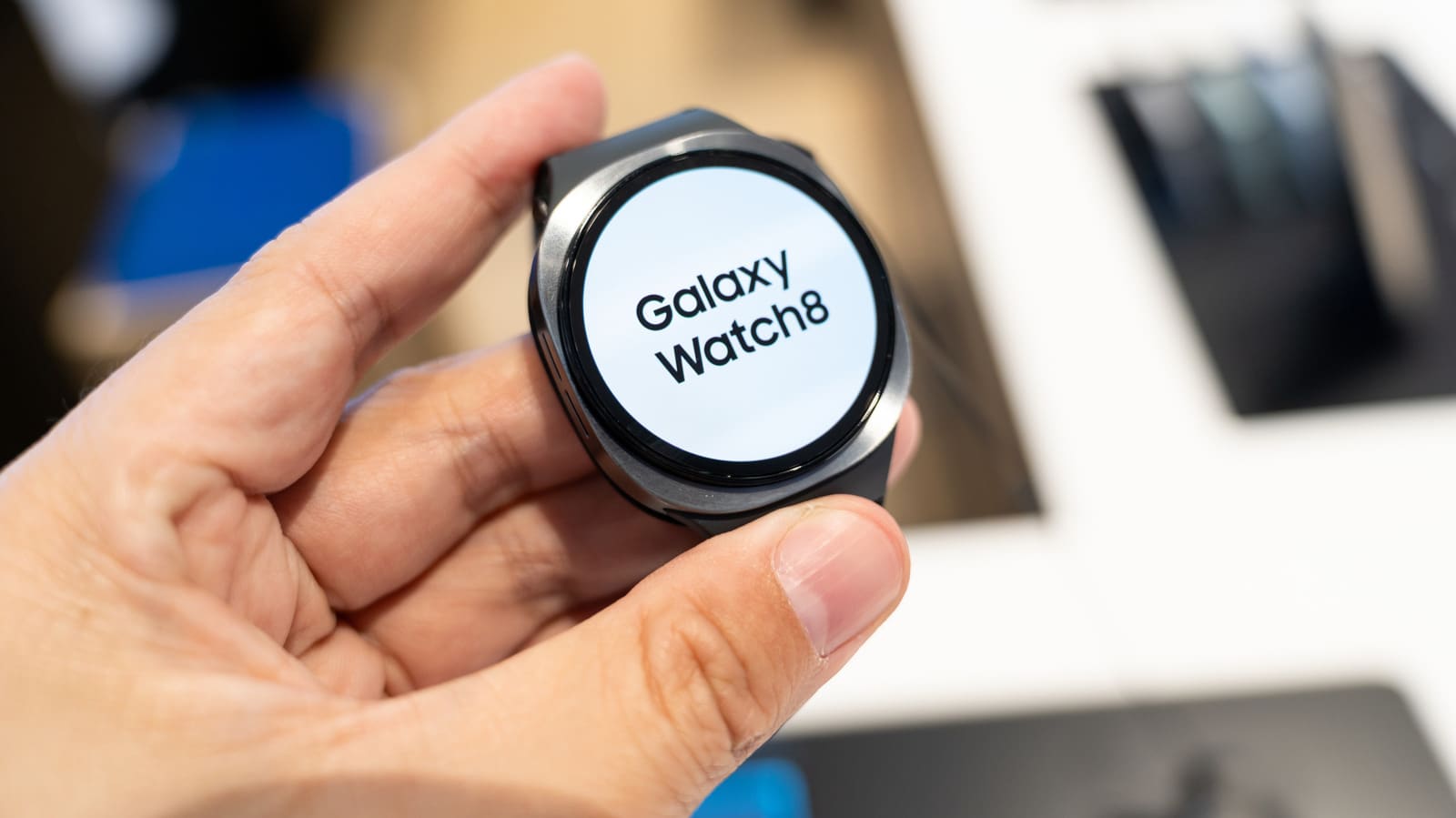
Press your thumb to the back of Samsung's Galaxy Watch 8 for five seconds, and the device returns a number between zero and one hundred. That score, labeled the Antioxidant Index, represents an estimate of carotenoid pigments accumulated in your skin, compounds tied to diets rich in yellow, orange, and green produce. It joins a growing list of biometrics that wearables claim to capture, from blood oxygen saturation to electrocardiogram traces, each pushing the boundary of what a consumer device can measure outside a clinic.
At DailyTechWire, we've tracked the miniaturization of optical sensors across Asia's supply chains for years. The question is no longer whether a feature can fit on a wrist, but whether the data it generates moves beyond novelty into actionable insight. Samsung's carotenoid sensor offers a case study in that tension.
How Multi-Wavelength Absorption Spectroscopy Works on Skin
The BioActive Sensor on the Galaxy Watch 8 relies on four discrete LED wavelengths: yellow, blue, purple, and green. When you place your thumb over the sensor array, those LEDs fire in sequence, illuminating the outermost layers of skin. Carotenoids, the target molecules, absorb blue light more strongly than other wavelengths. Photodiodes positioned alongside the LEDs capture the reflected light, and onboard algorithms compare absorption patterns across the spectrum to estimate carotenoid concentration.
Samsung selected the thumb for two reasons. First, finger skin contains less melanin than other body sites, reducing one major source of optical noise. Second, pressing down temporarily restricts capillary blood flow, minimizing interference from hemoglobin, which also absorbs light in overlapping bands. The result is a cleaner signal for the photodiodes to interpret.
This approach, known in research labs as reflection spectroscopy, has been used in clinical studies for over a decade. The difference here is scale: Samsung has condensed the optical path, power budget, and processing pipeline into a module thin enough to sit flush with a watch case.
Validation Against Lab Standards
Samsung compared its sensor output to Raman spectroscopy, a gold-standard technique that uses laser light to detect molecular vibrations in skin. The company also cross-referenced readings with blood tests, dietary logs, and clinical measurements from several hundred participants, though it has not published consumer-facing accuracy metrics or margin-of-error figures for the Galaxy Watch 8 feature.
A 2023 randomized controlled trial involving Samsung researchers demonstrated a strong correlation between reflection spectroscopy and Raman spectroscopy when measuring skin carotenoids. That study validates the underlying physics, but correlation in a controlled trial does not guarantee precision in daily use. Real-world variables like ambient light, skin hydration, temperature, and user technique introduce noise that lab protocols explicitly minimize.
Samsung itself notes that ultraviolet exposure, alcohol consumption, and stress can influence Antioxidant Index scores, independent of diet. The company explicitly states that the feature is not intended to diagnose or treat medical conditions, framing it instead as a wellness trend to monitor over time.
Practical Limits and User Experience
One reviewer tested the feature by shifting her diet for a single day and observed a two-point drop in her score. Over subsequent days, her readings fluctuated between 56 and 60. That narrow band suggests the sensor can detect directional changes, but also that short-term dietary experiments may not move the needle in ways users expect.
The explanation lies in carotenoid pharmacokinetics. Samsung notes that it typically takes two to three weeks for carotenoids from food to accumulate in skin tissue at detectable levels. The sensor is measuring a trailing indicator, not a real-time snapshot of yesterday's salad. For users hoping to see immediate feedback from a nutrition adjustment, that lag will feel like a disconnect.
The Antioxidant Index is available on the Galaxy Watch 8, Watch 8 Classic, Galaxy Watch Ultra, and newer models including the Watch 9 and Ultra2. Notably, the Galaxy Watch 7 does not support the feature, and Samsung has not disclosed whether the omission stems from hardware differences or segmentation strategy.
What the Data Means for Wearable Health Monitoring
The introduction of carotenoid sensing highlights a broader shift in consumer electronics: device makers are moving beyond activity and cardiovascular metrics into biochemical territory. Blood glucose estimation, hydration sensing, and now antioxidant proxies all attempt to infer internal states from external signals.
Each new sensor raises the same set of questions. Is the measurement reproducible enough to inform behavior change? Does the user understand what the number represents and what it does not? And does the feature add clinical value, or does it risk medicalizing everyday life without corresponding benefit?
In Samsung's case, the Antioxidant Index sits firmly in the wellness category rather than the diagnostic one. The score may prompt users to reflect on their produce intake, but it cannot replace a blood panel or a nutritionist's assessment. The sensor's real utility may lie in longitudinal tracking: watching the number rise or fall over months as dietary patterns shift, rather than expecting daily granularity.
The Engineering Trade-Offs
Fitting a multi-wavelength optical system into a smartwatch required Samsung to balance sensor size, power draw, and signal processing. LEDs and photodiodes consume energy, and the BioActive Sensor must share battery capacity with continuous heart-rate monitoring, GPS, and display refresh. The five-second measurement window likely represents an optimization between signal quality and power budget.
The choice of wavelengths also reflects trade-offs. Blue light penetrates skin effectively and interacts strongly with carotenoids, but it also scatters more than longer wavelengths, reducing signal-to-noise ratio. Yellow, green, and purple LEDs provide reference points for the algorithm to subtract out background absorption from other chromophores. The photodiode array must be sensitive enough to detect small differences in reflected intensity while rejecting ambient light leakage.
Samsung has not disclosed the spectral resolution of its LEDs or the bit depth of its photodiode readout, but those parameters determine how finely the system can distinguish carotenoid levels. A sensor with broader spectral bands or lower dynamic range would struggle to resolve the subtle absorption differences that separate a score of 56 from 60.
Implications for the Asia-Pacific Wearables Market
Samsung's move comes as smartwatch makers across the region compete on sensor differentiation. Chinese vendors have introduced blood-pressure estimation and body-composition metrics; Japanese manufacturers have focused on sleep architecture and stress indices. Each feature aims to create a moat in a market where hardware specs have largely converged.
The carotenoid sensor may resonate more strongly in markets with dietary patterns high in plant-based foods, where users can intuitively connect the score to meals. In regions where produce intake is lower or more variable, the feature risks becoming another unused data point in an already crowded health app.
From a regulatory perspective, Samsung's careful language around the Antioxidant Index reflects lessons learned from earlier wearable health features. Overpromising clinical utility invites scrutiny from agencies like the FDA or Korea's Ministry of Food and Drug Safety. By positioning the metric as informational rather than diagnostic, Samsung avoids the approval pathways required for medical devices, while still offering a differentiator on the spec sheet.
The Path Forward for Biochemical Sensing
Carotenoid measurement represents an incremental step in a longer arc. The ultimate goal for wearable makers is continuous, non-invasive biochemical monitoring: glucose, lactate, cortisol, electrolytes. Each of those targets presents steeper technical challenges than carotenoids, requiring either deeper tissue penetration or higher molecular specificity.
Optical methods hit physical limits when target molecules are present in low concentrations or buried beneath layers of skin, fat, and connective tissue. Alternative approaches, including microneedle patches, interstitial fluid sampling, and sweat analysis, trade invasiveness for accuracy but complicate the user experience. The smartwatch form factor constrains what is possible.
For now, the Antioxidant Index offers a glimpse of where consumer health tech is headed: more sensors, more data streams, and more responsibility on users to interpret what the numbers mean. Whether that trajectory serves public health or simply adds complexity to daily life remains an open question, one that will be answered not in the lab but in how millions of people choose to engage with the devices on their wrists.