The RAM Crisis Is Entering Year Three
AI data centers have consumed fabrication capacity through 2027, pushing consumer memory prices into uncharted territory and forcing manufacturers to choose between hyperscale contracts and retail customers.
The Numbers Tell an Unprecedented Story
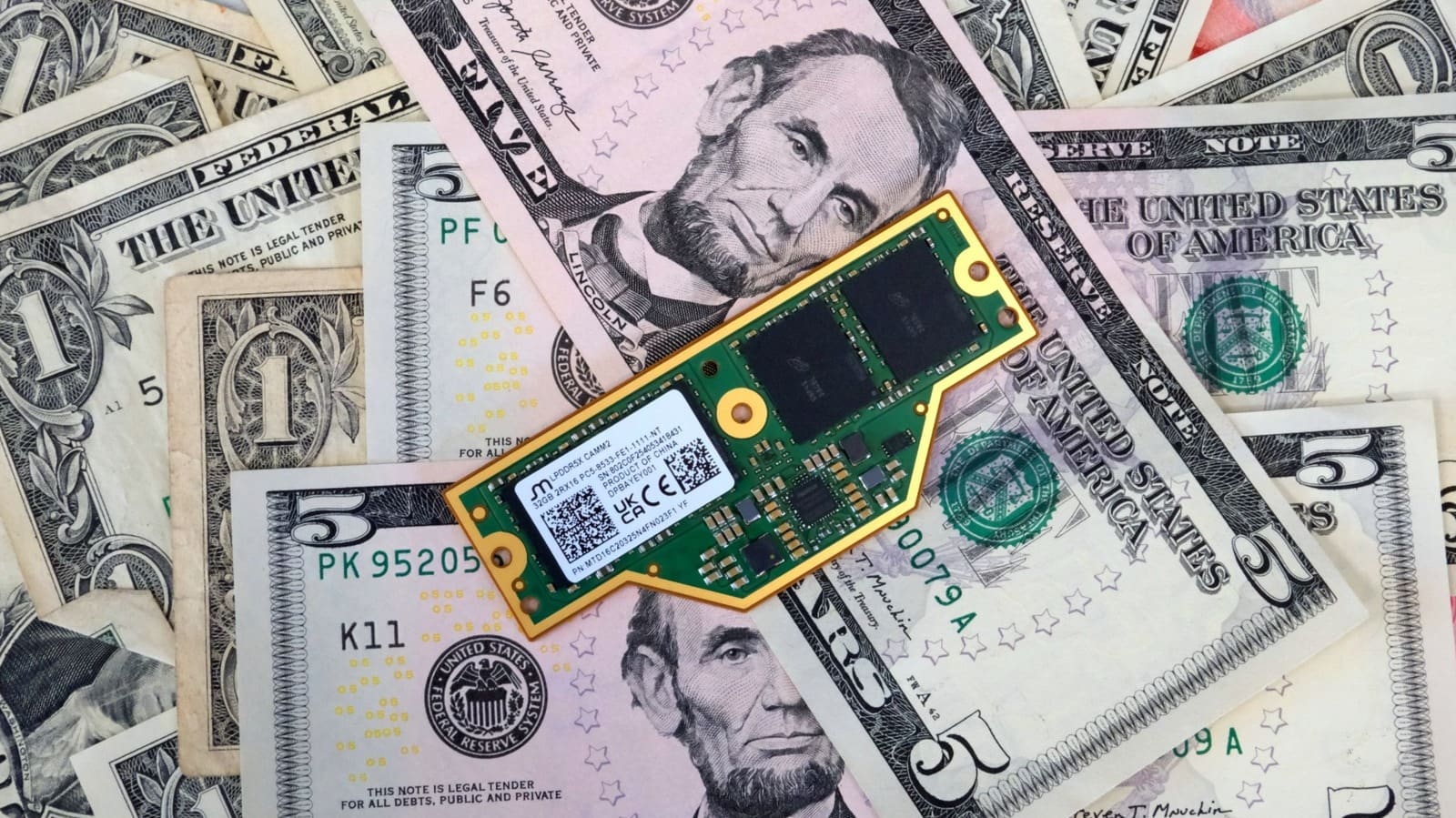
In early 2025, a 32GB kit of DDR5-6000 memory cost approximately $250. Today, the same configuration exceeds $1,200. Entry-level 16GB DDR5-4800 pairs have climbed from under $100 to more than $400 over the same 18-month period. For a component whose cost-per-gigabyte has declined steadily since the 1960s, the trajectory represents a fundamental break with decades of precedent.
The memory industry has absorbed demand shocks before: cloud infrastructure buildouts in the 2010s, cryptocurrency mining booms, pandemic-era PC upgrades. None triggered a supply crisis of this duration or severity. At DailyTechWire, we've tracked component pricing across Asia's electronics supply chain for years, and the current dynamic stands apart in both cause and projected timeline.
How AI Infrastructure Breaks the Supply Model
Random access memory sits between storage and processor in every computing system, holding data ready for immediate execution. Consumer electronics rely overwhelmingly on DRAM variants: DDR modules in PCs, LPDDR in mobile devices. The three manufacturers capable of producing these at scale - Samsung, SK Hynix, and Micron - have operated within a relatively predictable demand model. Annual PC shipments, smartphone upgrade cycles, and enterprise refresh schedules telegraph requirements years in advance.
High-bandwidth memory changes that calculation entirely. HBM delivers substantially higher speed and capacity than standard DRAM, making it essential for machine learning workloads. The architecture is different, but the foundation is identical: both draw from the same silicon wafer supply. According to Micron, each HBM unit consumes approximately three times the wafer allocation of a DDR5 module. In a fabrication environment with fixed capacity, this creates direct competition between consumer and datacenter segments.
AI companies have purchased that capacity in bulk. Industry sources indicate that 2027 production has already been committed, with hyperscale customers securing multi-year allocations at prices far above consumer market rates. The economics are straightforward: HBM commands premium margins, and buyers with venture-backed or sovereign financing will pay to lock in supply.
Scale of a Single Facility
xAI's Colossus datacenter in Memphis illustrates the resource intensity of current-generation AI infrastructure. The site houses approximately 555,000 NVIDIA GPUs across several product lines: Grace Blackwell 200 units with 192GB maximum RAM, Grace Blackwell 300 units supporting 288GB, and H100/H200 Tensor Core GPUs configured for 80GB to 141GB. Assuming maximum memory configurations, the facility could deploy upwards of 112 million gigabytes of RAM.
That volume is roughly equivalent to the memory in 14 million iPhone 17 units or 9.3 million Galaxy S26 devices. The comparison is imperfect - datacenter HBM cannot be repurposed for consumer electronics - but it illustrates the magnitude of wafer supply being redirected. According to industry reporting, more than 800 similar facilities are currently under construction globally.
OpenAI's October 2025 agreement with AMD outlines 6 gigawatts of datacenter capacity, beginning with a 1GW site using Instinct MI450 GPUs. Each MI450 supports up to 432GB of RAM. Using standard power-to-GPU ratios, the first phase alone could require approximately 194 million gigabytes of memory. The full six-site buildout would multiply that figure accordingly.
Manufacturer Guidance Points to 2030 and Beyond
SK Hynix CEO Kwak Noh-jung stated in a recent interview that supply constraints will intensify through 2027 and persist beyond 2030. Micron's leadership echoed the timeline, projecting tight conditions into 2028 at minimum. Deloitte's semiconductor analysts see no meaningful relief before 2030. These are not speculative forecasts; they reflect production roadmaps and committed capacity.
New fabrication plants require multi-year construction cycles and billions in capital. SK Hynix announced two memory facilities in South Korea with a combined $38.1 billion investment and a June 2029 target for initial production. Micron's Boise, Idaho cleanroom operates at class-one specification - fewer than one dust particle per cubic foot of air - illustrating the precision environment required. Scaling production is not a matter of adding shifts or repurposing warehouse space.
The Strategic Calculus
Manufacturers face little financial incentive to accelerate consumer supply. HBM generates substantially higher margins than DRAM, and hyperscale customers will pay premium rates for guaranteed allocation. At the end of 2025, Micron discontinued Crucial, its consumer RAM brand, to prioritize enterprise and datacenter segments. The company's June quarterly revenue reached $28.86 billion with an 84.9 percent gross margin. SK Hynix reported a 557 percent year-over-year increase in operating profit in July. Samsung's memory division posted all-time highs for both revenue and profit in the same period.
Micron has also reportedly approached U.S. government officials to limit customers' ability to source memory from alternative suppliers, framing domestic production capacity as a strategic asset. The move signals how deeply the competitive landscape has shifted: memory is no longer a commodity component but a constrained input with geopolitical implications.
What This Means for Hardware Buyers
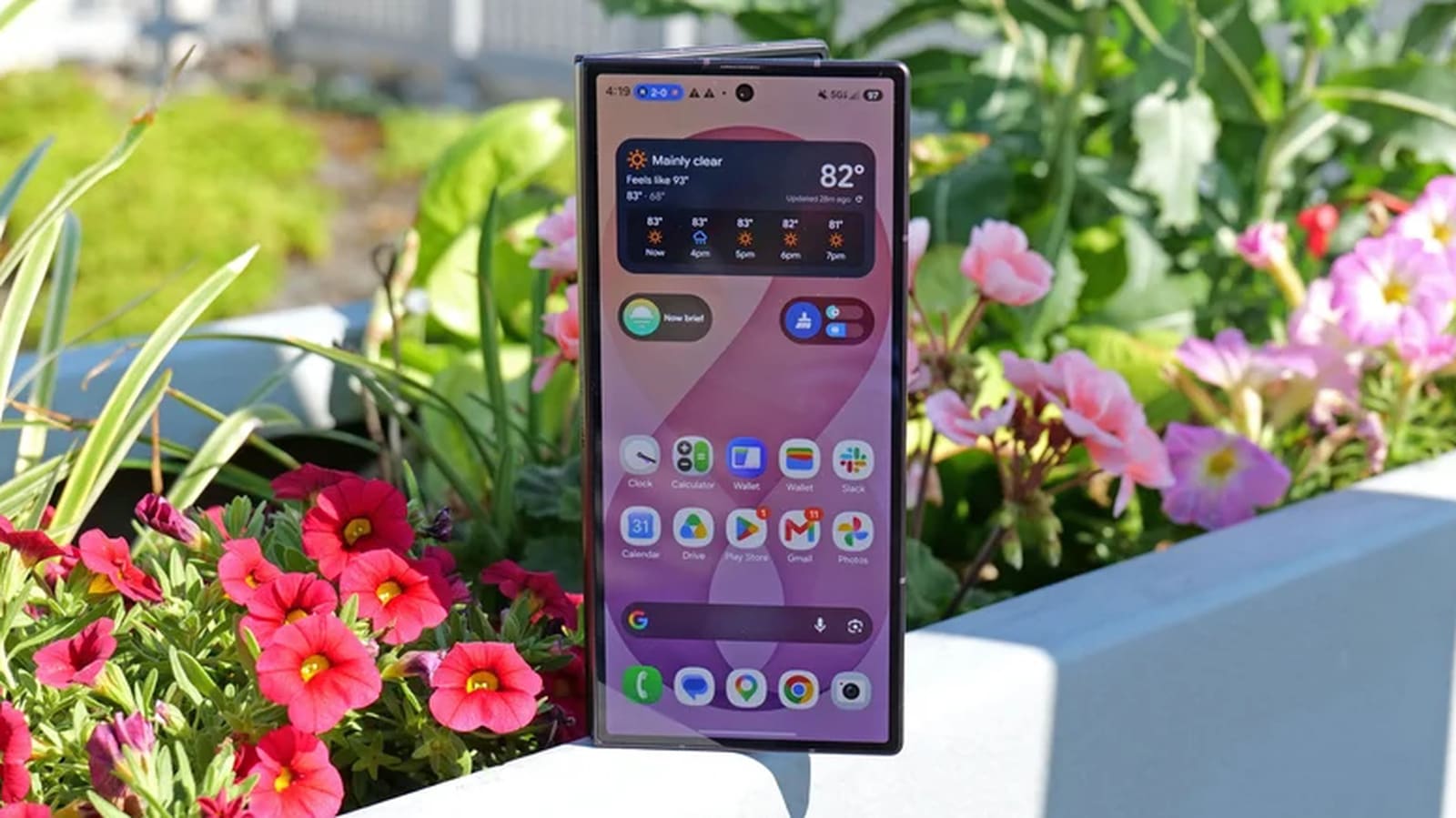
The immediate consequence is higher device costs. Phones, laptops, and tablets all carry memory as a core bill-of-materials item, and OEMs have limited ability to absorb a 300 to 500 percent input cost increase. Expect price hikes across consumer electronics categories, with mid-range and flagship products hit hardest. Budget devices may shift to smaller memory configurations, compressing performance headroom.
For buyers considering upgrades, the decision tree is unforgiving. Waiting carries the risk of further price escalation, particularly if 2027 and 2028 capacity is indeed fully committed. Purchasing now locks in costs that, while elevated, may look comparatively modest in 18 months. The calculus depends on timeline: if you need expanded memory capacity within the next four years, current prices may represent the floor.
Second-hand markets could provide partial relief. As enterprises refresh hardware or datacenter operators upgrade infrastructure, decommissioned modules may enter resale channels. Volume and compatibility will vary, but it's a potential source of supply outside the new-production bottleneck.
The Broader Pattern
The RAM crisis reflects a recurring tension in technology supply chains: long-cycle manufacturing assets colliding with short-cycle demand surges driven by speculative capital. Semiconductor fabs operate on decade-long planning horizons. AI funding operates on quarterly deployment targets. When hyperscale customers can outbid an entire consumer market, manufacturers will reallocate accordingly.
This dynamic has precedent in other component categories - GPU shortages during cryptocurrency booms, display panel allocation during smartphone growth phases - but the duration and depth here are more severe. Memory is foundational to nearly every computing device, and no substitute technology can fill the gap in the near term.
Whether the AI infrastructure buildout justifies the current expenditure remains an open question. If demand softens or funding tightens, manufacturers holding multi-year HBM contracts could find themselves with stranded capacity. For now, the market is pricing in sustained hyperscale growth through the end of the decade. Consumer hardware buyers will pay the cost of that bet, regardless of its outcome.