Five Hardware Verdicts That Reveal the High Stakes of Premium Tech in 2026
From Samsung's flagship foldable misstep to Lenovo's surprising comeback, recent product reviews show how thin the margin for error has become at the top of the market.
The Premium Trap
Five major hardware launches in recent weeks share a common thread: each stumbled not because of technical failure, but because of strategic miscalculation. Samsung shipped a foldable that doesn't justify its Ultra badge. Dell positioned a laptop against Apple's latest without matching the entry-level memory configuration. Lenovo proved it can build a world-class ultraportable, then priced most buyers out of the conversation.
At DailyTechWire, we've tracked the premium segment closely over the past eighteen months, and the pattern is unmistakable. As baseline performance across the industry reaches parity on core tasks, the old playbook of faster chips and higher resolution displays no longer guarantees differentiation. What separates a compelling flagship from an overpriced misstep today is execution on the details: thermal design, material choice, software integration, and most critically, value alignment with the target buyer.
The hardware released in mid-2026 crystallizes that shift. Companies that understood it delivered products that punch above their spec sheets. Those that didn't are asking buyers to pay Ultra prices for standard outcomes.
Samsung's Naming Problem
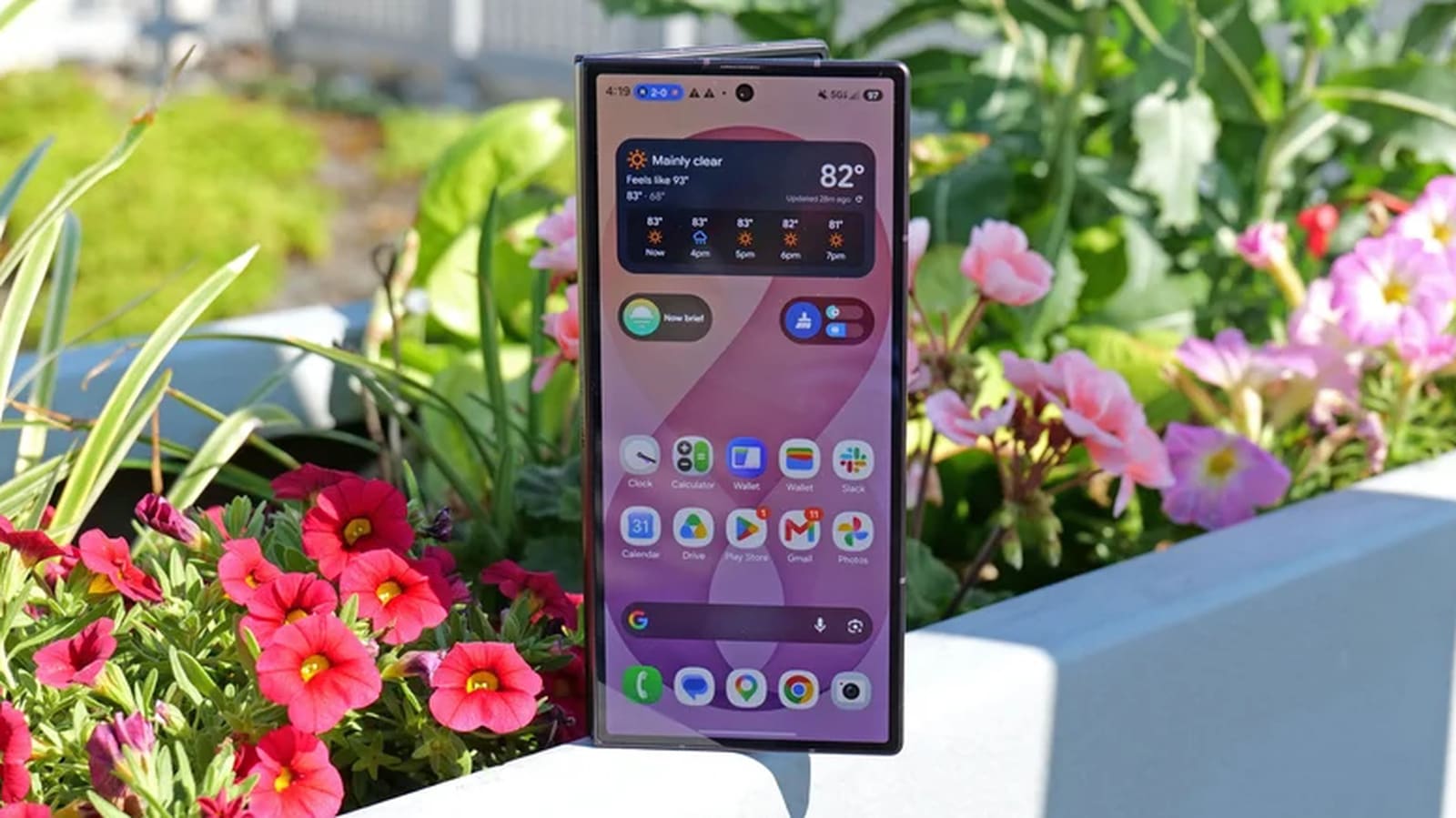
Samsung introduced two flagship foldables this cycle, but the Galaxy Z Fold 8 Ultra carries a badge it hasn't earned. The device itself performs capably, according to testing, but the "Ultra" designation traditionally signals a no-compromise approach. This model misses that mark.
The core issue is that Samsung bifurcated its foldable line without a clear rationale. The standard Z Fold 8 offers a refined industrial design and solid everyday performance. The Ultra variant adds processing headroom and faster charging, but retains the bulkier chassis and heavier weight profile of the previous generation. For a segment where portability and refinement are non-negotiable, the tradeoff doesn't compute.
What buyers wanted, and what Samsung could have built, was the Z Fold 8's sleeker form factor with the Ultra's performance envelope. Instead, the company delivered a device that feels more like a spec-sheet exercise than a considered product. In a market where foldables still command a skepticism premium, that's a costly misstep.
The broader lesson: brand equity has limits. Slapping "Ultra" on a product without delivering a proportional leap in user experience erodes trust faster than any single quarterly result can rebuild it.
Dell Versus the Neo Baseline
Apple's MacBook Neo redrew the budget-premium landscape earlier this year, and Dell moved quickly to respond with an updated XPS 13. Speed matters in competitive cycles, but so does ensuring your base configuration can stand up to the comparison.
The 2026 XPS 13 ships with an 8GB memory option at the entry tier. That decision made sense in 2023. In mid-2026, with the Neo establishing 12GB as the new floor for fluid multitasking and browser-heavy workflows, it reads as either cost-cutting or miscalculation. Testing confirmed what many buyers will discover six months into ownership: 8GB is no longer enough for the way people actually use laptops today.
The 16GB configuration, by contrast, performs well and offers the build quality and design language Dell is known for. But requiring a step-up purchase to avoid near-term obsolescence undermines the value proposition, especially when the Neo offers more memory out of the box at a comparable price.
Dell's challenge going forward is clear. The XPS line built its reputation on delivering MacBook-level refinement for Windows users. Maintaining that position requires matching or exceeding Apple's baseline specs, not trailing them. The next iteration will need to close that gap, or risk ceding the category to Cupertino entirely.
When Soundbars Actually Deliver
Audio gear suffers from a credibility gap. Nearly every soundbar manufacturer claims their flagship model delivers true bass without a separate subwoofer. In practice, most fall short, leaving buyers to add the very component they were promised they could skip.
Samsung's QS90H breaks that pattern. Internal testing across movie soundtracks, gaming audio, and music playback confirmed that the soundbar's integrated woofers handle low-end frequencies with authority. The bass presence is genuine, not the thin approximation that typically defines "subwoofer-free" marketing.
The QS90H also features Samsung's Convertible Fit technology, which allows the soundbar to adapt its acoustic profile based on placement. Wall-mounted or shelf-positioned, the system recalibrates output to maintain tonal balance. That flexibility matters in real-world living spaces where ideal speaker placement is often a luxury.
The tradeoff is price. The QS90H sits at the upper end of the soundbar market, a positioning that will limit its audience. But for buyers who prioritize audio fidelity and lack the space or appetite for a multi-component setup, it's one of the few products that delivers on its all-in-one promise.
Insta360 Returns to Core Strength
After a summer spent launching gimbal cameras aimed squarely at DJI's territory, Insta360 returned to its home turf with the X6, a 360-degree action camera that iterates on the well-regarded X5.
The X6 represents a focused product strategy: refine what works, add incremental capture quality and stabilization improvements, and lean into the editing workflow advantages that have differentiated Insta360's software ecosystem. For users upgrading from the X4 or earlier models, the leap is meaningful. For X5 owners, the case is less urgent, but the foundation is solid.
The move signals a broader recognition within the action-camera segment. Competing head-on with DJI's established gimbal line requires either a breakthrough feature or a significant price advantage. Insta360's strength lies in 360 capture and the post-production flexibility it enables. Doubling down on that capability, rather than chasing adjacencies, is the sharper strategic bet.
Lenovo's Sleeper Hit
The ThinkPad line dominates mindshare when Lenovo comes up in conversation, but the Yoga Slim 7i Ultra Aura Edition makes a case for broadening that association. The laptop delivers on the fundamentals: lightweight chassis, strong battery endurance, a display that holds up in varied lighting, and thermal performance that doesn't throttle under sustained load.
The Aura Edition branding ties into Intel's latest platform push, but the real story is Lenovo's execution on design and materials. The Yoga Slim 7i feels like a tier-one ultraportable, the kind of device that wouldn't look out of place in a lineup alongside Dell's XPS or Apple's MacBook Air.
The obstacle is price. Configured to compete, the Yoga Slim 7i pushes past the threshold where most buyers shopping for a portable productivity machine will commit. Lenovo has proven it can build a compelling product at this tier, but the economics haven't caught up. If the company can bring a similar design and build philosophy to a sub-$1,200 SKU, it could reshape perceptions of the brand outside the enterprise ThinkPad base.
The Margin for Error Is Gone
The hardware market in 2026 offers buyers more genuinely good options than at any point in the past decade. That abundance is a win for consumers, but it compresses the window for manufacturers to differentiate and command premium pricing.
The products released in recent weeks illustrate the new dynamics. A foldable that doesn't justify its badge, a laptop that skimps on memory at the base tier, an ultraportable priced beyond its audience - each represents a minor miscalculation, but in a saturated market, minor is all it takes to lose momentum.
At the same time, the products that threaded the needle - a soundbar that actually replaces a subwoofer, a 360 camera that plays to its maker's strengths - show that disciplined execution still wins. The challenge for hardware makers going forward isn't building faster or flashier devices. It's understanding what buyers actually need, and delivering it without asking them to compromise or overpay.