Private Equity Firms Lose Millions to Vishing Rings Pretending to Be IT Staff
Hackers are cold-calling employees on personal phones, spoofing help desks, and walking away with trade secrets and bitcoin ransoms as high as $3 million per victim.
The Phone Call That Costs Millions
A private equity analyst picks up her personal cell. The voice on the other end sounds urgent but professional: IT needs her to verify her login because of a suspicious access attempt. She navigates to what looks like her firm's portal, types in her username, password, and the six-digit code from her authenticator app. Within minutes, hackers halfway across the world are inside her employer's network, copying deal memos, client lists, and merger documents worth tens of millions of dollars.
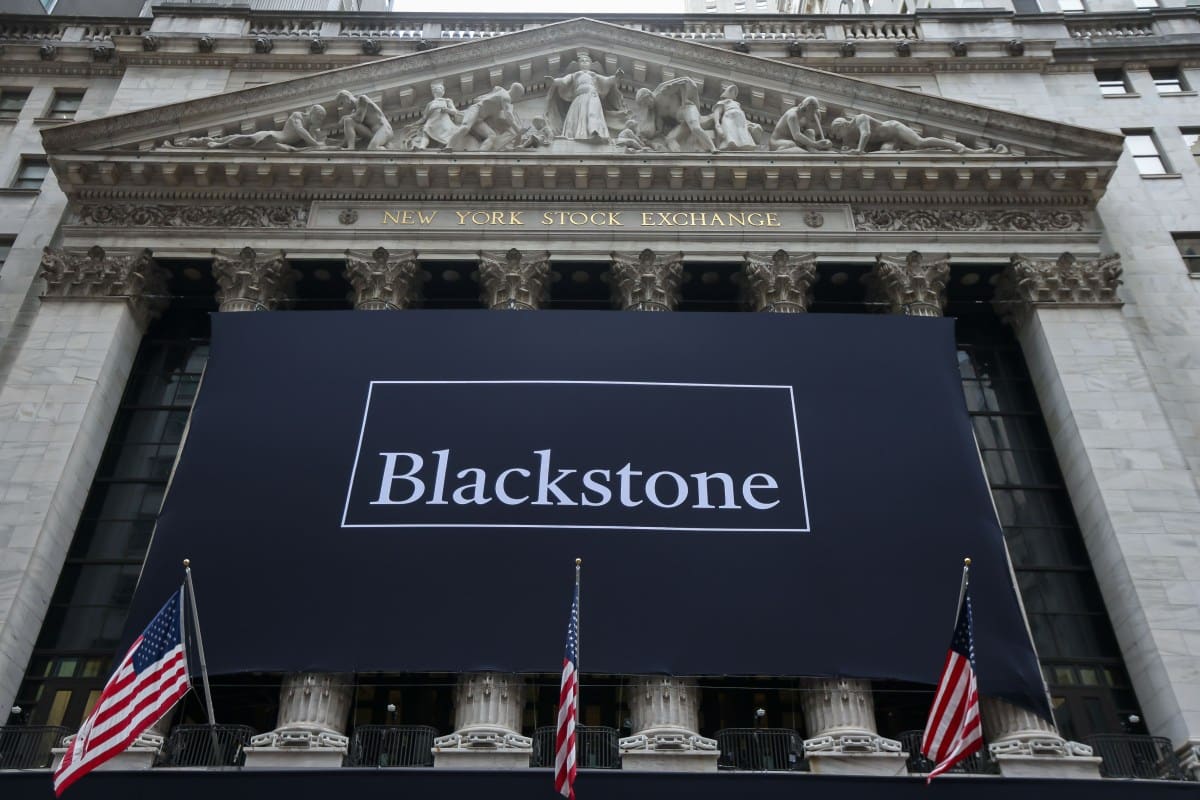
This scenario has played out dozens of times across leading US financial institutions over the past year, according to new findings from Google's Threat Intelligence Group. The targets read like a who's-who of Wall Street: Apollo Global Management, Bain Capital, Blackstone, Bridgewater Associates, KKR, Moody's, TPG, and CME Group have all been named in connection with breaches tied to coordinated vishing operations. At DailyTechWire, we've tracked the rising sophistication of social engineering attacks across Asia-Pacific financial hubs, but the scale and brazenness of these US-focused campaigns mark a troubling evolution in how organized cybercrime monetizes access to high-value corporate targets.
The attackers are not deploying zero-day exploits or advanced persistent threat toolkits. They are simply calling people and lying convincingly enough to bypass multi-factor authentication, the security control most organizations consider their last line of defense.
Four Brands, One Umbrella
Google's researchers have cataloged four distinct extortion brands operating in this space: Falcon, Helix, Pink, and Redact. Each maintains its own leak site where stolen data is previewed and ransom deadlines are posted. The language on these portals is clinical, almost corporate. One site reassures victims that "we conduct every negotiation on professional terms" and frames publication as "the consequence of refusal to engage, deliberate stalling, or failure to honor an agreement."
Behind the polished messaging, Google believes all four groups may be part of a larger collective tracked internally as UNC6671. Whether they operate as affiliates under a shared phishing-as-a-service infrastructure, or as splinter cells with independent command structures, remains unclear. What is evident is a deliberate strategy to compartmentalize operations, obscure the true volume of breaches, and insulate individual brands from reputational blowback if a negotiation goes sideways.
The tactic mirrors patterns we've observed in ransomware cartels across Southeast Asia and Eastern Europe, where decentralized branding allows operators to burn one identity and spin up another without losing operational momentum. It also complicates attribution and makes it harder for victims to assess whether they are dealing with a known quantity or a new threat actor.
Why Private Equity, Why Now
For years, these groups cast a wide net, hitting manufacturers, real estate developers, healthcare providers, insurers, tech startups, logistics companies, and hospitality chains. The common thread was access to intellectual property, source code, or VIP client records that could be weaponized for extortion.
More recently, the focus has narrowed. Legal firms and private equity shops now dominate the target list. Google's analysis suggests this shift reflects a calculated move toward organizations involved in mergers, acquisitions, capital deployment, and high-stakes litigation. The data these firms hold, pre-announcement deal terms, confidential valuations, litigation strategy documents, carries asymmetric leverage. A leaked term sheet can crater a pending acquisition. A disclosed legal strategy can tank a settlement negotiation. The potential for reputational and financial damage is enormous, and attackers know it.
One cryptocurrency wallet linked to a group tracked by Google received roughly ten million dollars in bitcoin during the first few months of this year alone. Ransom demands typically range from $750,000 to $3 million per victim, according to the report. Those figures are consistent with what we've seen in the Asia-Pacific region, where financial services targets have faced similar extortion economics, though often with longer negotiation windows and more aggressive data sampling tactics.
Vishing in the Age of AI Hype
The timing is ironic. As vendors tout autonomous AI agents capable of detecting anomalous behavior and predicting attacks before they happen, some of the most damaging breaches are still happening because someone picked up the phone and believed a story. Voice phishing, or vishing, is not new. It predates the internet. But it remains effective precisely because it exploits the hardest layer to harden: human judgment under pressure.
The mechanics are straightforward. Attackers research their targets, often scraping LinkedIn for org charts and role descriptions. They spoof caller IDs to mimic internal extensions or trusted vendor numbers. They rehearse scripts that mix urgency with plausibility: a password reset required before end of day, a security incident that needs immediate verification, a system upgrade that demands re-authentication. The goal is to create a narrow window in which the target acts before thinking.
Once the victim enters credentials and a live multi-factor code on a spoofed login page, the attackers have everything they need to authenticate as that user. From there, lateral movement inside the network is a matter of time and tooling. The exfiltration of sensitive documents, often terabytes of deal files and client records, can happen over days or weeks before detection.
The Extortion Playbook
After data is stolen, the groups typically reach out via encrypted channels, sometimes email, sometimes direct messages on secure platforms. They provide samples of the stolen data as proof of access, outline their demands, and set a deadline. If the victim does not respond or refuses to pay, a subset of the data appears on the group's leak site. Further delays result in full publication.
This model, sometimes called double extortion, has become standard in the ransomware world. But unlike ransomware, which encrypts systems and demands payment for decryption keys, these attacks leave no forensic trace of encryption. The victim's systems continue to function normally. The leverage is reputational and regulatory: the threat of public disclosure, regulatory scrutiny, client lawsuits, and loss of competitive advantage.
For private equity firms, the calculus is brutal. Paying a ransom invites moral hazard and may violate sanctions or money laundering rules depending on who is behind the keyboard. Not paying risks a data dump that could expose portfolio companies, limited partners, and deal pipelines to competitors and regulators. There is no clean exit.
What Firms Are Saying, and Not Saying
CME Group declined to comment when contacted. Apollo Global Management, Bain Capital, Blackstone, Bridgewater Associates, KKR, Moody's, and TPG did not respond to requests for comment. The silence is unsurprising. Acknowledging a breach invites scrutiny from regulators, clients, and investors. It also signals to other attackers that the firm may be a lucrative target.
But the lack of public disclosure creates an information asymmetry that benefits attackers. When breaches go unacknowledged, other firms in the sector remain unaware of the specific tactics in play, the social engineering scripts being used, or the infrastructure being leveraged for phishing. That makes it easier for the same groups to recycle their playbooks against new victims.
Defense in an Era of Human Exploits
Technical controls, endpoint detection, network segmentation, anomaly detection, can catch some of this activity after the fact. But they do little to prevent the initial compromise when it hinges on a human decision made in real time. The most effective countermeasures are organizational: mandatory callback policies for any request involving credentials, hardware-based multi-factor tokens that cannot be phished, and regular red-team exercises that simulate vishing scenarios.
Some firms are experimenting with voice biometrics and behavioral analytics to detect anomalous call patterns, but these systems are still nascent and prone to false positives. The reality is that as long as attackers can reach employees on personal devices, outside the perimeter of corporate monitoring, and as long as those employees are conditioned to respond quickly to requests that sound authoritative, vishing will remain a viable attack vector.
The financial services industry, particularly in the US and Europe, has been slow to adopt some of the more aggressive security postures common in parts of Asia, where firms routinely isolate employee personal devices from any access to corporate systems and enforce strict protocols around out-of-band authentication. Whether the current wave of breaches will accelerate that shift remains to be seen.
The Bigger Picture
At its core, this story is not about technology. It is about leverage, economics, and the asymmetry between the cost of an attack and the cost of a breach. A vishing campaign can be run with minimal infrastructure: spoofed phone numbers, cloned login pages, and a few hours of social engineering research. The return on investment, measured in millions of dollars per successful breach, is staggering.
For the private equity firms on the receiving end, the damage extends beyond the immediate ransom. There is the cost of forensic investigation, legal fees, regulatory fines, client notification, and the long tail of reputational harm. There is also the strategic cost: competitors who gain access to deal terms, valuation models, or portfolio performance data gain an edge that is difficult to quantify but impossible to ignore.
As these groups continue to refine their tactics and expand their target lists, the question for the financial services sector is not whether vishing will remain a threat, but how long it will take for defenses to catch up to the reality that the weakest link is not the firewall, it is the voice on the other end of the line.