Washington Lawmaker Pushes Framework to Let Communities Block Data Centers
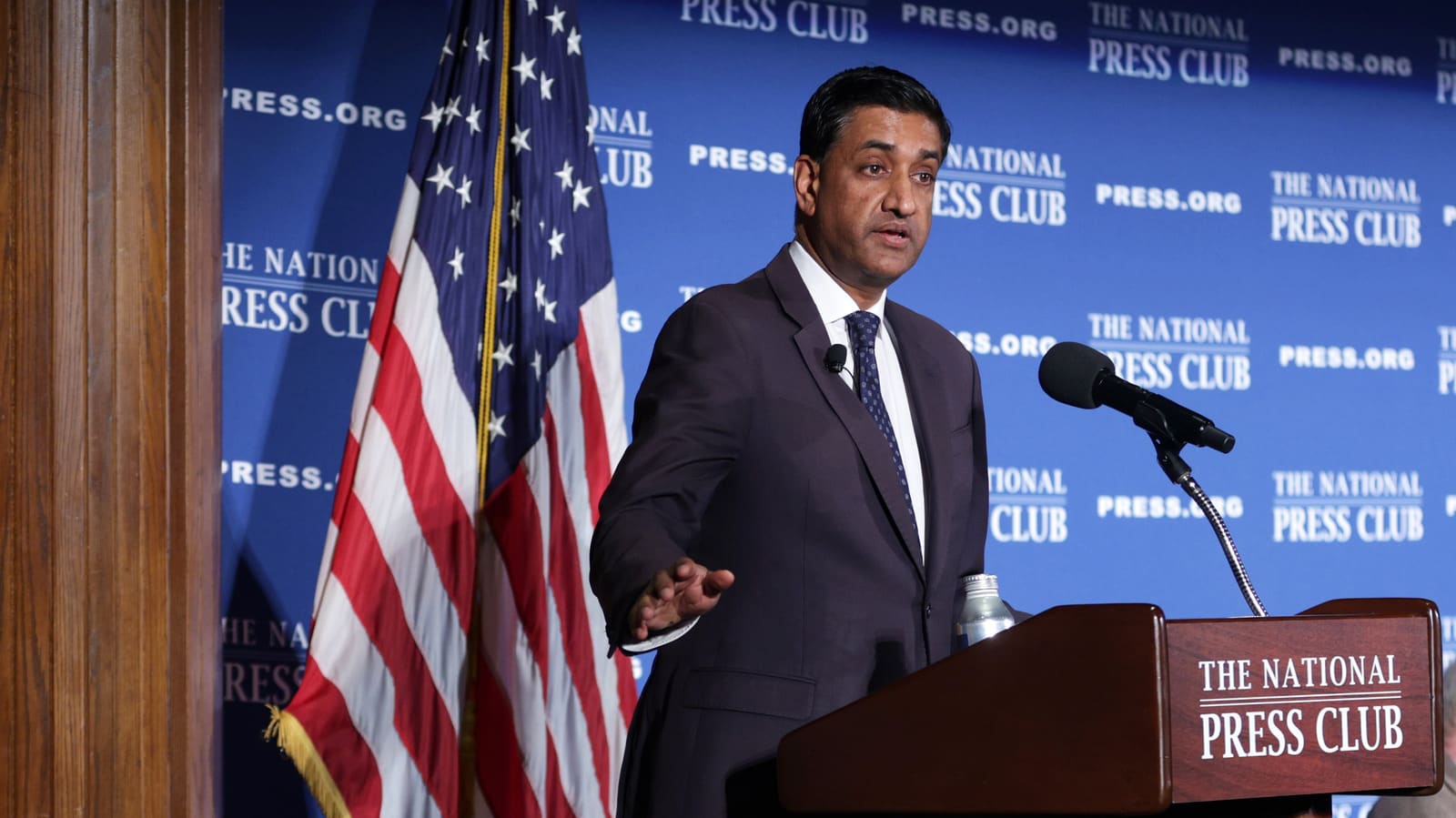
Congressman Ro Khanna's resolution sketches a "Data Center Bill of Rights" that would preserve local veto power over infrastructure projects fueled by AI demand.
A Legislative Sketch, Not Yet a Law
Representative Ro Khanna, who represents California's 17th district, introduced a resolution in early August that outlines what he calls a "Data Center Bill of Rights." The measure does not carry the force of law but instead signals to the House a set of principles: local communities should retain the authority to reject data center proposals near residential zones, schools, and hospitals without being overruled by state governments.
At DailyTechWire, we've tracked the collision between AI infrastructure expansion and local resistance across Asia and North America. Khanna's resolution lands in the middle of a wider regulatory tug-of-war. New York enacted a one-year pause on new data center permits earlier this year, and municipalities from Virginia to Singapore have faced organized opposition to hyperscale builds. The resolution is less a ready-to-pass bill than a policy blueprint, staking out a position that runs counter to federal efforts over the past eighteen months to streamline data center approvals and exempt them from environmental review.
What the Framework Proposes
The resolution lays out several specific protections. Communities would be empowered to hold transparent public processes before any data center breaks ground, with the option to ban facilities outright in residential areas or within 2,500 feet of homes, schools, childcare centers, hospitals, and nursing facilities. Local governments would also have the right to demand operational transparency from data center operators, block changes to electricity rates triggered by new demand, and mandate the use of renewable energy sources.
None of these provisions are enforceable in their current form. The resolution functions as a legislative signal, a way to articulate concerns that have gained traction at the state and municipal level but remain largely unaddressed by federal policy. It also underscores a tension: the same federal agencies that have promoted domestic semiconductor and cloud infrastructure buildout have simultaneously worked to preempt state-level regulation, citing national competitiveness and the need for expedited permitting.
Water, Power, and the Cost of Inference
The environmental stakes are material. Data centers supporting large language model training and inference workloads are projected to consume up to 32 billion gallons of water annually by 2028, according to industry estimates cited in the resolution. Much of that water is used for cooling, and in regions already facing drought or water scarcity, the draw has become a flashpoint. Generators and gas turbines that provide backup power or supplement grid capacity also produce localized air pollution, raising public health concerns in communities adjacent to these facilities.
These are not abstract worries. In Northern Virginia, where data center density is among the highest in the world, residents have documented noise, diesel particulate matter, and grid strain. Similar patterns have emerged in parts of Maharashtra and Johor, where hyperscale operators have negotiated power purchase agreements that effectively lock in industrial rates at the expense of residential users. Khanna's framework attempts to give communities a formal mechanism to push back before those agreements are finalized.
Federal Preemption and the Regulatory Gap
The resolution arrives against a backdrop of federal policy that has leaned heavily in favor of accelerated infrastructure deployment. Over the past two years, the Department of Energy and the Federal Energy Regulatory Commission have explored pathways to exempt data centers from certain environmental impact reviews under the National Environmental Policy Act. The rationale is straightforward: AI and cloud infrastructure are treated as strategic assets, and delays in permitting are seen as a competitive vulnerability.
But that top-down approach has created friction. States and municipalities that attempt to impose stricter zoning, water-use limits, or emissions standards have found themselves facing preemption arguments, often backed by industry coalitions and federal agencies. Khanna's resolution, in effect, argues for a floor rather than a ceiling: a baseline of local authority that cannot be overridden in the name of national infrastructure goals.
The irony is not lost on observers familiar with California housing policy. Khanna's home state has spent years dismantling local veto power over residential development, using state law to override neighborhood objections and accelerate high-density construction. The data center resolution flips that logic, embracing local control in a context where the externalities are environmental and infrastructural rather than related to housing supply.
What Happens Next
As a resolution, the measure does not require the president's signature and does not create enforceable rights. Its value lies in framing: it establishes a set of principles that could inform future legislation, and it gives political cover to state and local officials facing pressure to approve projects that carry significant environmental and financial costs.
Whether those principles will translate into binding federal law remains uncertain. The current Congress has shown little appetite for regulation that might slow domestic AI infrastructure buildout, and industry lobbying has been effective at framing local opposition as a barrier to innovation. But the resolution does reflect a growing recognition that the costs of data center expansion are not evenly distributed, and that the communities bearing those costs have limited recourse under existing law.
In the absence of a nationwide moratorium, frameworks like Khanna's may represent the most realistic path toward balancing infrastructure growth with local accountability. The question is whether that balance can be codified before the next wave of construction locks in another decade of externalities.