The New Normal: Why $100 Phone Price Increases Feel Like a Win
As memory shortages and AI hype decouple hardware costs from value, consumers and manufacturers alike brace for a sustained affordability crisis
A Modest Increase in an Immodest Market
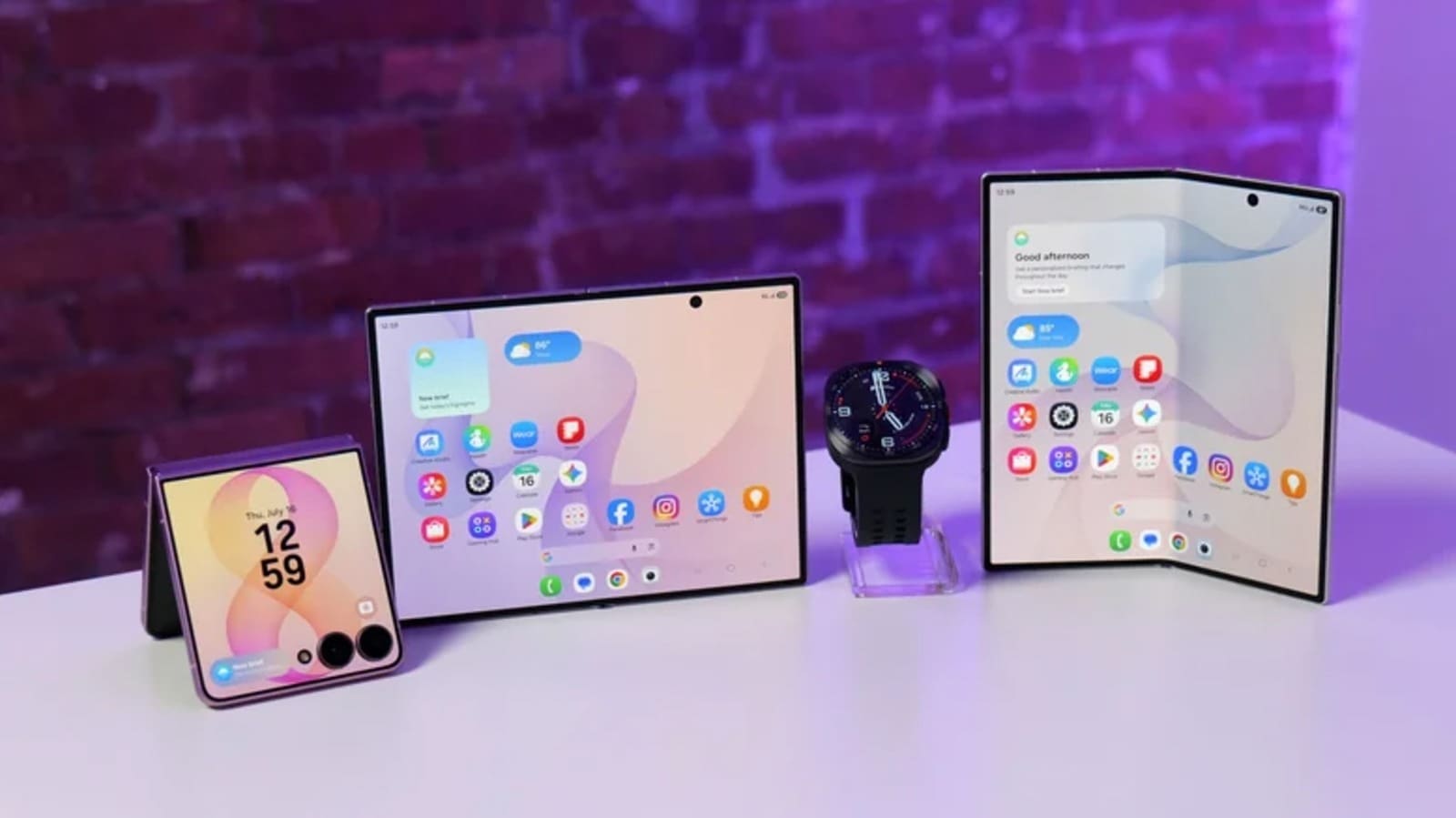
When Samsung unveiled its newest foldable flagships this month with a $100 across-the-board price increase, the collective sigh from industry watchers wasn't frustration. It was relief. That reaction speaks volumes about where the mobile hardware market stands in mid-2026: a place where restraint, not ambition, defines the wins.
The calculus has shifted. Component shortages, particularly in high-bandwidth memory required for on-device AI inference, have pushed bill-of-materials costs higher even as competition intensifies. At DailyTechWire, we've tracked memory spot prices across Seoul and Taipei for eighteen months, and the curve hasn't flattened. DRAM and NAND suppliers are prioritizing data-center customers willing to pay premiums, leaving handset makers scrambling for allocation. In that context, a hundred-dollar bump starts to look like discipline rather than opportunism.
The Ripple Begins
Samsung rarely moves alone. Google is widely expected to raise Pixel pricing by at least $100 when its fall lineup arrives. Apple has telegraphed similar intent. Tim Cook, outgoing as CEO, broke with the company's traditional opacity earlier this year to acknowledge that holding prices steady was no longer feasible. Within weeks, price adjustments rolled across Mac, iPad, and accessory lines. The fall iPhone refresh will almost certainly follow.
One scenario circulating among supply-chain sources in Shenzhen and Cupertino suggests Apple may stagger the iPhone 18 launch. Under this plan, the rumored ultra-flagship foldable and the high-margin Pro models would debut in September, capturing holiday spending from customers less sensitive to price. The standard iPhone 18 and a rumored iPhone 18e, a more accessible variant, would arrive only after the new year, when the sticker shock has faded and consumers have adjusted expectations.
Whether that plays out remains speculative. What isn't speculative is the pressure. Energy costs in the United States have climbed 15.7 percent year-on-year, according to recent Department of Labor figures. Disposable income is tighter. Discretionary tech purchases, once impulse buys on carrier financing, now require deliberation.
Early Signals of Pullback
Valve's Steam Deck offers a cautionary preview. In May 2026, the company discontinued its entry-level $399 model. The two remaining tiers saw their prices jump from $549 and $649 to $789 and $949. Sales collapsed. Third-party analysis indicates an 82 percent drop in unit volume, a stunning reversal for a device that had been gaining momentum in Asia-Pacific markets, particularly in South Korea and Japan where handheld gaming retains cultural cachet.
Polling data from a major Apple-focused publication found that 38 percent of respondents plan to extend their device replacement cycles in response to higher prices. That's consistent with what IDC projects: a sharp contraction in smartphone shipments through the remainder of 2026 and into 2027. The firm has described the outlook as a "record low," driven primarily by memory supply constraints and the resulting price escalation.
The AI Premium and Its Discontents
On-device AI has become the industry's rallying cry, but it carries a steep infrastructure cost. Running large language models locally, even trimmed-down variants optimized for mobile silicon, demands more unified memory and faster interconnects than previous generations required. Chipmakers from Qualcomm to MediaTek have responded by integrating more LPDDR5X and stacking additional cache, all of which adds to per-unit cost.
Manufacturers argue this investment unlocks new experiences: real-time translation, smarter camera processing, personalized assistants that don't phone home. Consumers, meanwhile, are asking whether those features justify the outlay. The gap between engineering ambition and market willingness to pay is widening, and it's unclear which side will blink first.
Contracts as Camouflage
One reason the $100 increase hasn't sparked wider revolt is the structure of mobile purchasing in many markets. In the United States, Europe, and parts of Southeast Asia, carrier financing remains dominant. A $100 hike spread over 24 months adds roughly four dollars to a monthly bill, an amount that blends into the noise of other subscription creep. It's a psychological subsidy: the pain is deferred, diffused, made tolerable.
But even that mechanism has limits. As base prices climb past $1,200 for flagship models and approach $2,000 for foldables, the monthly installment starts to resemble a car payment. That's a threshold where even financially comfortable buyers pause. And in cash-heavy markets like India and Indonesia, where carrier subsidies are less prevalent, sticker prices hit immediately and hard.
What Restraint Looks Like Now
So when Samsung added $100 rather than $200 or $250, it sent a signal. The company could have leaned harder into premium positioning, banking on brand loyalty and the sunk-cost fallacy of its ecosystem. It chose not to. That suggests internal modeling showed a steeper increase would trigger demand destruction that no amount of marketing could recover.
It's also a recognition that the smartphone market in 2026 is no longer a growth story. Replacement cycles have lengthened. Feature differentiation has plateaued. The next billion users aren't coming from affluent markets; they're in price-sensitive regions where $100 is the difference between a flagship and a capable mid-tier device. Samsung, with significant manufacturing and R&D footprints in Vietnam and India, understands that arithmetic intimately.
The Year Ahead
If IDC's projections hold, the rest of 2026 and much of 2027 will be a stress test. Manufacturers will need to balance margin pressure with volume targets. Retailers and carriers will need to rethink financing terms and trade-in incentives. Consumers will need to decide whether incremental upgrades justify the incremental cost.
There's also a strategic layer. Chinese OEMs, particularly those expanding aggressively in Southeast Asia, Africa, and Latin America, may see this moment as an opening. If legacy players raise prices, challengers can undercut on cost while closing the gap on features. Xiaomi, Oppo, and Vivo have all demonstrated the ability to deliver flagship experiences at mid-tier prices. A sustained affordability crisis in the premium tier could accelerate their market-share gains.
The Bigger Picture
What's unfolding isn't just a pricing adjustment. It's a recalibration of what the smartphone industry can promise and what consumers are willing to accept. The era of annual upgrades driven by genuine innovation has given way to incremental refinement sold at escalating cost. That's sustainable only if buyers see the value, and right now, the evidence suggests many don't.
A $100 increase feeling like good news is a measure of how constrained the landscape has become. It's a reminder that in a market shaped by supply shocks, geopolitical friction, and speculative technology bets, even modest restraint counts as a victory. Whether that restraint lasts, or whether the next round of launches tests the ceiling again, will define the smartphone market's trajectory for years to come.