Google Introduces Video Selfie Authentication for Account Access
The Mountain View company now lets users verify identity through camera-based head movements, expanding biometric login options beyond passkeys and device unlock.
A New Layer in Identity Verification
Google has introduced selfie video authentication as an additional pathway into user accounts, marking the company's latest expansion of biometric login methods. The feature joins existing face-based options, including device-native face unlock and passkey biometrics, but operates independently of phone or computer hardware requirements.
The timing is notable. As account recovery scenarios grow more complex and users increasingly find themselves locked out without access to their primary devices, alternative verification paths become critical infrastructure rather than convenience features. At DailyTechWire, we've tracked the steady migration of consumer identity systems toward multi-modal biometrics, and this rollout fits squarely within that broader industry pattern across both Western and Asian platforms.
How the System Works
Setting up video selfie login begins in the Security & sign-in section of Google's My Account dashboard. Users navigate to the Selfie video option and initiate enrollment. For those on desktop machines equipped with cameras, the process completes in-browser. Devices without cameras generate a QR code that redirects setup to a mobile phone.
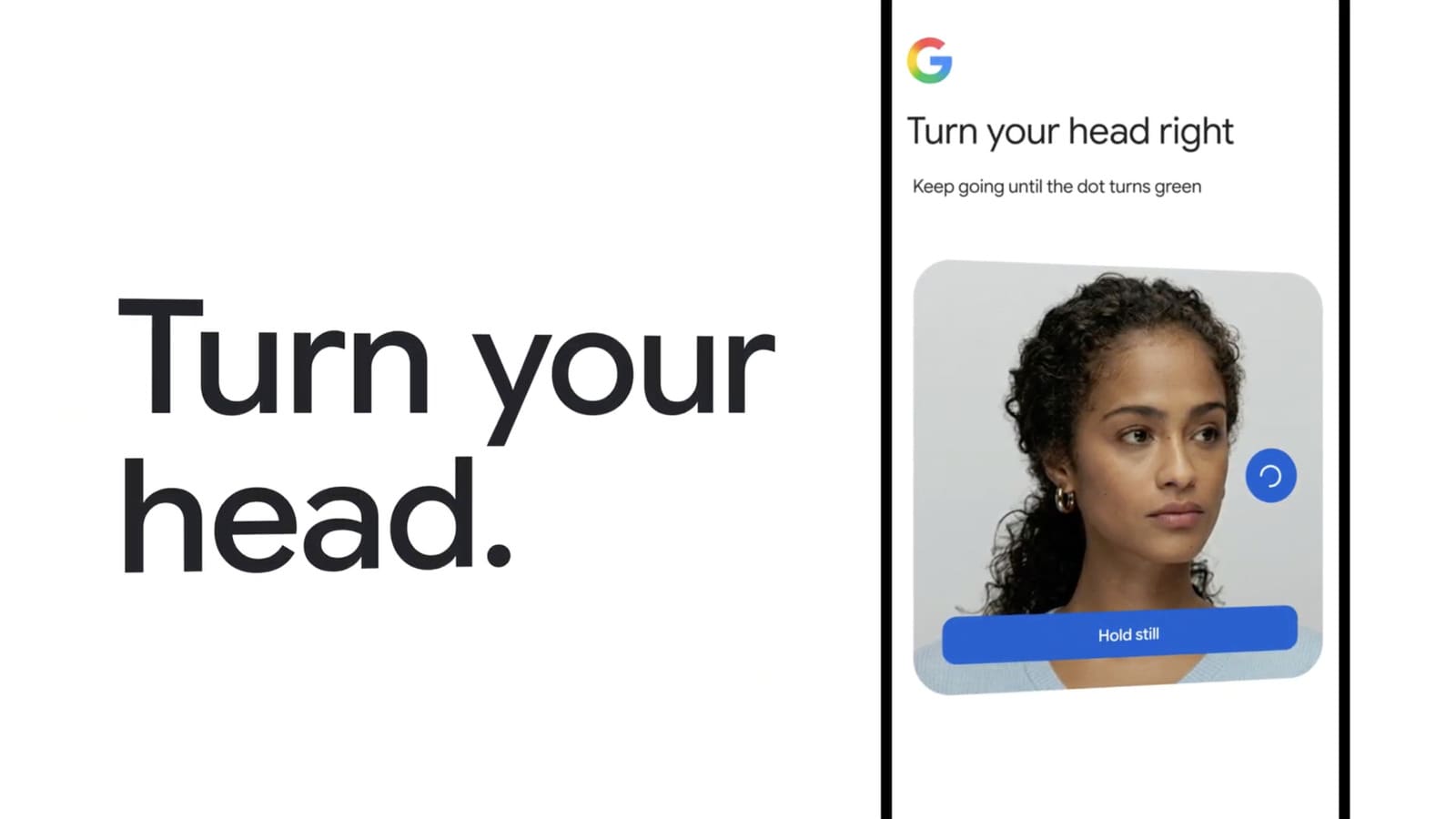
During enrollment and every subsequent login attempt, Google prompts users to rotate their heads in specific directions. The company positions this as an anti-spoofing measure, designed to distinguish live individuals from static images or pre-recorded deepfake content. Glasses and face coverings must be removed, and Google recommends plain backgrounds without other people visible in frame.
The verification footage is encrypted and stored within Google's identity infrastructure. According to the company, the video serves solely for comparison during future login attempts. Users retain deletion rights through a dedicated Video Verification page, where enrolled selfies can be removed at any time.
Gaps in Availability
The feature currently excludes three account categories: Workspace organizational accounts, child accounts managed under Family Link, and profiles enrolled in Google's Advanced Protection Program. The first two restrictions likely stem from administrative and parental consent considerations. The third is more revealing.
Advanced Protection Program users, typically journalists, activists, campaign staff, and executives facing elevated threat models, rely on hardware security keys and stricter authentication flows. Excluding them from selfie video login suggests Google views the method as less hardened than physical token-based verification, a tacit acknowledgment of the threat landscape around biometric spoofing.
The Deepfake Problem and Liveness Detection
Google's emphasis on head movement during verification points directly to the escalating sophistication of generative video attacks. Static photo-based face recognition, once considered robust, has been undermined by accessible tools capable of animating still images with realistic expressions and lighting. Even short video clips can now be manipulated frame-by-frame or synthesized entirely from training data.
Liveness detection, the technical term for proving a user is physically present, has become the contested frontier in biometric authentication. Head rotation, eye movement tracking, and challenge-response gestures represent the current generation of defenses. Yet these too face pressure from adversarial machine learning techniques that learn to replicate natural micro-movements.
The regional dimension matters here. Liveness standards vary significantly across markets. China's facial recognition infrastructure, deployed at scale in payment and transit systems, has driven rapid iteration in both spoofing attacks and countermeasures. Southeast Asian fintech platforms have similarly invested in multi-factor liveness checks after high-profile fraud incidents. Google's rollout, global in scope, must balance usability against threat models that differ markedly between, say, Singapore's digital banking environment and less targeted consumer contexts.
Account Recovery and the Device-Loss Scenario
The practical use case Google highlights centers on device loss or account lockout. Traditional recovery flows rely on backup email addresses, phone numbers for SMS codes, or pre-established security questions. Each carries friction: phone numbers change, backup emails fall into disuse, and security questions prove vulnerable to social engineering or data breaches that expose answers.
Biometric recovery bypasses these dependencies by anchoring identity in the user's physical presence. For travelers separated from their primary devices, or users whose phones have been stolen, video selfie authentication offers a path back into accounts without requiring access to secondary communication channels. The trade-off, as always, is the biometric data itself, which unlike a password cannot be reset if compromised.
Privacy and the Biometric Data Bargain
Google's assurance that selfie videos remain encrypted and isolated to authentication purposes aligns with standard industry practice, but the broader question persists: how comfortable should users be storing biometric templates with a single platform? Unlike passwords or even hardware tokens, facial geometry cannot be changed. A breach of biometric data carries permanent consequences.
Regulatory frameworks around biometric storage remain fragmented. The European Union's GDPR classifies biometric data as a special category requiring explicit consent and heightened protection. California's BIPA imposes strict liability for unauthorized collection. In contrast, many Asian jurisdictions have lighter-touch regimes, though that is shifting as India's Digital Personal Data Protection Act takes effect and ASEAN member states harmonize standards.
For Google, operating across these jurisdictions means building systems that accommodate the strictest requirements while remaining usable globally. The deletion mechanism built into the Video Verification page reflects that compliance posture, offering users an exit ramp even as the company encourages adoption.
What Comes Next for Authentication
Selfie video login is unlikely to be Google's final move in this domain. The company has invested heavily in passkey infrastructure, which pairs device-local biometrics with public-key cryptography to eliminate phishable passwords. Video selfies occupy a different niche, less secure than hardware-backed passkeys but more accessible in recovery scenarios.
The longer arc points toward orchestrated authentication, where platforms dynamically select verification methods based on risk signals: location anomalies, device fingerprints, behavioral patterns. In that model, video selfies become one instrument in a larger suite, invoked when other factors trigger elevated scrutiny or when fallback access is needed.
For now, the feature offers a window into how consumer identity systems are evolving, biometric data as both convenience and liability, liveness detection as an arms race, and global platforms navigating a patchwork of privacy regimes. Whether users adopt it widely will depend less on technical capability than on trust, the same currency that underpins every authentication system, no matter how sophisticated the underlying machinery.