Phoenix Pitches Infrastructure Play as TSMC Pulls Taiwan Capital West
Arizona's commerce authority is courting Taiwanese family offices and developers to fund the logistics, hotels, and industrial real estate underpinning a $265 billion chip buildout.
The Pitch Session
A hundred investors filled a conference room in Taipei this July, listening to a speaker outline industrial park availability and tax structures in a desert city nearly seven thousand miles away. The audience was not there for chips. They were there for everything else: warehouses, logistics hubs, hotels, office towers, and the science parks that trail semiconductor fabs like pilot fish.
Steve Hsu, who runs the Arizona Commerce Authority's Taiwan office, told the room that ribbon-cutting ceremonies happen almost weekly in Phoenix. The construction boom, he said, would run for two or three decades. His pitch was simple. Taiwan Semiconductor Manufacturing Company has committed a quarter-trillion dollars to Arizona. Tech suppliers are following. Now it is time for real estate capital to move.
"The investment opportunity in Arizona is not just available for tech companies," Hsu told attendees, according to the Commerce Authority. "If only tech companies are building there while we ignore the appreciation in land values, we'll be missing a once-in-a-lifetime opportunity."
The pitch reflects a broader recalibration. Arizona's economic trajectory has become inseparable from TSMC, and the state government knows it. What officials want now is diversification within that dependence: not fewer chips, but more investors who do not make chips at all.
The Numbers Behind the Courtship
Trade figures explain the urgency. Arizona's trade with Taiwan jumped from $4.9 billion in 2024 to $21.2 billion in 2025, according to the Commerce Authority. Taiwan is now Arizona's second-largest trading partner by volume, behind Mexico, and its largest by value. It leapfrogged Canada and China in a single year.
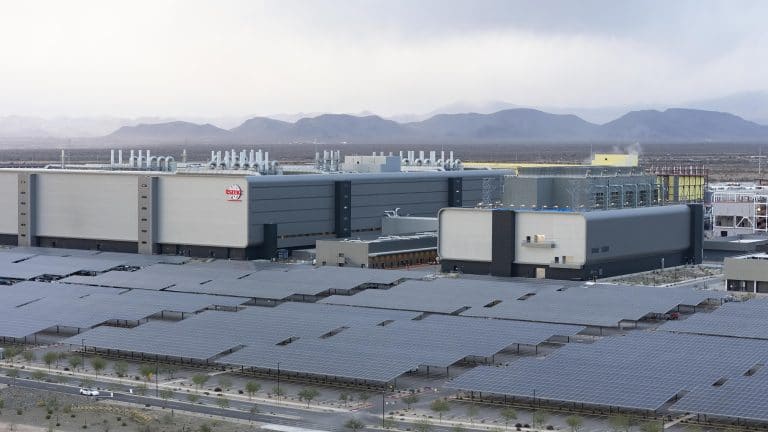
TSMC announced its Arizona project in 2020. Since then, the company has raised its planned U.S. spending to $265 billion across twelve facilities. In July alone, TSMC committed an additional $100 billion. The expanding footprint represents the largest single foreign investment project in U.S. history.
At least 25 Taiwanese suppliers have established U.S. operations to stay close to their anchor customer, data from Economic Daily News shows. That migration has created the infrastructure gap Arizona now wants private capital to fill.
What Arizona Wants Built
The Commerce Authority is targeting family offices and property developers, not just venture capital. The shopping list includes logistics centers to handle materials and finished wafers, hotels for the rotating cohort of Taiwanese engineers and executives, commercial office space for supplier headquarters, and industrial real estate for fabrication equipment manufacturers.
Phoenix's industrial vacancy rate has tightened as demand for manufacturing and distribution space climbs. Land values near the TSMC site in north Phoenix have appreciated sharply, though precise figures remain hard to track in a market moving this fast. Arizona officials argue that the next wave of returns will come not from semiconductor tooling but from the physical real estate that houses it.
Hsu's framing positions the opportunity as a hedge: invest in the scaffolding, not just the core. If chip demand fluctuates, the logistics and hospitality assets still hold value as long as the fabs remain operational. And TSMC's commitment, underwritten by U.S. CHIPS Act subsidies and export-control pressures on China, gives those fabs a long runway.
The Obstacles Investors Face
Enthusiasm at the Taipei event was uneven. Several venture capital and family office representatives told attendees they planned to join delegation trips to Arizona in the coming months. But others were more cautious.
One CFO from a mid-sized Taiwanese real estate firm said her company lacked the scale to participate. She attended for a different reason: her son studies in Arizona, and she wanted to understand what life there might look like if he stayed.
The regulatory landscape poses real friction. U.S. tax codes, zoning rules, and permitting processes differ sharply from Taiwan's. Foreign investors must navigate state incentives, federal opportunity zones, and local development agreements that vary by county. Arizona has streamlined some approval processes to attract TSMC suppliers, but the learning curve remains steep for investors without U.S. legal and accounting infrastructure.
Currency risk is another variable. The U.S. dollar has strengthened against the Taiwan dollar over the past two years, making Arizona assets more expensive in New Taiwan dollar terms. Long-term real estate plays depend on sustained TSMC expansion, which in turn depends on U.S.-China tech policy, domestic political will, and global chip demand cycles.
The Broader Reshoring Context
Arizona's courtship of Taiwanese capital is part of a wider pattern. U.S. reshoring policy, driven by tariffs and export controls on advanced semiconductors to China, has accelerated capital flows from East Asia to the American Southwest. TSMC's Arizona project is the most visible example, but Samsung has committed to a Texas expansion, and Intel is building fabs in Ohio and Arizona.
Each anchor investment creates a constellation of supplier, logistics, and service investments. Arizona is betting that Taiwanese investors, already familiar with TSMC's ecosystem, will deploy capital faster than domestic or European players. The state has opened offices in Taipei and Hsinchu to facilitate dealmaking and site visits.
At DailyTechWire, we have tracked similar pitches in Texas and Ohio, where state commerce departments have courted Asian investors to build around semiconductor hubs. Arizona's approach is more explicit: it is selling real estate appreciation as a primary return, not just ancillary to a tech thesis.
What Comes Next
The Taipei pitch session is one of several planned for the second half of 2026. Arizona officials are organizing site tours for family offices and developers, offering meetings with local banks, law firms, and construction companies. The state has also expanded its tax incentive programs to include non-tech real estate projects tied to TSMC supply chain activity.
Whether the pitch converts interest into capital remains to be seen. Real estate investment is a slow-moving asset class, and cross-border deals take time. But the underlying logic is straightforward: TSMC has committed a quarter-trillion dollars, and someone will need to build the hotels, warehouses, and office parks that make that investment functional.
Arizona is betting that Taiwanese investors, flush with capital and familiar with TSMC's rhythms, will see the opportunity before others do. The state is offering the playbook. Now it waits to see who writes the checks.