OpenAI Ships GPT-Live-1, a Voice Model That Knows When to Stay Quiet
The new conversational AI waits through pauses, interrupts less often, and routes queries to GPT-5.5 when deeper reasoning is needed.
A Conversational Upgrade That Listens
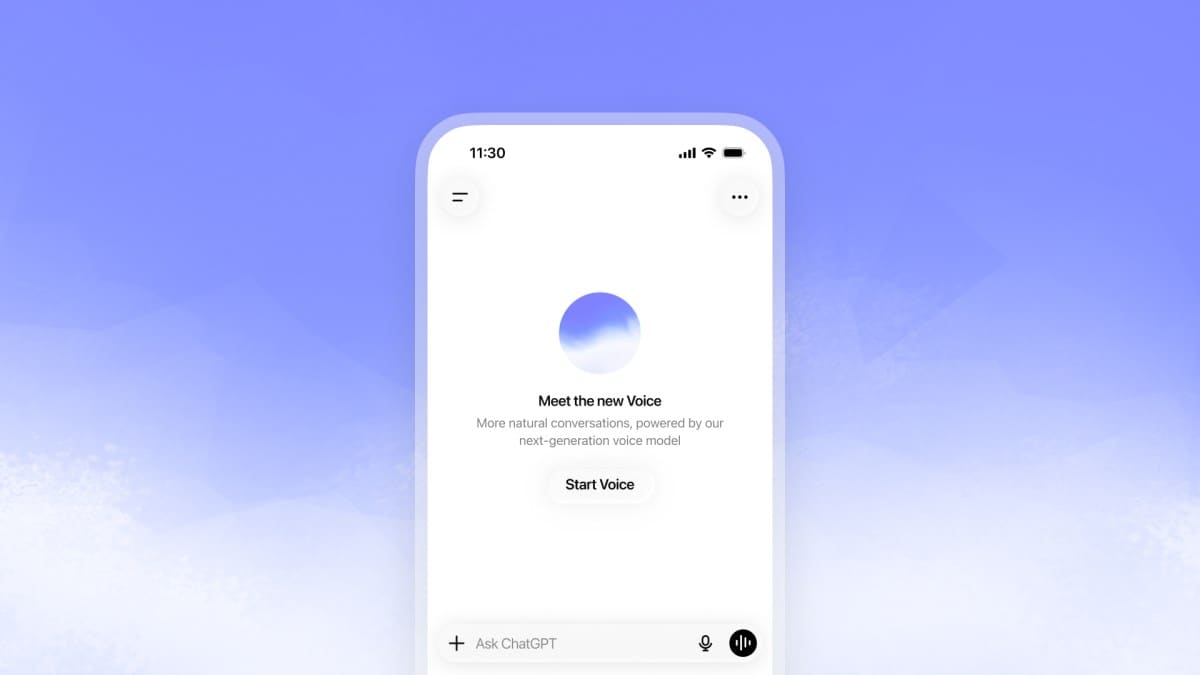
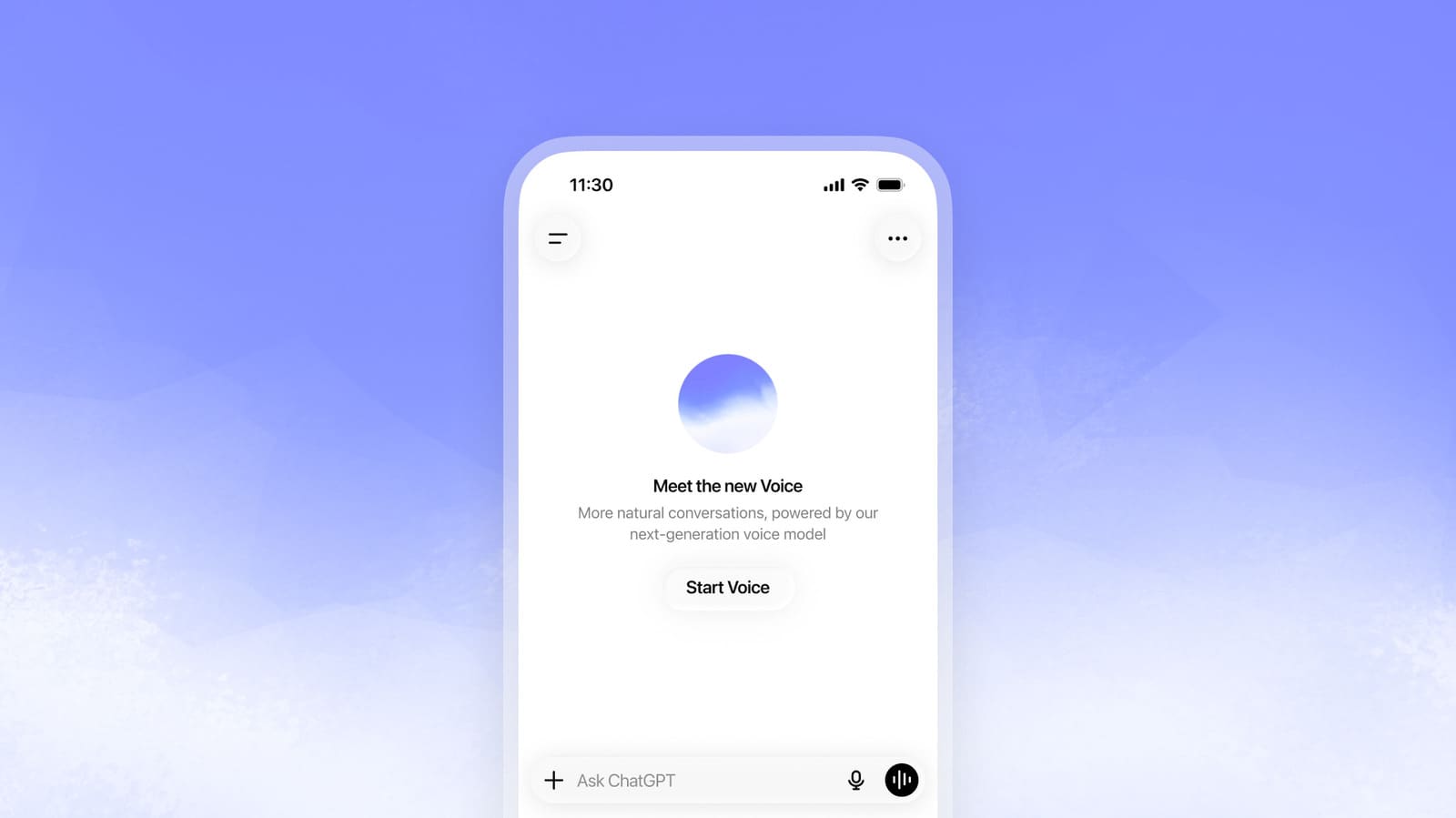
The latest iteration of OpenAI's voice interface tackles one of the most persistent irritations in AI conversation: knowing when to shut up. GPT-Live-1, unveiled this week, represents a shift in how voice models handle the rhythm of human speech, particularly the natural pauses that punctuate our thinking.
According to OpenAI research lead Kundan Kumar, GPT-Live-1 is the company's "smartest voice model" to date. The core improvement centers on turn-taking behavior. Where earlier voice models often jumped in during momentary silences or talked over users, the new system is engineered to recognize when a pause is just a pause, not an invitation to respond.
This is not merely a cosmetic tweak. Conversational AI has long struggled with the temporal dynamics of dialogue. Humans pause to gather thoughts, search for words, or simply take a breath. Systems that mistake these natural rhythms for conversational endpoints create friction, forcing users to adapt their speech patterns rather than the other way around. GPT-Live-1 attempts to flip that dynamic.
Routing to Reasoning Engines
Beyond turn-taking, GPT-Live-1 introduces a hybrid architecture that leverages OpenAI's text models when voice alone is insufficient. When a query requires deeper reasoning or web search, the system automatically routes the request to models like GPT-5.5, then synthesizes the results back into spoken output.
This handoff happens in the background. A user asking about, say, the regulatory environment for AI chips in Southeast Asia would trigger GPT-Live-1 to pull in GPT-5.5 for research and analysis, then return to voice mode to deliver findings. The goal is to collapse the latency between query and insight while maintaining the flow of conversation.
The architecture reflects a broader trend in multimodal AI: specialization within a unified interface. Voice models excel at low-latency interaction and natural prosody, but they are not optimized for the kind of chain-of-thought reasoning that text models handle well. By stitching the two together, OpenAI is betting that users will tolerate slight delays in exchange for more accurate, context-rich answers.
The Interruption Problem
Interruption has been a defining flaw in voice AI since the early days of virtual assistants. Systems that cut users off mid-sentence or fail to wait through pauses create an experience that feels less like conversation and more like talking to an overeager call-center bot.
At DailyTechWire, we've tracked how this issue has plagued not just OpenAI but competitors across the board. Google's Gemini Live, Anthropic's voice experiments, and even Apple's Siri updates have all grappled with the same challenge: how to build a model that understands the difference between "I'm done" and "I'm thinking."
GPT-Live-1's approach involves training on conversational datasets that include pause patterns, disfluencies, and overlapping speech. The model learns to interpret silence as part of the dialogue, not the end of it. This requires a different kind of inference pipeline, one that holds state longer and delays response generation until it has higher confidence that the user has finished speaking.
The technical details remain sparse, but the implication is clear: OpenAI is moving away from reactive, turn-based voice models toward something closer to continuous listening with adaptive response timing.
Real-World Constraints
Whether GPT-Live-1 delivers on its promise depends heavily on deployment context. Latency, network stability, and edge-case handling will determine if the model feels genuinely conversational or just less annoying than its predecessors.
Voice AI still faces the same infrastructural hurdles that have limited adoption in Asia-Pacific markets. High-latency connections, multilingual environments, and accented speech all stress models in ways that press briefings do not reveal. OpenAI's voice products have historically performed best in controlled, English-dominant settings. Expanding that reliability to Jakarta, Manila, or Kolkata requires more than smarter turn-taking; it demands localization at the inference level.
There is also the question of use cases. Voice interfaces have found traction in hands-free scenarios like driving, cooking, or accessibility tools. But for knowledge work, text remains the dominant modality. GPT-Live-1's ability to route to GPT-5.5 may make it more useful for research-heavy queries, but it is unclear whether users will prefer speaking those queries aloud or simply typing them into a chat window.
The Broader Voice Race
OpenAI's move comes as the voice AI landscape grows more crowded. Meta has been experimenting with real-time voice in its Llama models, Google continues to refine Gemini Live, and a wave of startups are building voice-native applications on top of open-source stacks.
The competitive dynamic is shifting from "can we do voice?" to "can we do voice that people actually want to use?" That means solving for naturalness, reliability, and contextual awareness, all while keeping costs low enough to scale. GPT-Live-1's hybrid architecture, routing expensive reasoning tasks to text models only when necessary, suggests OpenAI is optimizing for both performance and economics.
For developers, the question is whether GPT-Live-1 will be accessible via API and at what price point. Voice models are computationally expensive, and real-time inference adds overhead. If OpenAI can offer GPT-Live-1 at a cost structure that makes sense for consumer apps, it could accelerate adoption. If not, the model may remain a showcase feature for ChatGPT's premium tiers.
What Comes Next
Voice AI is still in its awkward adolescence. Models can generate human-like speech, but they stumble over the subtleties of conversation: timing, tone, context switching, and emotional register. GPT-Live-1 addresses one slice of that problem, but it is only one slice.
The next frontier is likely multimodal context, where voice models can see what you see, remember what you said three turns ago, and adapt their responses based on your emotional state or the task at hand. OpenAI has hinted at these capabilities in research previews, but productizing them at scale is another matter.
For now, GPT-Live-1 represents an incremental but meaningful step. If it can reliably wait through pauses, interrupt less, and route queries intelligently, it will be a better tool than what came before. Whether it is better enough to change how people interact with AI remains to be seen.