Chinese PCB Manufacturers Race to Build Capacity as AI Infrastructure Demand Surges
More than 20 mainland circuit-board producers have announced factory expansion projects in the first half of 2025, signaling a structural shift in the supply chain underpinning global data center growth.
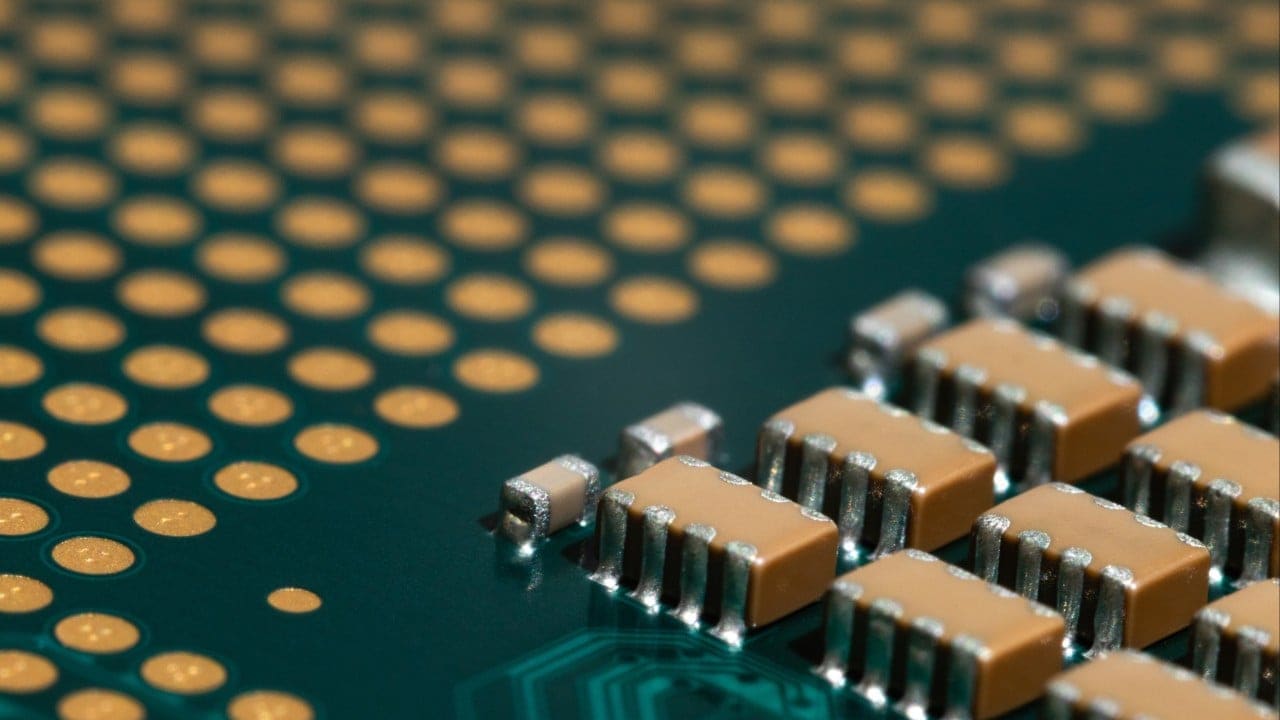
A Factory Boom Driven by Server Racks
Walk through any major data center construction site in Asia today and you will find a common thread: the servers being installed rely on multilayer printed circuit boards manufactured in Shenzhen, Suzhou, and a dozen other Chinese industrial hubs. Those boards, the substrates on which processors and memory chips sit, have become the silent bottleneck in the race to scale AI infrastructure. At DailyTechWire, we have tracked more than 20 mainland PCB manufacturers announcing new production capacity in the first six months of this year, a collective push that is set to drive industry capital expenditure to unprecedented levels.
The companies leading this expansion include Victory Giant Technology, WUS Printed Circuit, Shennan Circuits, and Suzhou Dongshan Precision Manufacturing. Each has disclosed plans to add fabrication lines tailored to the high-layer-count, high-frequency boards required for AI accelerators and networking switches. The scale of investment is notable not only for its size but for its timing: it arrives as Western hyperscalers scramble to secure supply for next-generation GPU clusters and as export controls reshape the flow of advanced semiconductor equipment into China.
Why Circuit Boards Have Become a Chokepoint
The surge in AI workloads has changed the economics of PCB manufacturing. Training a large language model or running inference at scale demands servers packed with high-bandwidth memory, multi-die GPUs, and low-latency interconnects. All of those components require boards with 20, 30, or even 40 layers, each etched with micron-scale traces and drilled with thousands of vias. The yield rates on such boards are lower than on consumer electronics substrates, and the qualification cycles with server OEMs can stretch six months or longer.
Chinese manufacturers have spent the past decade climbing the value curve, moving from simple four-layer boards for smartphones to the complex substrates now used in enterprise networking and storage. That trajectory has positioned them as critical suppliers to global server brands, even as geopolitical friction complicates cross-border technology flows. The current expansion wave reflects a bet that AI infrastructure spending will remain elevated through the end of the decade, regardless of macroeconomic headwinds or shifts in end-user sentiment.
The Numbers Behind the Build-Out
While individual companies have not disclosed aggregate capital expenditure figures for the industry, the pattern of announcements suggests a step-change in investment intensity. Victory Giant Technology, for example, has committed to a new facility in Guangdong province focused on high-frequency materials and advanced stackup designs. WUS Printed Circuit has outlined capacity additions in both Jiangxi and Guangdong, targeting both domestic server assemblers and international contract manufacturers. Shennan Circuits, already one of the largest PCB producers in China, has earmarked funds for automation upgrades and cleanroom expansions at multiple sites.
Suzhou Dongshan Precision Manufacturing, which serves clients in the automotive and computing sectors, has announced plans to broaden its product mix to include backplanes and midboards for AI servers. The company has historically derived much of its revenue from flexible circuits used in smartphones, but management has signaled a strategic pivot toward infrastructure electronics as mobile device demand plateaus.
Across the industry, the expansion projects share several common features. First, they emphasize vertical integration, with manufacturers investing in in-house resin mixing, copper foil lamination, and final assembly to reduce reliance on external suppliers. Second, they prioritize automation, deploying laser drilling systems, automated optical inspection, and robotic handling to improve yield and reduce labor costs. Third, they target certifications from international server OEMs, a prerequisite for winning volume orders from hyperscaler supply chains.
Regional Context and Competitive Dynamics
The Chinese PCB industry operates in a complex regional ecosystem. Taiwan remains the dominant player in high-end IC substrates, the ultra-fine-pitch boards used directly beneath processor dies. South Korea holds strength in flexible and rigid-flex circuits for consumer electronics. Mainland manufacturers, by contrast, have built scale in the mid-to-high layer count range, where volume and speed to market matter as much as absolute technical performance.
This division of labor has held for years, but the AI boom is blurring the boundaries. As server designs grow more complex, the line between motherboard and substrate becomes less distinct. Some Chinese manufacturers are now investing in modified semi-additive processes and advanced materials that were once the exclusive domain of Taiwanese and Japanese suppliers. The goal is to capture a larger share of the value stack within each server, moving from commodity boards to differentiated components that command higher margins.
At the same time, export controls imposed by the United States and its allies have created new uncertainties. While PCB manufacturing does not face the same restrictions as advanced lithography or EDA software, the equipment used to produce high-layer-count boards often incorporates controlled technologies. Laser drilling systems, for instance, rely on precision optics and motion control that may fall under dual-use export regulations. Chinese manufacturers have responded by accelerating domestic equipment development and by sourcing tools from suppliers in Japan and Europe that operate under different regulatory frameworks.
Supply Chain Implications for Hyperscalers
For the hyperscalers building out GPU clusters in North America, Europe, and Asia, the concentration of PCB capacity in China presents both opportunity and risk. On one hand, Chinese manufacturers offer competitive pricing, established quality systems, and the scale needed to support rapid ramps. On the other, reliance on a single geographic region introduces supply chain fragility, particularly in a geopolitical environment where technology decoupling remains a live policy debate.
Some hyperscalers have begun to diversify their PCB supply base, qualifying manufacturers in Southeast Asia, India, and Eastern Europe. Vietnam, in particular, has attracted investment from both Chinese and Taiwanese PCB companies seeking to hedge against tariff and regulatory risk. Thailand and Malaysia have also seen capacity additions, though the volumes remain small relative to the installed base in China.
The challenge for alternative production sites is not merely one of capital investment but of ecosystem depth. PCB manufacturing depends on a web of upstream suppliers: resin formulators, copper foil mills, drill bit makers, chemical suppliers, and equipment service networks. China has built that ecosystem over two decades, and replicating it elsewhere will take years, not months.
Margin Pressure and the Risk of Overcapacity
The aggressive expansion by Chinese PCB makers carries inherent risks. If AI infrastructure spending slows or if hyperscalers stretch out their deployment timelines, the industry could find itself with significant overcapacity. PCB manufacturing is a capital-intensive business with high fixed costs; idle production lines erode margins quickly.
There is also the question of pricing power. As more capacity comes online, competition for orders will intensify, particularly in the commodity segments of the market. Manufacturers that fail to differentiate on technology, quality, or service will face margin compression. The winners will be those that can secure long-term agreements with top-tier OEMs, maintain tight control over manufacturing costs, and continue to invest in next-generation capabilities.
Some industry observers have drawn parallels to the solar panel and LED industries, where Chinese manufacturers expanded aggressively in response to perceived demand, only to face brutal price wars when growth slowed. The PCB sector is more fragmented and less commoditized than those markets, but the dynamics of capital intensity and cyclicality are similar.
What It Means for the Broader Tech Stack
The factory-building wave among Chinese PCB manufacturers is a reminder that the AI boom extends far beyond GPU design and model training. Every layer of the infrastructure stack, from power delivery to thermal management to signal integrity, is being pushed to new limits. Circuit boards, often treated as a mundane component, have become a critical enabler of performance and reliability in high-density computing environments.
For investors and strategists watching the AI value chain, the PCB sector offers a lens into the material and manufacturing challenges that accompany rapid scaling. It also highlights the interdependencies that make technology supply chains difficult to reconfigure on short timelines. Even as governments pursue policies aimed at onshoring or friendshoring critical production, the realities of cost, capability, and ecosystem depth continue to shape where and how electronics are made.
The expansion projects announced in the first half of this year will take 12 to 24 months to come fully online. By the time those new lines are running at volume, the contours of AI demand may have shifted, and the geopolitical landscape may look different still. What is clear today is that Chinese PCB manufacturers are placing a large bet on sustained infrastructure growth, and the rest of the industry is watching closely to see whether that bet pays off.