Microsoft Ships 75 Linux Commands to Windows — and Grep Becomes an AI Agent Tool
Redmond's coreutils binary erases decades of command-line friction, but the real play is making Windows containers safe for agentic workflows
A 4.6MB Binary That Closes a 30-Year Rift
Microsoft announced this week that Windows CMD and PowerShell now ship with native support for 75 Unix commands — including grep, ls, cat, and head — via a single Rust-compiled binary called coreutils. The package weighs 4.6MB and can be installed through WinGet. For developers who toggle between Linux containers, macOS terminals, and Windows desktops, the change eliminates a persistent friction point: remembering that ls doesn't work in CMD and typing dir instead, or hunting down PowerShell's verbose equivalents for text-processing tasks.
The timing is deliberate. At DailyTechWire, we've tracked the enterprise AI agent boom across Seoul, Singapore, and Bengaluru over the past 18 months — and a recurring pain point has been runtime environments. Agents that parse logs, scrape internal wikis, or orchestrate DevOps pipelines often assume a POSIX-like shell. Windows has been the outlier, forcing teams to either spin up WSL instances or rewrite scripts. By embedding Unix commands directly into the Windows kernel layer, Microsoft removes a barrier to deploying agents at scale inside enterprises that still run Exchange, Active Directory, and legacy .NET stacks.
Why Grep Matters More in 2026 Than 2006
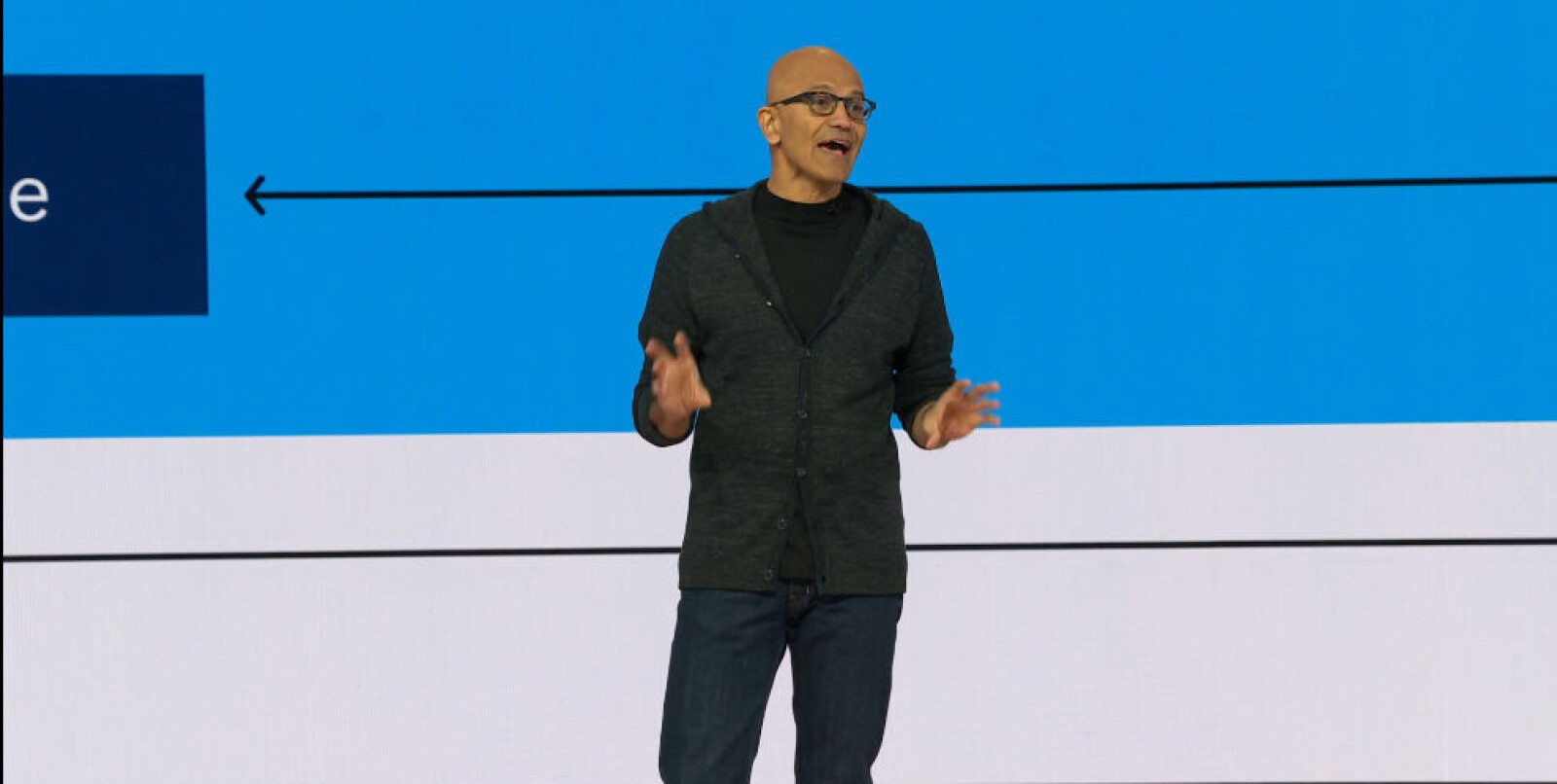
Grep — Global Regular Expression Print — is a staple for sifting through log files, searching codebases, and filtering pipeline outputs. In the pre-LLM era, it was a sysadmin power tool. Today, it's an agent primitive. Microsoft CEO Satya Nadella highlighted grep specifically during his Build keynote, calling it "now available for full Windows access." The phrasing is telling: grep isn't just a developer convenience anymore; it's infrastructure for retrieval-augmented generation (RAG) workflows, where agents need to pull contextually relevant snippets from sprawling file hierarchies.
The coreutils binary is built atop uutils, an open-source project that rewrites core Unix utilities in Rust for memory safety and cross-platform portability. Microsoft chose uutils in part because it's MIT-licensed — avoiding the GPL entanglements that spooked the Ballmer era — but also because Rust's type safety aligns with the company's broader push to harden Windows against supply-chain attacks and memory exploits. The result is native performance without the overhead of Cygwin or other POSIX emulation layers.
Not every Unix command made the cut. Tools like dd (byte-level copying) and permission-setters (chmod, chown, chgrp) are omitted because Windows uses ACLs rather than POSIX permission bits. A few legacy DOS commands — sort and find — were merged with their Linux counterparts so scripts can run unchanged across environments. But conflicts remain: commands like date and rmdir exist in both DOS and Unix flavors, and precedence depends on PATH order or PowerShell alias tables. Developers will need to audit scripts carefully, especially in mixed environments where both CMD and bash are invoked.
The Real Play: Making Windows Safe for Agentic Workflows
The coreutils release is a footnote to a larger strategy unveiled at Build: Microsoft Execution Containers (MXC), a policy layer for sandboxing AI agents inside Windows. MXC enforces containment rules — which files an agent can read, which APIs it can call, which network endpoints it can reach — and integrates with Azure Active Directory for identity-based access control. The framework is designed to address a warning Microsoft itself issued earlier this year about the security risks of running OpenClaw (an open-source agent orchestrator) unfettered on Windows.
By porting Unix commands natively, Microsoft ensures that agents can execute familiar shell scripts without breaking out of MXC's sandbox. An agent that needs to grep through terabytes of SharePoint logs or cat configuration files from multiple microservices can now do so using standard syntax, while MXC monitors every syscall. The alternative — running agents inside WSL or Docker — adds latency and complicates compliance, especially in regulated industries where data residency and audit trails are non-negotiable.
Microsoft also announced AutoPilots, a suite of pre-built OpenClaw-based agents for Office 365 that inherit the developer's permissions and run inside the tenant boundary. The first, Scout, operates within Microsoft Teams and can search email, calendar, and chat history to automate scheduling, follow-ups, and information retrieval. AutoPilots are long-running and autonomous, meaning they don't require a human in the loop for every action — but they're constrained by enterprise compliance guardrails, a direct response to concerns about agents exfiltrating sensitive data or triggering unintended workflows.
Edge Compute and the Ambient AI Bet
Microsoft Technical Fellow Steve Bathiche used Build to introduce Project Solara, a platform for "ambient computing" that distributes AI workloads across NPUs, GPUs, and CPUs at the edge. The pitch: rather than centralizing inference in the cloud, push lightweight models to laptops, tablets, and single-purpose devices, then orchestrate them via agents. Bathiche's framing — "the next computer is not one device, it is all these devices working together as one system" — echoes Anthropic's recent Claude Desktop Buddy blueprint, but with a Windows-first twist.
The economics are compelling for enterprises with large device fleets. Running inference on-device reduces API costs and latency, especially for tasks like transcription (MAI-Transcribe-1.5) or voice synthesis (MAI-Voice-2). But the operational challenge is coordination: how do you ensure an agent running on a field technician's Surface tablet can securely query a backend SQL database in Singapore, while respecting GDPR and logging every action for audit? This is where MXC and native Unix commands converge. An agent script that uses grep to filter local logs and curl to POST results to a regional API endpoint can now run identically on Windows, macOS, and Linux — and be policy-enforced at the OS level.
Microsoft also unveiled MAI-Thinking-1 (a reasoning model), MAI-Code-1-Flash (for code generation), and MAI-Image-2.5 (for image synthesis) — all in-house models designed to reduce reliance on OpenAI and Anthropic APIs. The subtext: enterprises wary of vendor lock-in can mix and match foundation models while keeping orchestration, security, and compliance inside the Microsoft stack. For developers in Jakarta or Hangzhou building vertical SaaS on Azure, this is a hedge against the risk that OpenAI's API pricing spikes or that Anthropic's rate limits throttle production workloads.
Why It Matters: The Shift from "Linux vs. Windows" to "Agents vs. Chaos"
A decade ago, Microsoft's Linux strategy was defensive — WSL was a concession to developers who threatened to abandon Windows entirely. Today, the posture is integrative. Linux is the dominant OS on Azure, and Microsoft ships its own distribution (Azure Linux) for container workloads. The coreutils release is less about winning over Linux purists than about eliminating friction for the 80 percent of enterprise developers who toggle between platforms daily and increasingly rely on agents to automate toil.
The risk is fragmentation. As more commands are ported, edge cases will proliferate: scripts that assume POSIX semantics will break when they hit Windows ACLs; PATH conflicts will cause silent failures; and debugging will require fluency in both DOS and Unix idioms. Microsoft's documentation acknowledges some of these tradeoffs but offers limited guidance on conflict resolution. For DevOps teams managing multi-cloud pipelines — say, a mixture of Azure VMs, AWS Lambda, and on-prem Windows Server — the operational burden of maintaining cross-platform scripts may actually increase, even as the surface area of compatibility expands.
The larger question is whether enterprises will trust agents to run unsupervised inside production environments, even with MXC's guardrails. Early adopters in financial services and healthcare have been cautious, citing concerns about agents misinterpreting ambiguous instructions or triggering cascading failures. Microsoft's bet is that by embedding agents inside familiar tools (Teams, GitHub, Office 365) and constraining them with enterprise IAM, it can thread the needle between autonomy and control. But as any Linux sysadmin knows, the real test of a tool isn't the demo — it's what happens when it's handed to Frank in accounting and the security team starts asking questions.
What Comes Next
Microsoft's Build announcements sketch a future where the command line is less a human interface than an agent API — a standardized surface for orchestrating tasks across heterogeneous compute. Grep, ls, and cat become the verbs of an agentic grammar, and Windows becomes just another runtime in a polyglot stack. Whether that future materializes depends on whether developers adopt MXC, whether AutoPilots prove reliable enough for mission-critical workflows, and whether enterprises can stomach the operational complexity of managing agents at scale.
For now, the 4.6MB coreutils binary is a signal: Microsoft has moved past the "not invented here" defensiveness of the Ballmer years and embraced a pragmatic polyglot stance. The question is whether that pragmatism extends to the messier realities of production — where agents misbehave, scripts fail silently, and grep is only as good as the logs it's searching.
The Unix philosophy was built on composability: small tools, loosely joined. The agent philosophy may prove to be composability at scale — or just chaos with better syntax highlighting. Either way, Windows is now part of the experiment.


