The Hunt for a Self-Setting Clock That Doesn't Spy on You
One engineer's quest for a bedside timepiece that syncs automatically, skips the app bloat, and sticks to classic seven-segment red LEDs.
A Quarter-Century Problem
The premise sounds absurdly simple: a bedside clock that sets itself, adjusts for daylight saving, and never drifts. Yet after another power outage forced yet another round of button-mashing to reset the time, the question became unavoidable. Why, in 2026, does this basic appliance still demand human babysitting?
For decades, the default has been a parade of seven-segment LED clock-radios, almost always red, almost always cheap, and almost always requiring manual intervention twice a year when the clocks change. They are reliable in the sense that they last, but fragile in the sense that a brief flicker in the grid wipes their memory clean. The ritual is familiar: hold down "TIME," jab the "HOUR" button, squint at the display, and hope you landed on the correct meridiem.
At DailyTechWire, we've tracked the steady miniaturization of radio receivers, the ubiquity of NTP servers, and the rise of connected-home devices that sync time automatically. The technology exists. The question is why it hasn't migrated into the humblest corner of the bedroom.
The Spec Sheet That Shouldn't Be Impossible
The requirements are narrow but non-negotiable. Automatic time-setting, ideally via radio signal or network sync. Drift correction to sub-second accuracy. Daylight saving adjustment that can be toggled on or off, depending on whether legislative efforts to abolish the practice ever succeed. A red seven-segment display, not the garish blue or white LEDs that have crept into recent designs. And crucially, no companion app that phones home to a cloud service, no account creation, no permission requests for location or contacts.
This last point is where the market splinters. The past five years have seen a wave of "smart" alarm clocks that bundle Bluetooth speakers, voice assistants, and app ecosystems. They sync time flawlessly, but they also collect usage data, require firmware updates, and stop working when the manufacturer loses interest. The trade-off is clear: convenience in exchange for a persistent data stream.
For someone who simply wants the correct time on a nightstand, the bargain feels lopsided.
Radio Clocks and the WWVB Problem
Radio-controlled clocks have existed for decades, relying on low-frequency time signals broadcast by national standards agencies. In the United States, that signal comes from WWVB in Colorado, a 60 kHz transmission that carries UTC offset and DST flags. Clocks equipped with a receiver can decode the signal overnight and adjust accordingly.
The technology is elegant and privacy-preserving, there is no internet connection, no app, no data exhaust. But WWVB coverage is inconsistent. Buildings with steel frames, basements, and urban interference can block the signal entirely. In parts of Asia, similar services exist, Japan's JJY and China's BPC, but adoption has been uneven. Europe's DCF77 enjoys better penetration, largely because the signal is stronger and the geography more forgiving.
Even when reception is good, radio clocks are often hobbled by poor industrial design. Many models default to blue or white displays, prioritize alarm features over timekeeping accuracy, or bury the DST toggle in a labyrinth of button combinations. The result is a product category that technically solves the problem but fails to deliver a satisfying user experience.
The Network Sync Alternative
Network Time Protocol offers a more reliable path. NTP clients can query time servers over the internet and adjust for drift with millisecond precision. Devices with Wi-Fi connectivity, smartphones, laptops, smart TVs, already do this without user intervention.
The challenge is bringing that capability to a bedside clock without dragging in the entire smart-home stack. A minimal implementation would require a Wi-Fi radio, an NTP client, and a real-time clock chip with battery backup. No app, no cloud account, no voice assistant. Just a one-time SSID and password entry, then silent operation.
A handful of niche manufacturers have attempted this. Some embed NTP sync into digital photo frames or weather stations, but the displays are often full-color LCDs with auto-dimming algorithms that never quite dim enough. Others bundle the feature into Bluetooth speakers, where the clock becomes an afterthought, small digits tucked into a corner of the faceplate.
The gap in the market is a standalone NTP clock with a large, red, segmented display and no extraneous features. It is a product that should exist but largely doesn't, at least not without importing gray-market units from Shenzhen or assembling one from a Raspberry Pi and a MAX7219 LED driver.
Why the Market Hasn't Delivered
The economics are straightforward. Clock-radios are low-margin commodities, and adding Wi-Fi or radio-sync hardware increases the bill of materials. For mass-market brands, the safer bet is to keep the design unchanged and sell on price. For premium brands, the safer bet is to add smart features, bundle a subscription service, and target the connected-home segment.
The customer who wants a self-setting clock with no app is a small, vocal minority. They are technically literate enough to understand NTP but uninterested in maintaining a smart-home ecosystem. They value privacy and longevity over feature lists. They are willing to pay a modest premium but not the $150-plus that boutique manufacturers charge for artisanal timepieces.
This demographic exists across Asia, North America, and Europe, but it is fragmented and hard to reach. There is no influencer ecosystem for bedside clocks, no review sites that move volume, no viral marketing channel. As a result, the product remains unbuildable at scale, or at least, unprofitable.
The DIY Route
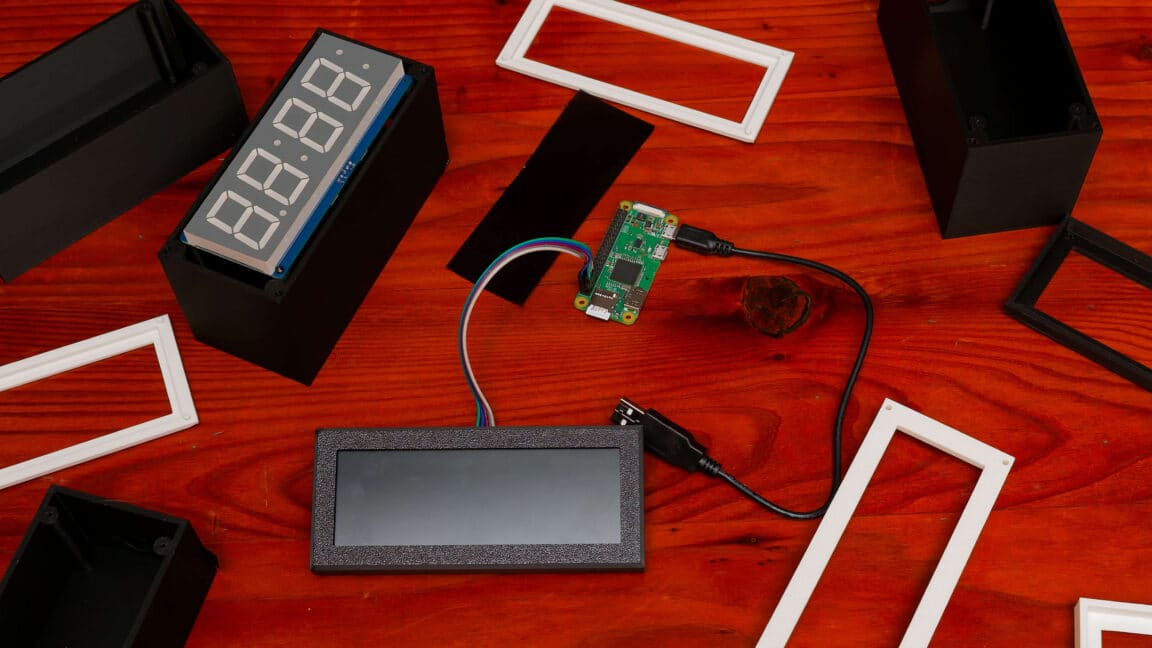
For those willing to solder, the solution is a weekend project. An ESP8266 or ESP32 microcontroller can fetch time from an NTP server, drive a TM1637 or MAX7219 LED module, and run for years on a wall adapter. The firmware is open-source, the components cost less than $15, and the result is a clock that does exactly what it is told, nothing more, nothing less.
The trade-off is time and skill. Flashing firmware, wiring a breadboard, and troubleshooting Wi-Fi credentials are trivial for someone with embedded-systems experience but daunting for someone who just wants a clock. The DIY path also lacks the fit and finish of a consumer product, exposed PCBs and loose wires do not belong on a nightstand.
Still, the existence of a thriving maker community around NTP clocks suggests latent demand. GitHub repositories for clock projects accumulate stars, forum threads on time-sync troubleshooting run for pages, and Etsy sellers offer hand-assembled units at markup. The market is there, it is just too small or too scattered for incumbents to notice.
What Comes Next
The clock problem is a microcosm of a broader tension in consumer electronics. As devices become smarter, they also become more complex, more connected, and more interested in their owners. The trade-offs, cloud sync for loss of local control, app convenience for data sharing, are often invisible until something breaks or a service shuts down.
For bedside clocks, the stakes are low. No one's livelihood depends on whether their alarm adjusts for daylight saving automatically. But the frustration is real, and it points to a category of products that could exist, simple, reliable, private, but currently don't, because the incentives don't align.
If legislative efforts to abolish daylight saving time succeed, the problem may solve itself, or at least shrink. Until then, the hunt continues for a clock that knows what time it is, without needing to know anything else.