Meta Stands Alone Among Frontier Labs as Pre-Release Review Talks Stall
While OpenAI, Anthropic, Google, xAI and Microsoft have begun submitting unreleased models to the Commerce Department's new review unit, the Menlo Park company remains the only major developer yet to join the voluntary program.
The Odd Lab Out
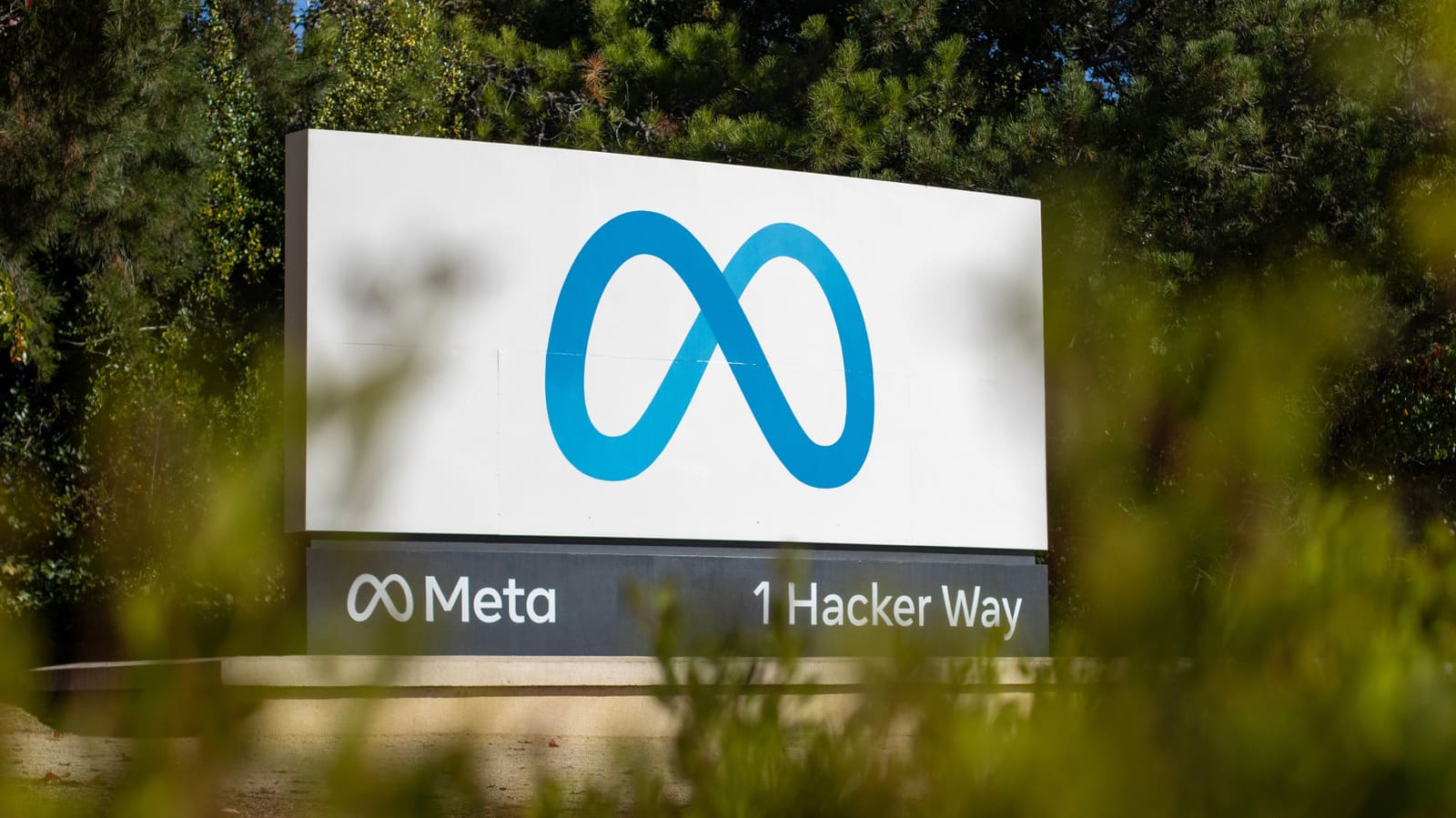
Meta has become the conspicuous outlier in Washington's push to evaluate frontier artificial intelligence models before public release. While OpenAI, Anthropic, Google, xAI and Microsoft have each begun sharing unreleased systems with federal reviewers, the Menlo Park social media giant has yet to finalize an agreement, leaving it as the only major developer outside the voluntary pre-release review process now taking shape inside the Commerce Department.
The delay is drawing attention at a moment when the White House is racing to formalize a thirty-day evaluation window for new models. Under an executive order signed earlier this month, agencies have until the end of July to finalize procedures that would give government experts up to a month to probe capabilities and identify security flaws before a model reaches the public. The framework is voluntary for now, but the fact that every large lab except Meta has already begun participating suggests the program carries enough weight to shape release calendars across the industry.
Meta spokesperson Francis Brennan said the company shares the administration's goals around American leadership in secure AI and expects to sign an agreement soon, noting that teams are working through details. Yet the gap between Meta's public position and its rivals' actions is widening. OpenAI and Anthropic have been submitting pre-release builds for months, while Google, xAI and Microsoft committed to early access arrangements with the Center for AI Standards and Innovation, the specialized unit Commerce Secretary Howard Lutnick now leads. That center, staffed with technical experts drawn from academia and industry, was established during the Biden administration and has continued to operate under the current White House.
Why the Holdout Matters
At DailyTechWire, we have tracked the evolution of AI safety infrastructure across the US, EU and Asia-Pacific for the past eighteen months, and the emergence of a pre-release review regime marks a significant shift in how governments engage with frontier labs. Unlike post-deployment audits or incident response, early access allows regulators to map model behavior before it propagates into millions of user sessions, third-party integrations and fine-tuned derivatives. The thirty-day window is designed to catch dual-use risks, from advanced phishing and exploit generation to biological research assistance that might lower barriers to harm.
Meta's absence from this cohort is especially notable because the company has positioned itself as a champion of open-weight models, releasing Llama iterations under permissive licenses that allow developers worldwide to download, modify and deploy the underlying weights. That openness has won praise from researchers who value reproducibility and access, but it also means that once a Meta model is public, controlling downstream use becomes nearly impossible. Pre-release review offers one of the few levers governments have to assess such systems before they diffuse beyond regulatory reach.
The company released its latest flagship, Muse Spark, in April. Muse Spark ships with two inference modes: Instant, which prioritizes speed, and Thinking, which allocates additional compute to chain-of-thought reasoning for more thorough responses. While Muse Spark does not match the raw benchmark performance of the most capable closed models from OpenAI or Anthropic, its reasoning mode and open-weight lineage make it a significant artifact in the broader landscape of large language model deployment.
The Regulatory Calendar and National Security Precedent
The executive order signed on June 2 set a tight timeline. Agencies must finalize evaluation procedures by the end of July, a deadline that leaves little room for negotiation if companies hope to influence the shape of the review process. The voluntary nature of the program is a deliberate choice, reflecting the administration's preference for industry cooperation over hard mandates, at least in the near term. But cooperation requires trust, and trust requires transparency about what reviewers will examine, how long evaluations will take, and what happens if a model is flagged.
Meta's hesitation may stem from uncertainty about those details. The Center for AI Standards and Innovation is new, its staff still ramping up, and the protocols for handling proprietary model weights, training data provenance and inference infrastructure remain in flux. For a company that ships open-weight models, the risk of leaks or unintended disclosures during review could outweigh the reputational benefit of early participation.
Yet the stakes extend beyond reputation. In mid-June, the government ordered Anthropic to suspend access to its Mythos 5 and Fable 5 models for all foreign nationals, citing national security concerns. Anthropic chose to block access entirely while it worked to ensure compliance. Mythos 5 is the latest iteration of Anthropic's cybersecurity-focused AI, available exclusively to partners in Project Glasswing, a closed collaboration focused on offensive and defensive security research. Fable 5 was designed to bring a subset of Mythos capabilities to a broader audience, though Anthropic described it as less powerful than the restricted version.
The Anthropic suspension illustrates how quickly model access can become a matter of export control and national security classification. For frontier labs, voluntary pre-release review may serve as a form of regulatory insurance, a way to surface concerns before a model triggers a post-hoc restriction that disrupts users and partnerships.
The Pressure on Meta
Meta is now receiving direct requests from the government to participate in the review process, delivered via email to senior executives and policy leads. The company has not publicly disclosed the content of those messages, but the pattern of outreach suggests that Commerce and White House officials view Meta's participation as essential to the credibility of the broader program. If the largest open-weight developer remains outside the tent, the voluntary framework risks being dismissed as a club for closed-model providers with less to lose from sharing early builds.
There is also a competitive dimension. If Meta delays while rivals gain experience navigating the review process, those competitors will have a clearer sense of how to design models that pass muster, what red lines trigger deeper scrutiny, and how to structure release timelines around the thirty-day evaluation window. That knowledge asymmetry could translate into faster iteration cycles and smoother launches for labs that engage early.
Meta's open-weight philosophy complicates its calculus. Once Llama or Muse weights are published, third parties can fine-tune them for tasks the original developers never intended, from multilingual misinformation to automated reconnaissance. Pre-release review cannot prevent such downstream misuse, but it can surface base-model capabilities that merit additional safeguards or documentation before weights leave Meta's control. The question is whether Meta sees value in that surface-level scan, or whether the company believes its internal red-teaming and responsible AI processes already cover the ground that government reviewers would tread.
What Comes Next
The end of July deadline is less than five weeks away. If Meta signs an agreement in the coming days, it will have time to submit Muse Spark or a successor model for review and help shape the norms that will govern evaluations for the next generation of systems. If the company continues to negotiate past the deadline, it risks being seen as uncooperative at a moment when AI policy is hardening across multiple jurisdictions.
Europe's AI Act has entered force, with tiered obligations for general-purpose models and high-risk applications. China's Cyberspace Administration requires algorithm filings and security assessments for recommendation systems and generative models. Singapore's Model AI Governance Framework is being piloted by banks and cloud providers across Southeast Asia. The US pre-release review program, voluntary though it may be, is part of a global turn toward proactive oversight, and the labs that help design these processes will have more influence over their final form than those that wait on the sidelines.
For Meta, the decision is not merely technical. It is a bet on how much autonomy frontier developers will retain in the years ahead, and whether collaboration with regulators today can preserve flexibility tomorrow. The other major labs have placed their bets. Meta's answer will clarify whether the open-weight model, in both the technical and strategic sense, can coexist with the emerging architecture of AI governance, or whether openness and oversight will continue to pull in opposite directions.