GrapheneOS to Expand Beyond Pixel With First Motorola Rollout
The privacy-focused Android fork plans official support for Motorola flagships and foldables in 2025, marking its first major expansion beyond Google hardware.
Breaking the Pixel Lock
For years, GrapheneOS has occupied a peculiar niche in the Android ecosystem: a security-first operating system trusted by privacy advocates and threat-model-conscious users, yet confined almost exclusively to Google's own Pixel hardware. That's about to change. The GrapheneOS Foundation announced plans to bring official support to Motorola smartphones beginning in 2025, marking the project's first substantial expansion beyond its Pixel stronghold.
The move represents a calculated bet that demand for de-Googled mobile operating systems extends beyond the self-hosting crowd willing to flash ROMs onto discounted Pixel 7a units. At DailyTechWire, we've tracked growing interest across Asia in sovereignty-conscious mobile platforms, from India's regulatory pushback on pre-installed apps to South Korea's enterprise deployments of hardened Android forks. Motorola's return to flagship competitiveness, particularly in markets like India and Latin America, makes it a logical second platform.
Rollout Strategy: Flagships First, Foldables Later
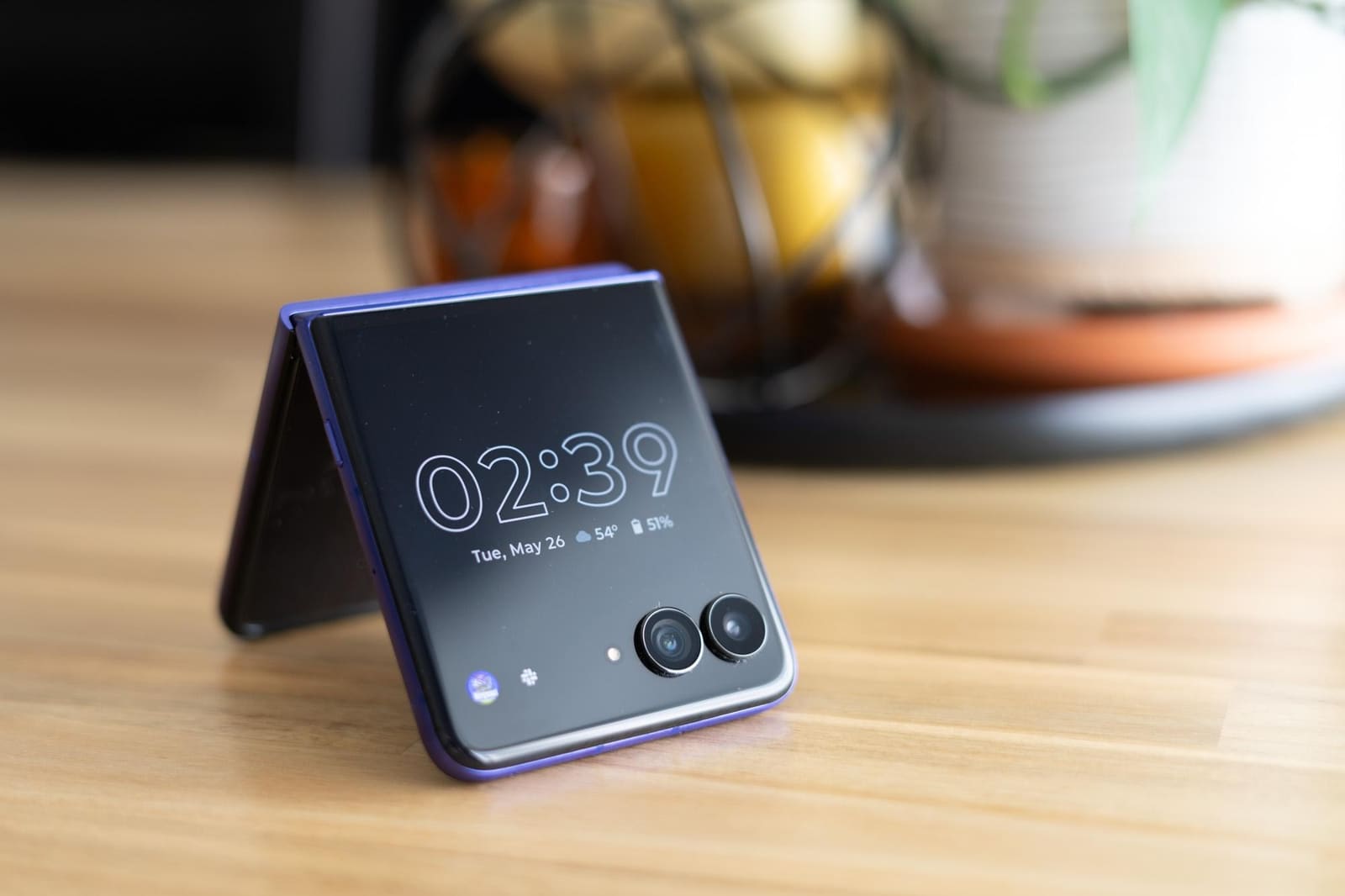
According to the foundation's announcement on Mastodon, GrapheneOS will initially target a Motorola slab-style flagship device. The timeline points to a 2025 launch, though specific model names remain unconfirmed. Following that debut, support will extend to two foldable lines: the Razr Fold (Motorola's book-style folder) and the Razr Ultra, a clamshell flip phone.
The Razr Ultra support carries particular weight. If executed, it would be the first time GrapheneOS runs officially on a flip-form-factor device, a category that has seen renewed momentum in Asia. Samsung dominates the foldable segment, but Motorola has carved out share in price-sensitive markets where the Razr Ultra's sub-$800 positioning undercuts Galaxy Z Flip models by hundreds of dollars.
The foundation also hinted at possible support for more affordable Motorola devices down the line, though it offered no commitments. That cautious phrasing reflects GrapheneOS's historical reluctance to compromise on hardware security baselines. Not every Android device ships with the Titan M-class secure elements and verified boot chains that GrapheneOS has relied on in Pixel hardware.
Why Motorola, Why Now
Motorola's hardware has evolved considerably since its Lenovo acquisition. Recent flagships ship with relatively clean software, minimal bloatware, and importantly, unlockable bootloaders on many SKUs, a prerequisite for third-party OS installation. The company has also committed to longer security update windows, narrowing the gap with Pixel and Samsung.
But the real catalyst may be geopolitical. Motorola's manufacturing and supply chain diversification, particularly its assembly operations in India and Brazil, positions it as a lower-risk hardware choice for users wary of US-China tech decoupling. GrapheneOS users tend to think in terms of threat models, and hardware provenance is part of that calculus.
There's also a practical angle. Pixel availability remains spotty across much of Asia, Africa, and Latin America. Google sells Pixels in fewer than 20 countries, leaving users in the Global South either importing gray-market devices or forgoing GrapheneOS entirely. Motorola's distribution footprint is far wider, especially in India, where it ranks among the top five smartphone vendors by volume.
The Security Trade-Off
GrapheneOS has built its reputation on uncompromising security standards. It requires hardware-backed attestation, verified boot, and regular firmware updates directly from the device manufacturer. Extending support to Motorola means trusting Motorola's firmware release cadence and security patching discipline, both of which lag behind Google's in-house Pixel operation.
The foundation has not yet detailed which Motorola chipsets it will support. Qualcomm's Snapdragon 8-series SoCs include Secure Processing Units and hardware-backed key storage, but implementation quality varies by OEM. Motorola's track record on firmware updates has improved, but it still trails Pixel's near-monthly patch rhythm.
This represents a calculated risk. GrapheneOS could insist on Pixel-only support indefinitely, preserving maximum control but limiting its user base to a few million devices globally. Or it can expand to hardware partners with acceptable but not perfect security postures, trading some theoretical attack surface for real-world reach. The Motorola expansion suggests the project is choosing scale.
Foldables and the Privacy Paradox
The decision to support foldables is both practical and symbolic. Foldable displays are rapidly normalizing in Asia; China's foldable shipments exceeded 5 million units in 2024, according to industry estimates, and the form factor is gaining traction in South Korea and Japan. Yet foldables have also attracted scrutiny over hinge-related vulnerabilities and the difficulty of applying screen protectors, a staple of physical security hygiene.
GrapheneOS on a flip phone like the Razr Ultra also invites questions about user intent. Flip phones skew toward fashion-conscious buyers and users seeking digital minimalism, not typically the Venn diagram overlap with users who compile their own OS builds. But there's a growing contingent interested in privacy without asceticism, users who want encrypted messaging and minimal data collection but aren't willing to sacrifice hardware design or camera quality. A GrapheneOS-powered Razr Ultra could appeal to that emerging segment.
What This Means for the Alternative OS Landscape
GrapheneOS is not alone in the de-Googled Android space. LineageOS supports hundreds of devices but prioritizes breadth over security hardening. CalyxOS, another privacy-focused fork, already runs on select Motorola and Fairphone models, though its security model is less stringent than Graphene's. /e/OS, backed by the European Murena project, targets mainstream users with pre-installed devices sold commercially.
The Motorola expansion puts GrapheneOS in more direct competition with these alternatives, particularly CalyxOS. Both projects target similar user bases, overlapping communities on Signal, Matrix, and Mastodon where threat modeling and open-source licensing are everyday topics. Differentiation will come down to security posture, update velocity, and device support breadth.
There's also a commercial angle. Murena sells phones with /e/OS pre-installed, turning alternative Android into a retail product. GrapheneOS has avoided that model, remaining a community-driven project with no commercial hardware sales. If Motorola devices prove popular, pressure may mount for a similar direct-to-consumer channel, either through the foundation or a third-party vendor.
Open Questions
The announcement leaves several key details unresolved. The foundation has not specified which Motorola flagship will receive support first, nor has it committed to a precise launch quarter in 2025. Motorola's 2025 flagship roadmap remains under wraps, though leaks suggest a Snapdragon 8 Gen 4-powered Edge device and refreshed Razr models are in development.
Equally unclear is how GrapheneOS will handle Motorola's firmware binaries. Pixel devices benefit from Google's open-source firmware components and well-documented factory images. Motorola's firmware is less transparent, and the company has historically been slower to publish kernel sources and binary blobs. GrapheneOS will need either closer collaboration with Motorola or more reverse-engineering work to maintain its security guarantees.
Finally, there's the question of user demand. GrapheneOS installations number in the tens of thousands, not millions. Expanding to Motorola hardware could grow that base significantly, but only if the target audience exists. Privacy-focused users in India, Brazil, and Indonesia represent a potential growth market, but converting mainstream Motorola buyers into GrapheneOS flashers is a different challenge entirely.
The Motorola expansion signals that GrapheneOS is maturing from a niche Pixel mod into a broader privacy platform. Whether it can maintain its security principles while scaling to new hardware partners will define the next chapter of the project.