Google Closes the Hardware Gap with Pixel 11 Pro, but Samsung Keeps Its Edge
Two years of Tensor evolution and aggressive display specs bring Google within striking distance of the Galaxy S26 Ultra, yet the price delta tells a more complicated story.
A Narrower Race Than Ever
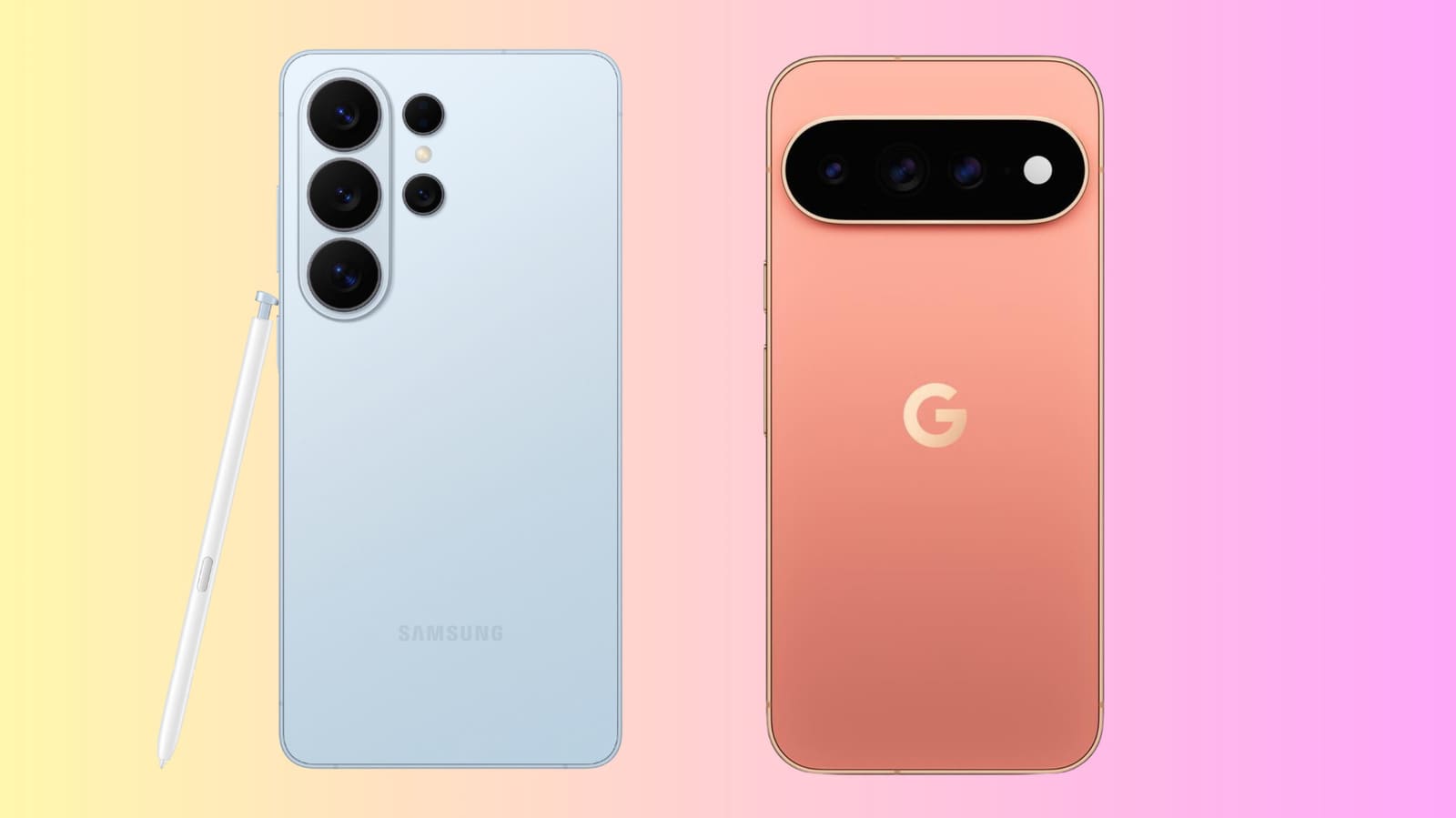
Google's Pixel 11 Pro and Pro XL arrived in mid-August, and for the first time in the flagship Android race, the hardware conversation no longer tilts overwhelmingly in Samsung's favor. The Galaxy S26 Ultra still commands attention with its 6.9-inch display, Snapdragon 8 Elite Gen 5 silicon, and a camera array that throws megapixels at every focal length. But Google has closed gaps that once felt insurmountable, particularly in display brightness, battery capacity, and charging infrastructure.
The Pixel 11 Pro starts at under $1,100 for 256GB, while the larger Pro XL and the S26 Ultra both sit at $1,300 for the same storage tier. That $200 spread matters, especially when the smaller Pixel delivers most of the Pro XL experience in a more pocketable form. At DailyTechWire, we've tracked Google's Tensor roadmap since its first generation, and the G6 chip inside the Pixel 11 series represents the sharpest year-over-year leap yet, with Google claiming 20 percent better power efficiency and 50 percent more neural processing capacity for on-device AI tasks.
Whether that closes the performance gap with Qualcomm's flagship silicon remains an open question. Historically, Tensor has trailed in raw compute and GPU benchmarks, a trade-off Google has accepted in exchange for tighter integration with its machine learning stack. The Pixel 11 Pro and Pro XL ship with 12GB of RAM in the 256GB and 512GB configurations, and 16GB in the 1TB variant. Samsung mirrors those specs exactly on the S26 Ultra, a rare moment of parity in a category where memory allocation often separates tiers.
Display Tech: Brightness Wars and Privacy Tricks
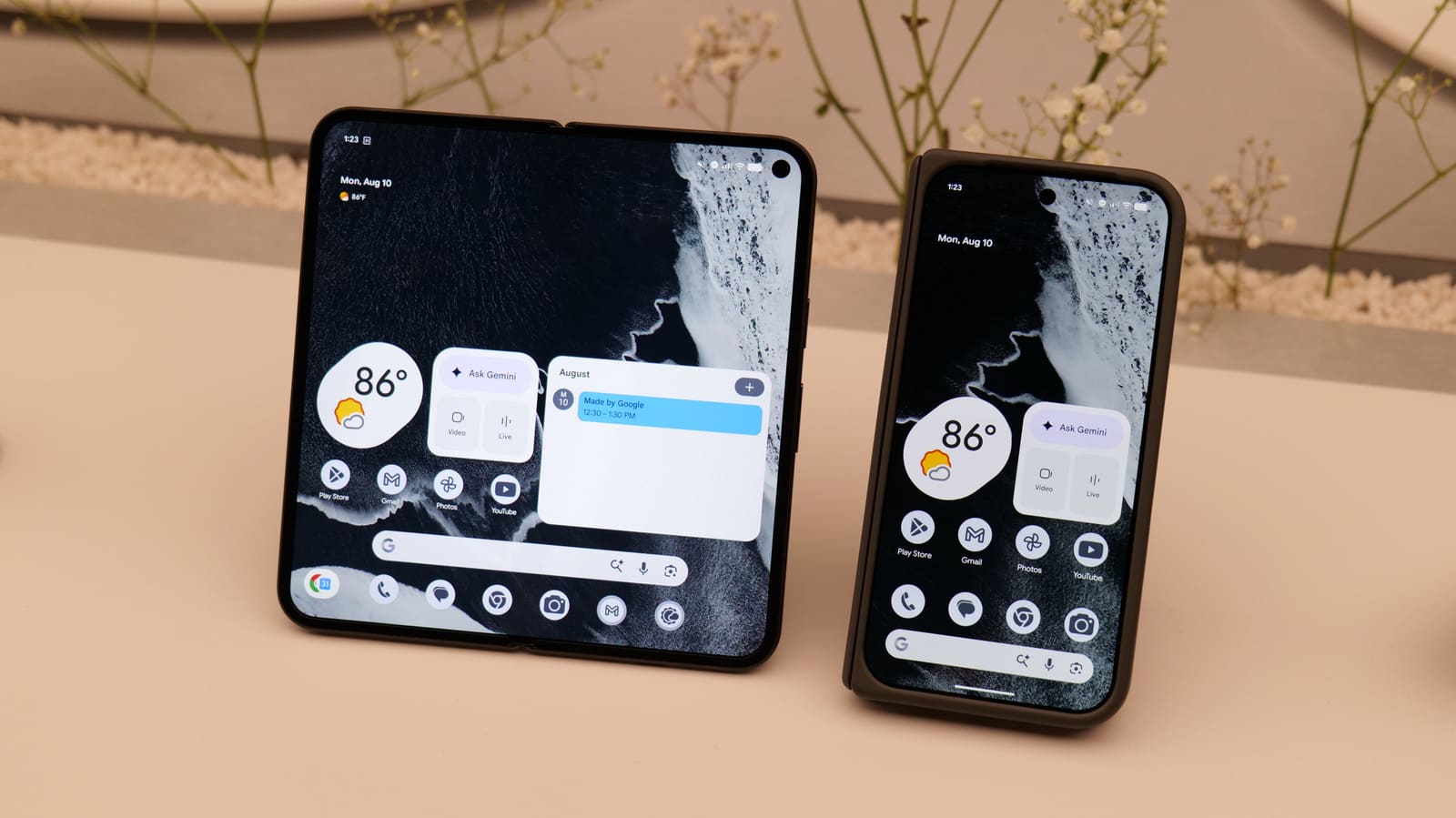
Samsung has long held the crown in mobile display technology, and the S26 Ultra's 6.9-inch LTPO AMOLED panel delivers a 1440 by 3,120 resolution, 120Hz adaptive refresh, and 2,600 nits of peak HDR brightness. But Google has leapfrogged Samsung on brightness alone. The Pixel 11 Pro's 6.3-inch screen hits 3,600 nits at peak, as does the Pro XL's 6.8-inch panel. Both use LTPO OLED tech with 120Hz refresh, though their resolutions (1,280 by 2,856 and 1,344 by 2,992, respectively) fall slightly short of Samsung's pixel density.
The S26 Ultra's standout feature remains its Privacy Display, a narrow-angle pixel arrangement that blacks out the screen when viewed from the side. It's a party trick with real utility for anyone who works in open offices or crowded transit, though it does cap maximum brightness in that mode. The S Pen stylus still ships with the Ultra, minus the Bluetooth radio Samsung stripped out last generation. For note-takers and PDF annotators, it remains a differentiator, even if the feature set has stagnated.
Battery and Charging: Google Embraces Qi2
Battery capacity and charging speeds have converged in ways that would have been unthinkable two years ago. The S26 Ultra carries a 5,000mAh cell with 60W wired charging, up from 45W on prior models, and 25W wireless charging. The Pixel 11 Pro packs a 4,850mAh battery with 30W wired speeds, while the Pro XL gets 5,115mAh and 45W wired. Google rates both Pixels for 30 hours of mixed use, a claim that will need real-world validation.
More interesting is Google's embrace of Qi2, the magnetic wireless charging standard that Apple popularized with MagSafe. Both Pixel 11 Pro models include what Google calls PixelSnap, its branding for built-in Qi2 magnet rings, and both support the latest Qi2.2 spec at 25W wireless charging. Samsung, by contrast, requires a compatible case to achieve magnetic alignment, a half-step that feels out of character for a company usually eager to own the accessory ecosystem.
Camera Philosophy: Megapixels vs Machine Learning
Camera hardware has always been a philosophical divide. Google leans on computational photography, using smaller sensors and aggressive software processing to punch above its weight class. Samsung throws silicon at the problem, betting that more megapixels and more lenses give users more flexibility.
The Pixel 11 Pro and Pro XL share identical camera arrays: a 50MP wide sensor, 48MP ultrawide, and 48MP telephoto with 5x optical zoom. Google's new Pro Zoom feature claims 120x digital magnification, a number that sounds more like a dare than a specification. The S26 Ultra counters with a 200MP main sensor, 50MP ultrawide, 50MP periscope at 5x optical, and a 10MP telephoto at 3x. Samsung's Space Zoom tops out at 100x, slightly behind Google's headline figure.
Which setup produces better images will come down to processing pipelines and the specific shooting scenarios users care about. Google has historically excelled in low light and portrait mode, while Samsung's hardware gives it an edge in bright daylight and situations where cropping flexibility matters. Both camps now lean heavily on AI for image enhancement, noise reduction, and scene optimization, which makes side-by-side testing the only reliable arbiter.
Software Divergence: AI Automation vs Customization Depth
If hardware has converged, software remains a study in contrasts. Google's Pixel UI on Android 17 is built around Gemini, the company's large language model, which now powers features that sound either liberating or dystopian depending on your tolerance for delegation. Gemini can now place phone calls on your behalf, displaying a live transcript and letting you jump in at any moment. It can also operate apps directly, ordering food or booking rides without manual input.
Magic Capture, a new camera mode, records short video clips and uses AI to select the best frames, applying automatic cropping and deblurring. Circle to Search, previously limited to screen content, now works through the camera viewfinder, letting users point at objects to trigger Google searches. The most intriguing addition is HiLight, an LED array embedded in the camera bar that pulses with notifications and Gemini activity. At launch, it only responds to calls from favorite contacts and AI interactions, but the potential for user customization could revive the notification LED culture that Android abandoned in the 2010s.
Samsung's One UI 8.5 on the S26 Ultra takes a different path, prioritizing user control over automation. The Quick Settings panel is now fully customizable, with resizable toggles and sliders. The lock screen adapts its clock design to wrap around wallpaper elements, a small touch that adds personality without demanding AI infrastructure. Audio Eraser, improved in this generation, can strip background music from video recordings or suppress wind noise on calls in real time. Live interpreter, which translates conversations on the fly, has matured enough to handle complex interactions, a feature that becomes indispensable once you've relied on it.
Samsung's ecosystem integration remains a selling point for users deep in the Galaxy fold. Storage Sense lets you browse file systems on other Samsung devices remotely. Music Share allows friends to hijack your Bluetooth connection for collaborative playlists. DeX, Samsung's desktop environment, turns the phone into a productivity machine when connected to an external monitor, a use case that still has no real equivalent in Google's software stack.
The Pricing Equation
At $1,100, the Pixel 11 Pro offers the most compelling value proposition in the premium Android segment, assuming you can live with a 6.3-inch screen and slightly smaller battery. The Pro XL and S26 Ultra both land at $1,300, but the Samsung includes the S Pen and a processor that will almost certainly outpace the Tensor G6 in sustained workloads and gaming scenarios.
For users who value immediate Android updates and early access to Google's AI experiments, the Pixel remains the obvious choice. For those who want maximum customization, stylus input, and the deepest feature set, Samsung's ecosystem advantages are hard to ignore. The hardware gap has closed, but the software philosophies remain far apart, and that divergence is likely what will drive purchase decisions more than any spec sheet comparison.
What This Means for the Android Landscape
Google's role in the Android ecosystem has always been more than just another OEM chasing market share. Pixel devices set the baseline for what Android can be, and third-party developers often optimize for Pixel hardware first. The Pixel 11 Pro's aggressive display specs and Qi2 adoption signal where Google believes the industry should head, and it's a safe bet that other manufacturers will follow within a generation or two.
Samsung, meanwhile, continues to define the premium Android experience for the mass market. The S26 Ultra's Privacy Display and S Pen remain exclusive, and the company's willingness to iterate on One UI without chasing every AI trend suggests confidence in its user base. The fact that Google has finally built hardware competitive enough to make this a legitimate comparison is the real story. Whether that translates into market share gains for Pixel or simply forces Samsung to sharpen its next move will become clear as the second half of 2026 unfolds.