Google Rolls Out AI Disclosure Controls for Advertisers, With a Catch
The company's new My Ad Center transparency feature will flag AI-generated ads automatically - but only when Google's own tools are involved.
A New Layer of Transparency
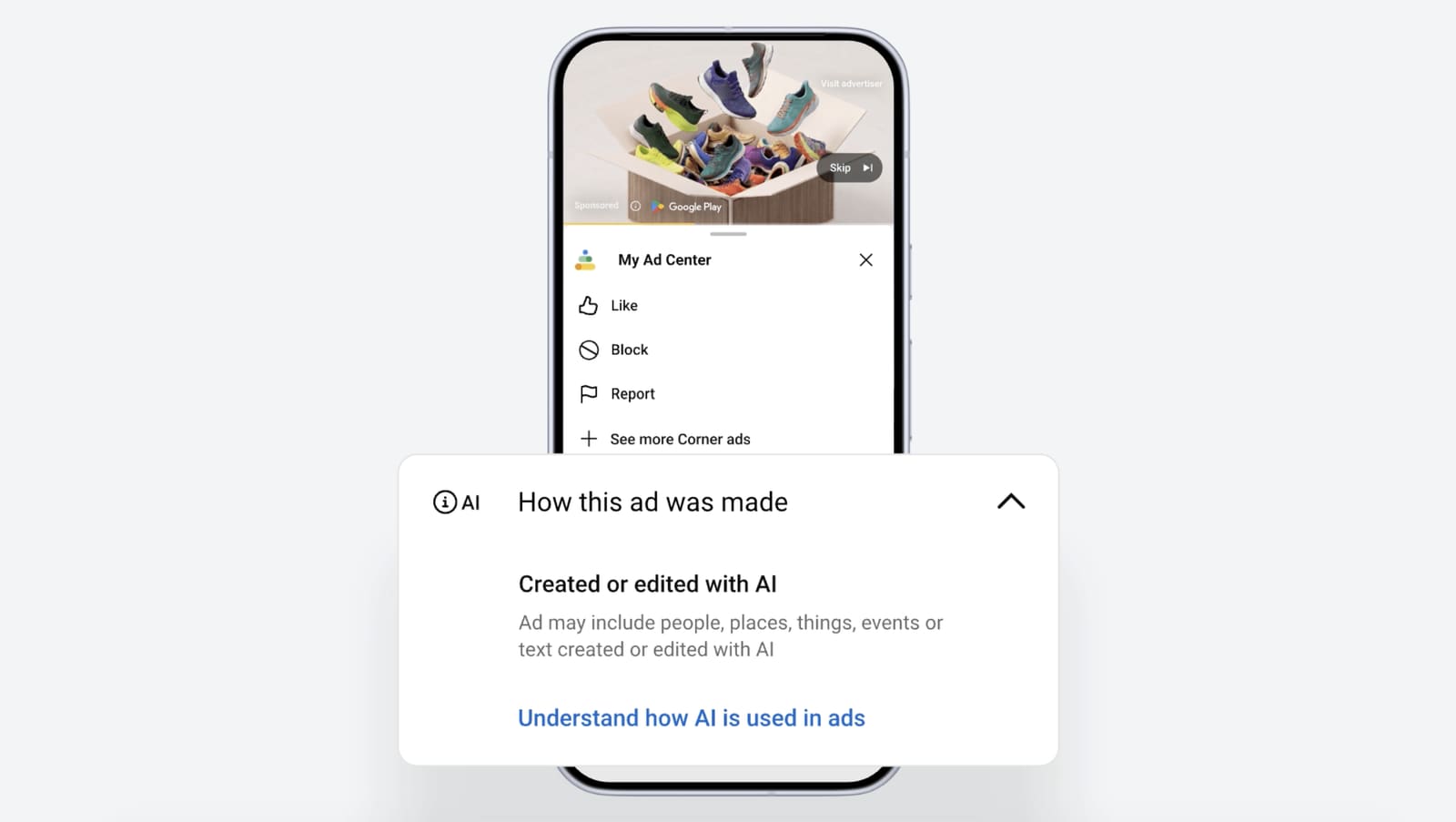
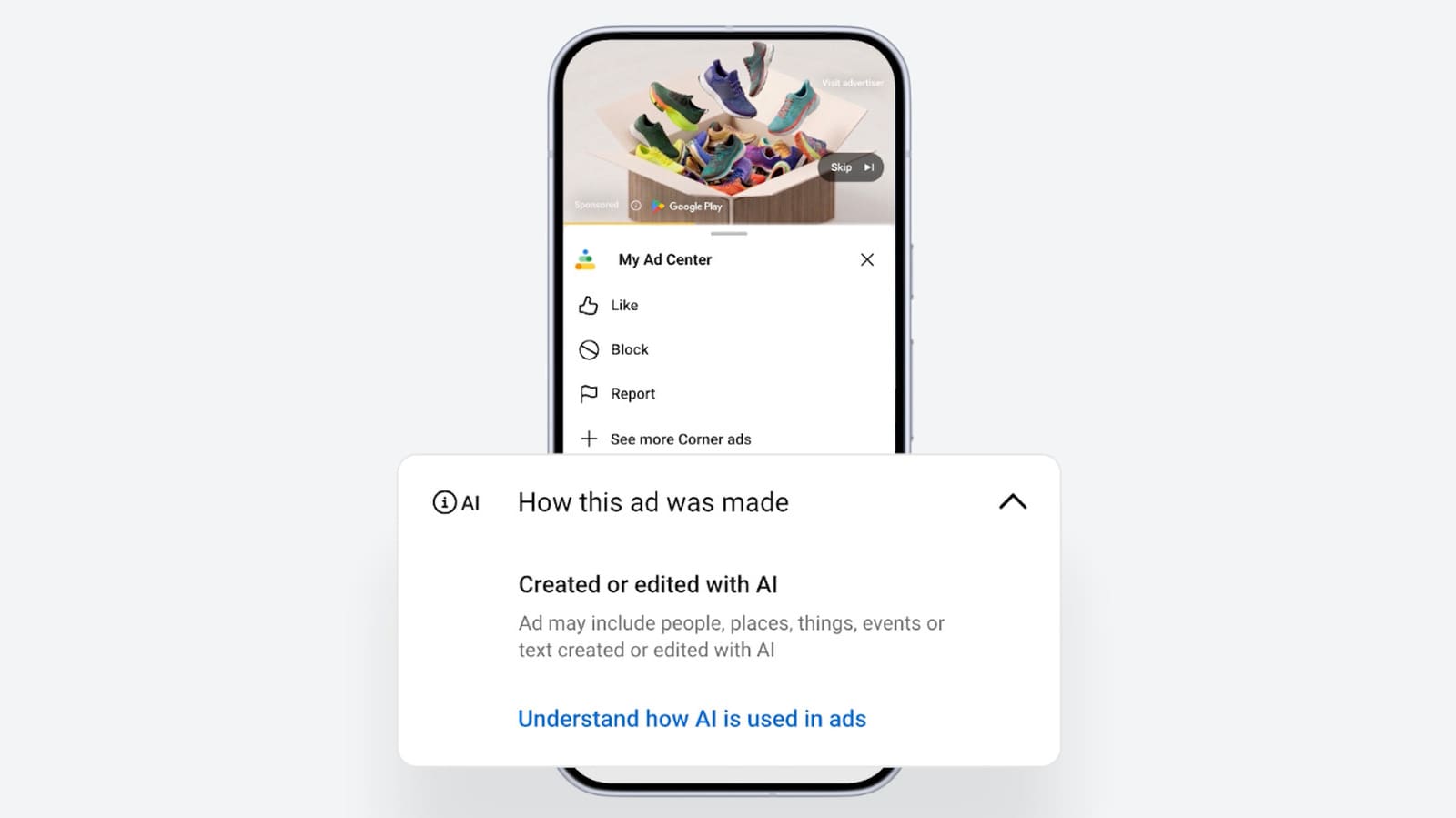
Google has introduced a disclosure mechanism for advertisements created or modified with generative AI, rolling out a "How this ad was made" section within its My Ad Center interface. The feature is now live across Search, YouTube, and Discover properties worldwide, marking one of the first platform-wide attempts to surface AI involvement in commercial content at scale.
The implementation reveals a two-tier approach. When advertisers use Google's native AI tools to produce or alter creative assets, the system will automatically append a disclosure to the ad's information panel. No action is required from the brand. But when third-party generative models are involved, the responsibility shifts: brands must manually toggle a control to indicate AI use. Google's announcement describes this as an available option rather than a mandatory requirement, a distinction that could matter as regulatory scrutiny around synthetic media intensifies.
The Opt-In Problem
The voluntary nature of third-party AI disclosure introduces a gap in the transparency framework. Advertisers who deploy models from Anthropic, Midjourney, Runway, or any non-Google provider can choose whether to flag that use. There is no enforcement mechanism described in Google's rollout, and no penalty outlined for omission. In practice, this means the "How this ad was made" panel will offer a complete picture only when Google's own infrastructure is in the creative pipeline.
This asymmetry is not trivial. At DailyTechWire, we've tracked the rapid adoption of third-party generative tools across Asia-Pacific advertising markets, particularly in e-commerce and direct-response campaigns. Brands in Jakarta, Bangkok, and Manila have increasingly turned to open-weight models and API-based image generators to localize creative at speed. If disclosure remains opt-in for these workflows, the transparency initiative risks becoming a selective audit rather than a comprehensive standard.
Regional Variation and Regulatory Pressure
Google notes that in certain jurisdictions, enabling the AI disclosure toggle may trigger a visible label on the ad itself, not just in the backend panel. The company did not specify which regions fall under this rule, but the phrasing suggests alignment with emerging regulatory frameworks in the European Union, where the AI Act mandates disclosure of synthetic content in commercial contexts, and in parts of East Asia where consumer protection agencies have begun to scrutinize algorithmically generated marketing materials.
South Korea's Fair Trade Commission, for instance, has signaled interest in rules that would require clear labeling of AI-manipulated product imagery, particularly in beauty and fashion verticals where post-production editing has long blurred the line between representation and reality. Singapore's Advertising Standards Authority has similarly floated guidance around synthetic endorsements. Google's regional carve-out appears designed to accommodate these varied requirements without imposing a single global standard, a pragmatic but potentially fragmented approach.
Why Disclosure Matters for Ad Integrity
Transparency around generative AI in advertising is not merely a matter of technical provenance. It touches on material accuracy. When a product photograph has been altered by a diffusion model to smooth textures, adjust lighting, or remove blemishes, the resulting image may no longer reflect what a buyer will receive. When a testimonial video features a synthetic voice or a deepfake likeness, the authenticity of the endorsement is in question. These are not edge cases. They are increasingly common techniques in performance marketing, where speed and cost efficiency drive creative production.
The "How this ad was made" panel is a step toward surfacing that manipulation, but its effectiveness hinges on completeness. If only a subset of AI use is disclosed, the feature risks becoming a trust signal that is selectively applied, undermining its credibility. Buyers may assume that ads without a disclosure were created without AI, when in fact they were simply created with non-Google tools and the brand chose not to flag it.
What Advertisers Should Expect
For brands running campaigns through Google Ads, the automatic disclosure for Google-native AI tools means no additional workflow overhead. Creative teams using tools like Google's Product Studio, which generates and edits product imagery, or AI-powered video extensions in YouTube campaigns, will see disclosures appended without manual input. This is the cleanest implementation of the policy.
For brands using external tools, the calculus is different. Opting in to disclosure may invite scrutiny or questions from consumers about the authenticity of creative assets. Opting out avoids that friction but leaves the brand exposed if regulatory expectations shift or if competitors use disclosure as a differentiation point. In markets where AI skepticism runs high, particularly in financial services and healthcare, voluntary disclosure may become a competitive liability rather than a trust-building gesture.
The Broader Industry Context
Google's move follows similar efforts by Meta, which introduced AI labeling for images on Facebook and Instagram earlier this year, and by TikTok, which has experimented with watermarks for AI-generated content in creator videos. None of these systems are interoperable. Each platform defines AI use differently, applies disclosure rules selectively, and leaves enforcement largely to user reports or automated detection. The result is a patchwork of transparency mechanisms that vary by platform, region, and content type.
Industry groups including the Interactive Advertising Bureau and the World Federation of Advertisers have called for standardized disclosure frameworks, but progress has been slow. The challenge is not technical - metadata standards like C2PA already exist to embed provenance information in digital media - but political. Platforms are reluctant to impose requirements that might slow creative workflows or disadvantage their ad products relative to competitors. Advertisers are wary of disclosure mandates that could complicate global campaigns or expose proprietary production methods.
What Comes Next
Google's announcement positions the company as responsive to transparency concerns without committing to enforceable standards. The automatic disclosure for its own tools is a clear win for users. The opt-in model for third-party tools is a hedge, preserving advertiser flexibility while signaling openness to regulation. Whether this balance holds will depend on how regulators in key markets respond and whether competing platforms adopt similar or stricter measures.
For now, the "How this ad was made" panel is live, and advertisers have a decision to make. In regions where disclosure is becoming table stakes, opting in early may be the safer path. In markets where AI use remains largely invisible, the temptation to stay silent will be strong. The disclosure control is available. How widely it gets used will reveal whether transparency in AI advertising is a principle or a preference.