Form Energy Secures $750 Million to Scale Iron-Air Battery Production
The West Virginia manufacturer's 100-hour storage systems are winning orders from Google and data center operators as U.S. electricity demand surges for the first time in decades.
A Different Chemistry for Long-Duration Storage
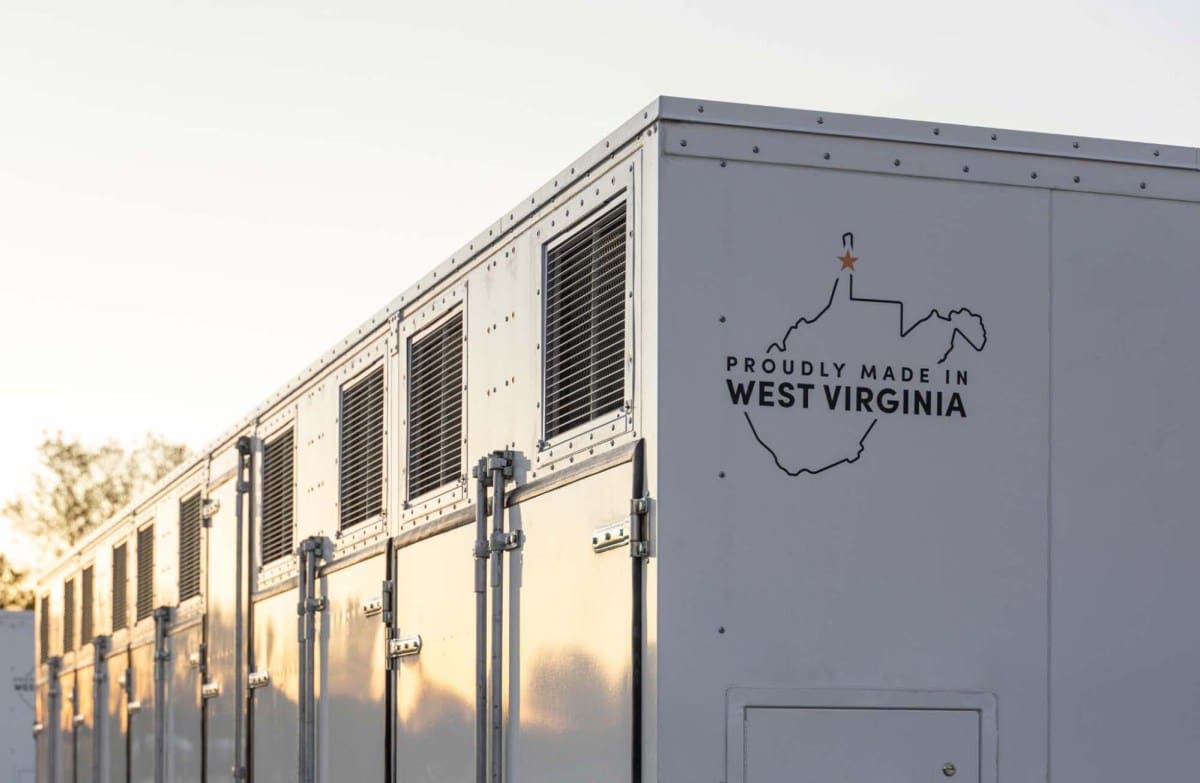
Form Energy closed a $750 million Series G round this week, marking one of the largest capital raises in the energy storage sector as data center expansion drives unprecedented demand for grid-scale batteries. The funding will expand the startup's manufacturing operations in West Virginia, where it produces iron-air batteries capable of discharging for up to 100 hours.
The company's technology differs fundamentally from the lithium-ion systems that dominate today's market. Instead of relying on scarce minerals, Form's batteries use iron that oxidizes during discharge and reduces during charging. In practical terms, the system converts iron to rust when releasing power, then reverses the chemical process to restore the metal when recharging. This approach allows the company to store massive quantities of electricity at a fraction of the cost of conventional battery chemistries.
Form Energy announced that roughly 80% of its materials are sourced domestically, with the remainder coming from Europe and Asia. Notably absent from the supply chain: China, which controls the majority of global battery production and raw material processing. The domestic supply strategy aligns with bipartisan policy efforts in Washington to reduce reliance on Chinese battery manufacturing.
Data Centers and the Return of Electricity Demand Growth
U.S. electricity consumption is rising for the first time in decades, and data centers account for the bulk of that increase. Projections suggest these facilities will quadruple their power draw by 2035, eventually consuming roughly one-fifth of all electricity generated in the country. That shift is reshaping capital allocation across the energy sector.
Google committed approximately $1 billion to a 30-gigawatt-hour Form battery installation at a new Minnesota data center. Crusoe, which operates data centers focused on high-performance computing, placed an order for 12 gigawatt-hours in March. Utilities including Xcel Energy and FuturEnergy Ireland have also signed contracts, bringing Form's commercial backlog to around 80 gigawatt-hours, a fourfold increase from earlier in the year.
The appeal of long-duration storage lies in its ability to bridge gaps in renewable generation. Wind and solar are expected to represent more than 90% of new generating capacity added in the U.S. this year, but their output fluctuates with weather and time of day. Batteries that can discharge for four hours help smooth short-term variability; systems that run for 100 hours can cover multi-day lulls in renewable production or provide backup during extended grid stress.
Capital Flows and the Iron-Air Bet
The Series G was led by T. Rowe Price, with participation from Sequoia Capital, Janus Henderson, Franklin Templeton, PEAK6 Investments, Prelude Ventures, Engine Ventures, TPG Rise Climate, Capricorn's Technology Impact Funds, Breakthrough Energy Ventures, Dustin Moskovitz and Cari Tuna, Gigascale Capital, Coatue, Energy Impact Partners, NGP, GE Vernova, Blindspot Ventures, and M&G Catalyst Fund. The syndicate reflects a blend of climate-focused funds, traditional asset managers, and strategic corporate investors.
At DailyTechWire, we've tracked a wave of capital moving into energy infrastructure over the past 18 months, much of it tied directly or indirectly to AI compute build-out. Form's raise is among the largest in the storage category, but it follows a broader pattern: U.S. energy storage installations reached 9.7 gigawatt-hours in the first quarter of this year, up 32% year-over-year. Most of that capacity still consists of short-duration lithium-ion systems, but the economics of long-duration technologies are improving as scale increases and renewable penetration rises.
Manufacturing Scale and Supply Chain Positioning
Form's West Virginia facility represents a bet on domestic manufacturing at a time when U.S. policy is tilting toward onshoring critical supply chains. The Inflation Reduction Act and related measures have created incentives for domestic battery production, and the company's material sourcing strategy positions it to capture those benefits.
Iron is abundant and cheap, but the engineering challenge lies in managing the chemistry at scale. Iron-air batteries are heavier and bulkier than lithium-ion equivalents, which makes them unsuitable for vehicles but acceptable for stationary grid applications where space is less constrained. The tradeoff between energy density and cost per kilowatt-hour is favorable for projects that prioritize long discharge durations over compactness.
The $750 million will fund additional production lines and support the ramp to meet the 80-gigawatt-hour backlog. Execution risk remains: scaling novel battery chemistries from pilot projects to multi-gigawatt-hour commercial deployments has proven difficult for other startups. Form has moved further than most, but the gap between signed contracts and delivered, operational systems is where many hardware companies stumble.
Grid Implications and Market Structure
Long-duration storage changes the economic calculus for renewable integration. Without it, grids with high renewable penetration face steep costs to maintain reliability, often requiring natural gas peaker plants to cover gaps. Batteries that can discharge for days reduce the need for fossil backup and improve the utilization of wind and solar assets.
The challenge is timing. Renewable capacity is being added faster than storage, and the U.S. grid is already experiencing strain in regions with high solar and wind deployment. California, Texas, and the Midwest have all faced reliability events tied to mismatches between generation and demand. Long-duration storage deployments lag behind the immediate need, creating a window where grid operators must manage volatility with legacy tools.
Form's technology is not the only approach to multi-day storage. Pumped hydro, compressed air, and other mechanical systems can provide similar durations, but they require specific geography and face permitting hurdles. Flow batteries and hydrogen electrolysis are also in development, each with distinct cost and performance profiles. The market is likely to support multiple technologies, with economics and site-specific factors determining which solution fits best.
The capital raise and customer traction suggest Form has gained an early lead in iron-air, but the sector is still in its formative stage. The next 24 months will clarify whether the company can deliver on its backlog and maintain cost competitiveness as competitors scale their own technologies. For now, the combination of domestic supply chains, favorable policy, and surging electricity demand has created a rare alignment of conditions for grid-scale storage startups.