Feedly's Week of Outages Exposes Tension Between RSS Roots and AI Ambitions
A performance bug left 15 million users unable to browse feeds, raising questions about whether the company's shift to enterprise threat intelligence has left its core product behind.
A Week of Frustration
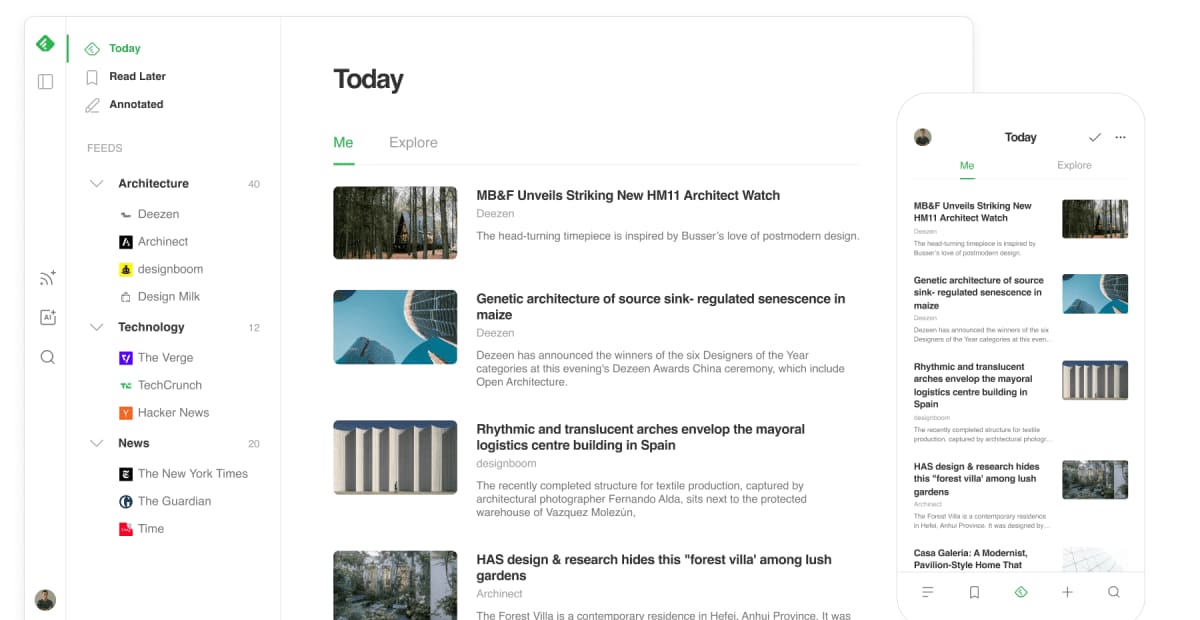
For more than seven days, Feedly users found themselves staring at loading spinners. The web interface that millions rely on to scan headlines and catch up on feeds had slowed to a crawl. Subscribers who pay for premium tiers took to Reddit to vent their frustration, describing the experience as "unusable" and complaining that support tickets went unanswered. For a service built on the promise of speed and efficiency, the prolonged outage was a stark departure from expectations.
Feedly commands a dominant position in a niche but loyal market. With 15 million users, it has become the de facto successor to Google Reader, which shut down in 2013 and left a vacuum in the RSS ecosystem. Competitors like Inoreader and desktop clients such as NetNewsWire serve dedicated audiences, but none match Feedly's reach. That scale makes technical failures all the more visible, and this incident arrived at a moment when the company's strategic direction is already under scrutiny.
The Root Cause
Feedly attributed the slowdown to a bug tied to the "Mark as Read" function, particularly for accounts managing large numbers of folders. The front-end engineering team deployed a fix late last week, though the company is still verifying whether the patch has fully resolved the issue across all user configurations. The problem was not an infrastructure collapse or a server overload; it was a discrete code defect that cascaded into a week of degraded performance.
At the same time, iOS users reported that the mobile app refused to load entirely, a separate issue that the company acknowledged only after being contacted for comment. That problem was subsequently added to the public status page, a step taken after initial user complaints had already circulated widely. The delay in public acknowledgment compounded frustration, particularly among paying subscribers who expected faster communication.
A Quiet Shutdown
Two weeks before the slowdown began, Feedly quietly discontinued its Classic mobile app. The legacy client had been removed from app stores months earlier, but a small group of users continued to run installed versions. The final shutdown happened without advance notice to those remaining users, a decision that surprised some in the community. Feedly noted that the Classic app had only a few hundred active users and that maintaining it had become unsustainable due to evolving platform requirements from Apple and Google.
For users who preferred the Classic interface, the abrupt cutoff felt like collateral damage in a broader shift. The company's homepage now leads with enterprise-focused messaging around cyber threat intelligence, not RSS. That repositioning has been underway for several years, but the timing of the outages brought it into sharper relief.
The AI Pivot
Feedly has been building out a business intelligence product aimed at security teams and corporate analysts. The offering uses RSS infrastructure to track emerging threats, monitor competitors, and surface tailored intelligence feeds. It is a logical extension of the platform's core capability, aggregating and filtering large volumes of content in real time, but it targets a fundamentally different customer base with different expectations around uptime, support, and feature velocity.
The consumer RSS market has never been large. Most people now encounter news through platform algorithms, whether in Apple News, Google News, or social feeds. RSS remains the domain of power users, journalists, researchers, and developers who value control over their information diet. Feedly's pivot reflects an economic reality: enterprise customers pay more and churn less. But the strategy introduces a tension. Maintaining a consumer product that serves millions while simultaneously courting corporate buyers requires parallel investment, and technical debt in one area can quickly erode trust in the other.
Feedly's CEO emphasized that RSS functionality remains a priority, in part because the cyber threat intelligence community relies on the same news-reading engine. The company's goal, he said, is to keep the RSS reader fast and streamlined. That statement is telling. It frames the consumer product not as an end in itself but as infrastructure that also serves the enterprise tier. The logic is sound from a technical standpoint, but it does little to reassure users who worry that their use case is now secondary.
Trust and Communication
The outage itself was a technical failure, but the communication breakdown was a strategic one. Multiple users reported that support requests went ignored during the week-long slowdown. When paying subscribers cannot get a response, the perception is that the company has deprioritized their segment. The eventual acknowledgment of the iOS issue, which came only after external inquiry, reinforced that impression.
In a market as small as RSS, trust is currency. Feedly built its user base by being reliable when Google walked away. Users tolerated occasional bugs and feature stagnation because the core experience worked. A week of degraded performance, combined with radio silence on support channels, tests that goodwill. For enterprise customers evaluating Feedly's threat intelligence product, the episode also serves as a data point. If the consumer product can go down for a week with minimal communication, what does that imply about incident response for a paid enterprise tier?
What Comes Next
Feedly has deployed a fix and is monitoring for residual issues. The iOS loading problem is now publicly documented. The company has reiterated its commitment to the RSS product, though the homepage and marketing materials tell a different story. The real test will be whether this incident prompts a reassessment of resource allocation and communication protocols, or whether it becomes a footnote in a longer arc toward enterprise focus.
For users, the calculation is simpler. RSS readers are abundant, and switching costs are low. Feedly's scale and feature set give it an advantage, but loyalty in this market is earned through consistency. A week of downtime is forgivable if it is an anomaly. If it becomes a pattern, the 15 million user figure will start to erode, one frustrated subscriber at a time.
The tension between serving a free or low-cost consumer base and pursuing higher-margin enterprise revenue is not unique to Feedly. It is a familiar dilemma in software, one that companies resolve in different ways. Some split the products entirely. Others let the consumer tier atrophy. A few manage to maintain both. Feedly's next moves will signal which path it has chosen.