Federal Scrutiny Lands on Tesla's Cybercab Within Hours of Commercial Launch
NHTSA opens audit query into the self-certification process behind a robotaxi that ships without steering wheel, pedals, or mirrors
A Launch and an Inquiry on the Same Day
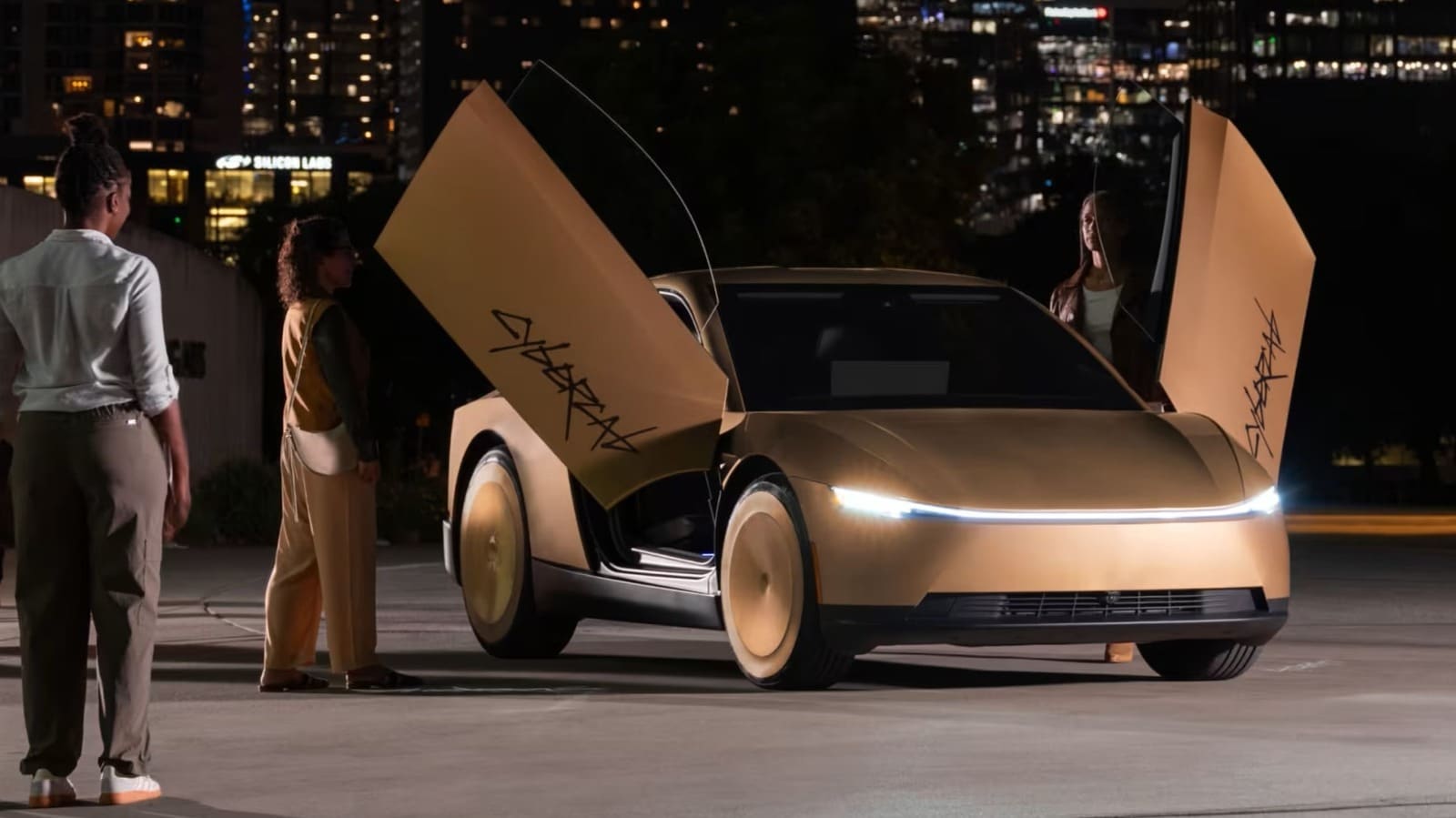
Tesla began carrying paying passengers in its Cybercab autonomous vehicle on Thursday in Austin, Texas, and by the close of business the National Highway Traffic Safety Administration had opened a formal audit query covering approximately 1,000 of the machines. The timing underscores the regulatory uncertainty that accompanies any vehicle designed from the ground up to operate without human controls.
The NHTSA's notice centres on Tesla's self-certification that the Cybercab complies with all applicable Federal Motor Vehicle Safety Standards. Under US law, manufacturers may declare their own compliance before a vehicle enters commercial service; the agency then retains the authority to audit that declaration and, if warranted, compel recalls or design changes. The regulator said it will examine both the process Tesla followed and the technical data the company relied upon when filing its certification documents.
What Makes the Cybercab Different
The vehicle in question ships without a steering wheel, brake pedal, accelerator, or conventional side mirrors. That configuration is legal under a narrow exemption pathway that permits up to 2,500 units per manufacturer per year if the vehicle is intended solely for autonomous deployment and meets an equivalent level of safety. Tesla indicated in filings that it plans to expand the Cybercab fleet beyond Austin, bringing the robotaxi to additional cities and increasing the total number of units in service.
According to registration data obtained from Texas authorities, Tesla has enrolled 420 autonomous vehicles in the state. Of that total, 45 are listed as Cybercabs; the remainder are modified Model Y sedans that retain manual controls and are also being used for ride-hailing in Dallas, Houston, and three cities in Florida: Miami, Orlando, and Tampa. It remains unclear how many of the 45 Cybercabs registered in Texas are carrying revenue passengers versus undergoing internal testing and data collection.
The Self-Certification Question
At DailyTechWire, we have tracked the evolution of autonomous-vehicle regulation in the United States for several years, and the Cybercab audit highlights a persistent tension. The self-certification regime was designed in an era when vehicles were fundamentally similar in architecture; a manufacturer attested that seat belts, crash structures, and lighting met prescribed performance tests, and post-market surveillance caught outliers. Autonomous vehicles that omit legacy controls force regulators to decide whether standards written with human drivers in mind even apply, and if not, what substitute benchmarks are appropriate.
The NHTSA's notice explicitly flags this question. The agency said it will consider "the extent to which Tesla's certification depended on determinations that certain FMVSS are inapplicable to the Cybercab." In practical terms, that means the regulator wants to see Tesla's reasoning for any standard the company deemed irrelevant. For example, requirements governing steering-column strength or brake-pedal placement may not apply if those components do not exist, but the agency still expects a documented rationale and evidence that equivalent safety outcomes are achieved through software, redundant hardware, or other means.
Implications for Scale and Speed
Tesla has publicly stated its intention to scale Cybercab deployment rapidly. The company's regulatory filings and investor presentations over the past eighteen months have outlined a vision in which tens of thousands of purpose-built robotaxis operate across North America by the end of the decade. The audit query does not halt commercial service, but it does introduce uncertainty into that timeline. If the NHTSA concludes that Tesla's certification was premature or inadequately supported, the agency can require additional testing, design modifications, or even a temporary suspension of new deployments until concerns are resolved.
The regulatory landscape varies sharply by jurisdiction. In California, the Public Utilities Commission and the Department of Motor Vehicles jointly oversee autonomous ride-hailing, and both agencies require pre-approval and ongoing reporting. Texas, by contrast, has adopted a more permissive posture, allowing manufacturers to begin revenue service with fewer procedural hurdles. That divergence has made Texas an attractive testbed, but it also means that federal oversight becomes the primary check on safety claims.
Precedent and Process
The NHTSA has opened similar audit queries in the past. In early 2024 the agency examined the certification basis for a low-speed autonomous shuttle deployed in several university campuses, ultimately accepting the manufacturer's documentation after minor clarifications. A year later, a separate investigation into a delivery robot classified as a low-speed vehicle led to a voluntary recall when the company could not demonstrate compliance with lighting standards. The outcomes vary, but the process itself is well established: the manufacturer submits technical data, the agency's engineers review it, and a determination is made within a timeframe that typically runs from several weeks to a few months.
For Tesla, the stakes extend beyond the Cybercab. The company's broader autonomous strategy depends on regulatory acceptance of its Full Self-Driving software and, eventually, of vehicles that rely on that software as the sole means of control. A protracted or unfavourable outcome in this audit could influence how other agencies, both in the United States and abroad, approach similar certification questions. Conversely, a swift resolution would signal that the existing exemption framework can accommodate radical departures from traditional vehicle design without requiring new legislation.
What Happens Next
The NHTSA has not specified a deadline for completing its review, and the agency's notice does not impose any interim restrictions on Cybercab operations. Tesla is free to continue service in Austin and to launch in additional markets while the audit proceeds. The company has not issued a public statement in response to the inquiry.
Industry observers will watch two variables closely: the volume of technical documentation Tesla provides and the agency's appetite for setting new interpretive precedents. If the automaker can demonstrate that its sensor suite, redundant compute architecture, and over-the-air update mechanisms deliver crash-avoidance and occupant-protection performance that meets or exceeds the intent of legacy standards, the audit may conclude without incident. If gaps emerge, or if the agency decides that certain standards cannot be waived even for a vehicle without manual controls, Tesla will face a choice between design changes and a slower, more constrained rollout.
The intersection of ambitious deployment schedules and deliberate regulatory review is not unique to Tesla. Every company pursuing purpose-built autonomous vehicles without steering wheels or pedals will eventually navigate the same certification labyrinth. The outcome of this audit will provide a data point, and quite possibly a template, for those that follow.