Washington and Beijing Prepare AI Safety Talks Amid Deepening Tech Rivalry
Ahead of a high-stakes presidential summit, both governments signal interest in guardrails discussions even as export controls and investment bans widen the technological gulf
A Narrow Opening in a Widening Rift
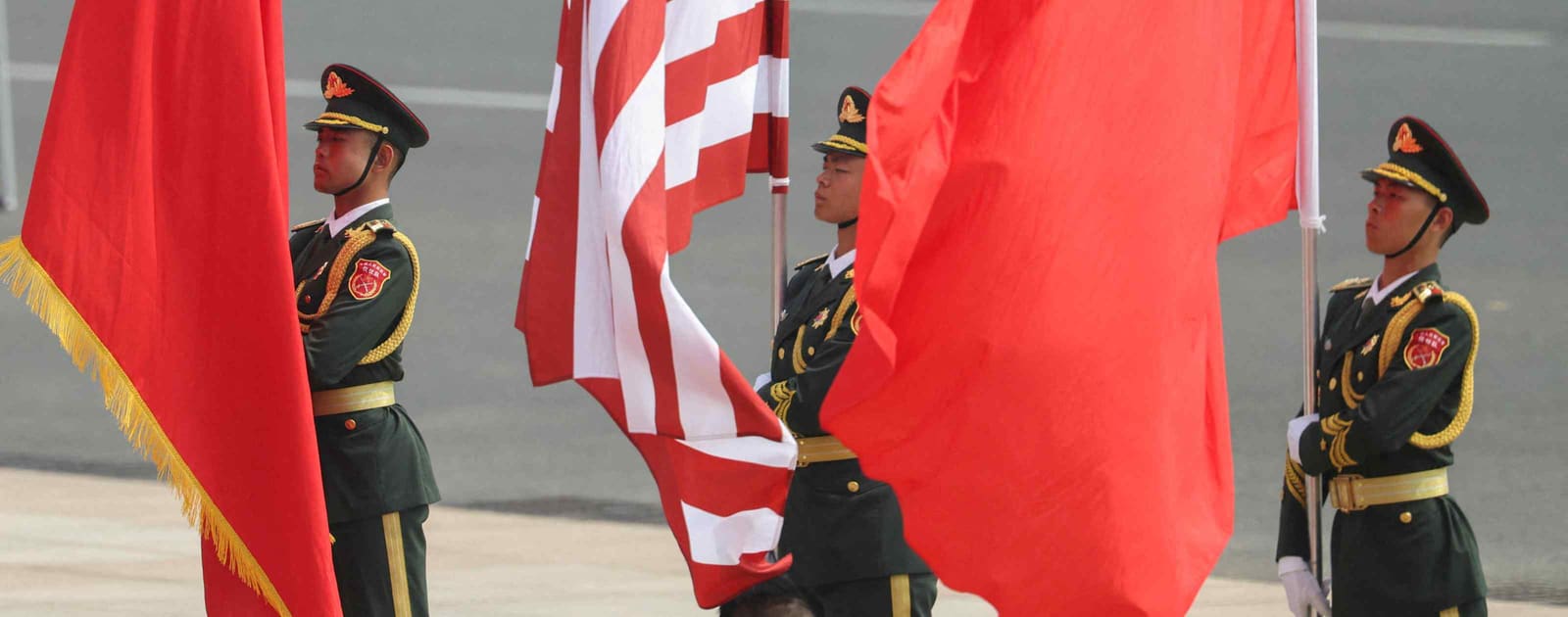
The United States is preparing to bring artificial intelligence safety to the table when President Donald Trump and Chinese President Xi Jinping meet later this month, according to people with knowledge of the planning. The move represents one of the few areas where Washington and Beijing are exploring cooperation, even as their technology rivalry grows sharper across semiconductors, cloud infrastructure, and export restrictions.
Xi is scheduled to visit Washington in late September, and AI guardrails have emerged as a potential area for dialogue. Both governments have signaled interest in discussing existential risks associated with advanced AI systems, though skepticism remains high among policy circles in both capitals about whether meaningful collaboration is feasible.
At DailyTechWire, we've tracked how tech decoupling has accelerated over the past three years. Export controls on advanced chips, restrictions on American venture capital flowing into Chinese AI startups, and reciprocal investment bans have created parallel ecosystems. Yet the prospect of uncontrolled AI development, particularly around autonomous weapons and dual-use models, has created a strategic rationale for at least talking.
What Safety Means in This Context
The proposed discussions would focus on narrow technical issues: preventing accidental escalation from AI-driven military systems, establishing notification protocols for large-scale model deployments, and exploring shared research on interpretability and alignment. These are not arms-control treaties. They are confidence-building measures designed to reduce the risk of miscalculation.
Silicon Valley insiders have floated several ideas in recent months, including joint red-teaming exercises for frontier models and information-sharing on safety incidents. One proposal circulating among researchers involves a bilateral working group that would meet quarterly to discuss emerging risks without sharing proprietary model architectures or training data.
The challenge is that safety and capability are often intertwined. Techniques that make models more robust can also make them more powerful. Both governments are wary of any framework that might constrain their own AI progress while allowing the other side to advance.
The Skeptics Are Vocal
Not everyone believes cooperation is wise or even possible. Hawks in Washington argue that any dialogue legitimizes China's AI ambitions and could be exploited for intelligence gathering. Meanwhile, officials in Beijing remain suspicious that safety talks are a cover for slowing China's technological ascent, much like earlier arms-control frameworks were used during the Cold War.
The semiconductor export controls imposed over the past two years have already poisoned the well. Chinese firms have been cut off from NVIDIA's H100 and successors, forcing a pivot toward domestically designed accelerators and alternative architectures. That decoupling makes technical collaboration harder, since the two sides are increasingly working with different hardware stacks and optimization strategies.
There is also the question of verification. Unlike nuclear weapons, AI capabilities are difficult to measure and monitor. A model's safety profile can change with fine-tuning or deployment context. Any agreement would need to rely heavily on voluntary disclosure, which neither side trusts the other to honor.
Why the Conversation Matters Anyway
Despite the obstacles, the fact that AI safety is even on the agenda reflects a shared anxiety. Both Washington and Beijing understand that the race to deploy increasingly autonomous systems carries downside risks that do not respect borders. An accidental engagement triggered by an AI-piloted drone, or a model that generates biological weapon designs, would harm both countries.
The recent expansion of AI-powered satellites in Japan's counterstrike architecture, and similar developments in other regional militaries, has added urgency. As more nations integrate AI into defense systems, the risk of cascading failures or misinterpreted signals grows. Establishing basic norms now, even modest ones, could reduce the likelihood of catastrophic mistakes later.
There is precedent for narrow cooperation even during periods of broader rivalry. The U.S. and Soviet Union maintained a hotline and shared information on missile launches during the Cold War. The analogy is imperfect, but it suggests that limited dialogue on existential risks can coexist with strategic competition.
The Silicon Valley Angle
Tech executives and researchers in Palo Alto and beyond have played an informal role in shaping the conversation. Several prominent AI labs have quietly advocated for international safety standards, partly out of genuine concern and partly to preempt more heavy-handed regulation. Some of these voices have channels into both governments, and their proposals have influenced the agenda.
However, the industry is far from unified. Some founders see any engagement with Beijing as naive, while others worry that a bifurcated global AI ecosystem will lead to redundant safety research and slower progress on alignment. The debate mirrors broader tensions within Silicon Valley about whether China is a strategic competitor, a necessary market, or both.
What Comes Next
The summit itself is unlikely to produce binding commitments. The most realistic outcome is a joint statement acknowledging shared risks and establishing a working group to continue talks. That may sound underwhelming, but in the current climate, even that would be notable.
If the dialogue proceeds, expect it to remain highly technical and insulated from the broader trade and security disputes. Both sides have an interest in keeping the conversation narrow to avoid political blowback. The danger is that this narrow focus makes the talks symbolic rather than substantive, a box-checking exercise that does little to address the underlying risks.
The real test will come in the months after the summit. Will the working group meet regularly? Will either side share information about a safety incident or near-miss? Or will the initiative fade as domestic political pressures and mutual distrust reassert themselves?
For now, the mere fact that Washington and Beijing are willing to discuss AI safety is a signal that both recognize the stakes. Whether that recognition translates into action remains to be seen. The technology is advancing faster than the diplomacy, and the gap between what is technically possible and what is governable continues to widen.