Europe's AI Dilemma: Building Capability or Renting It
As Anthropic's withdrawal earlier this year showed, the continent's dependence on US and Chinese infrastructure has real costs. But consensus on what to do about it remains elusive.
The Disruption Nobody Saw Coming
When Anthropic's Mythos and Fable models became unavailable to users outside Europe earlier this year, the incident landed differently across the continent's startup ecosystem. One software executive described serious disruption to his engineering team. Another dismissed it with a shrug: sure, relying on American and Chinese AI infrastructure might eventually create headaches, but right now? Everything still works fine.
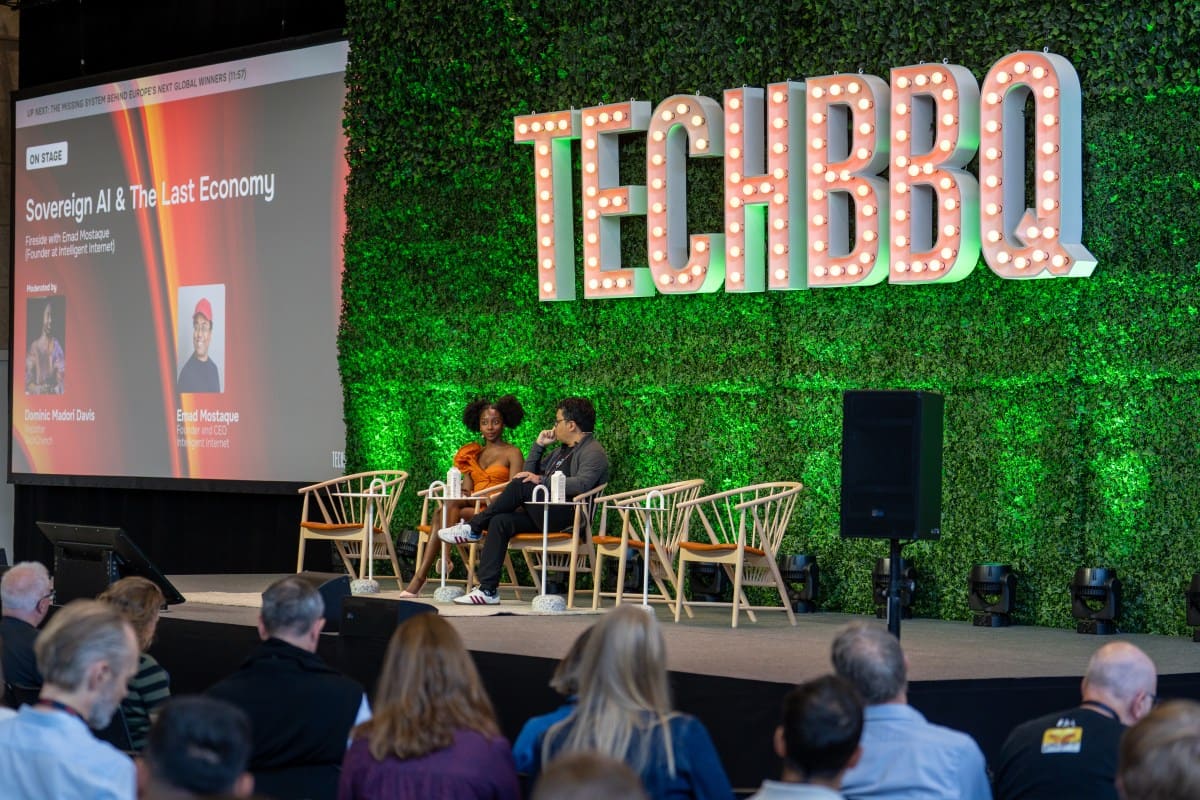
That split reaction captures the tension running through Copenhagen's TechBBQ conference in late August, where the underlying question wasn't about what to build with AI, but who should own the tools to build it. Across panels, cocktail receptions, and late-night gatherings, the same theme surfaced repeatedly: Europe's AI sovereignty, or the lack of it.
The challenge is structural. Most European startups rent compute and models from entities headquartered in Silicon Valley or Shenzhen. When those providers change terms, restrict access, or exit markets, European companies absorb the consequences with limited recourse. At DailyTechWire, we've tracked how this dependency has shaped venture conversations in Berlin, Stockholm, and Paris over the past eighteen months, with limited movement toward homegrown alternatives that can match the scale and performance of incumbents.
Sovereignty as Strategy, Not Slogan
TechBBQ's theme this year, "Emerging from Agency," framed the conversation around human decision-making in an age of autonomous systems. But sovereignty discussions went beyond philosophy. They centered on infrastructure: who owns the data centers, who trains the foundation models, and who decides when access gets turned off.
Ellen de Brever, an angel investor and head of partnerships at the Novo Nordisk Foundation Cellerator, noted that debates at the conference weren't about building smarter machines. They were about preserving human judgment and determining who stays in control. The shift from "what AI can do" to "what we're willing to let it do" reflects a maturation in how European operators think about the technology.
Emad Mostaque, co-founder of Stability AI and Intelligent Internet, offered a blunt assessment during a panel on agentic workforces: "Sovereignty is the ability to resist power being exerted over you." He argued that power in AI is concentrating in a small number of labs, and that every country will eventually be governed by AI systems. The implication: whoever controls those systems controls policy, economic levers, and public services.
That framing resonates in a region still processing the Mythos-Fable withdrawal. The incident wasn't catastrophic, but it was instructive. It demonstrated that access to cutting-edge models is a privilege, not a right, and that geopolitical friction can override commercial relationships without warning.
Privacy, Data, and the Collection Apparatus
A recurring point of tension at TechBBQ involved the relationship between AI development and data privacy. Signal President Meredith Whittaker argued that the current AI wave is constructing a vast data collection apparatus, and that labs are using marketing to obscure the collateral consequences of that collection.
Whittaker was particularly critical of AI assistants and agents being embedded into operating systems, citing ChatGPT's integration with iMessage as an example. She contended that these integrations normalize surveillance and erode user control over personal data. Her conclusion: there remains significant market demand for privacy-first products, especially in Europe where sovereignty concerns intersect with regulatory frameworks like GDPR.
The data question is central to Europe's AI calculus. Training competitive models requires enormous datasets, often scraped from the open web or aggregated from user behavior. European startups face a dilemma: build with privacy-preserving techniques that may limit model performance, or adopt the same data-intensive methods as their American and Chinese counterparts and risk regulatory backlash or reputational damage.
The Labor and Participation Question
Mia Negru, advocacy and engagement director for the nonprofit Life With Artificials, raised a longer-term concern: if intelligent agents perform cognitive work and robots increasingly handle physical tasks, society may need to rethink ownership, labor, democracy, and economic participation. The question isn't just who controls AI, but who gets to participate in an economy where human labor is progressively displaced.
This line of inquiry moves beyond infrastructure sovereignty into political economy. If European countries build domestic AI capability, who benefits from the productivity gains? If they continue renting from abroad, do those gains flow out of the region? And if automation accelerates faster than policy can adapt, what mechanisms ensure that displaced workers retain economic agency?
These questions were less prevalent in the venture-focused sessions at TechBBQ, which tended to emphasize growth, exits, and technical performance. But they surfaced in side conversations and late-night discussions, where operators acknowledged that the next decade of AI deployment will reshape labor markets in ways that current policy frameworks are unprepared to handle.
What Europe Isn't Building
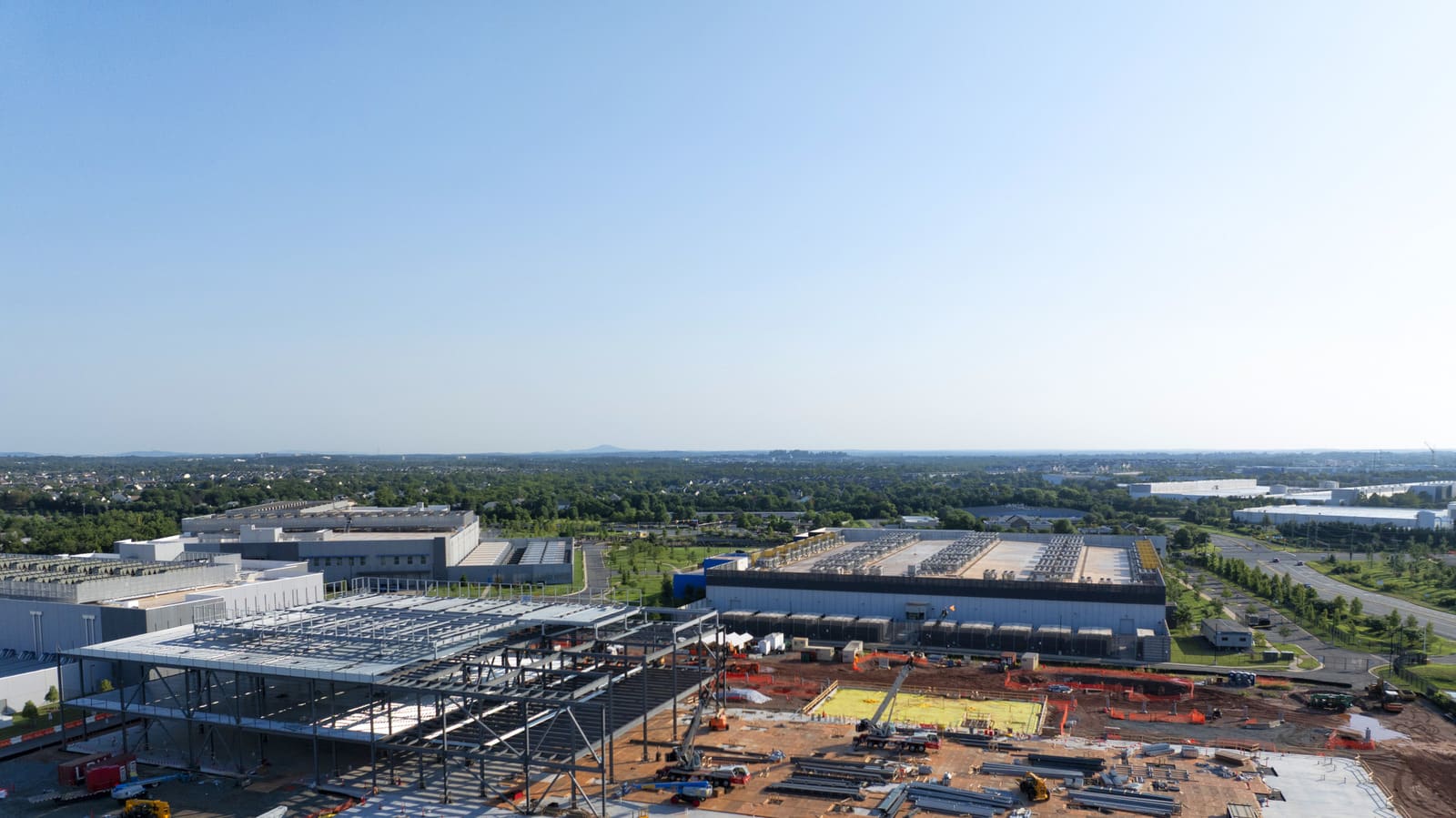
The sovereignty debate at TechBBQ highlighted what Europe has: strong regulatory frameworks, significant research talent, and capital pools that, while smaller than those in the US, are sufficient to back ambitious projects. It also highlighted what Europe lacks: hyperscale data centers, foundation models competitive with GPT-4 or Claude, and a willingness to deploy capital at the speed and scale required to close the infrastructure gap.
Several attendees noted that European AI startups often excel in application-layer innovation, building specialized tools for healthcare, logistics, or finance. But few are investing in the compute infrastructure or model training required to reduce dependence on OpenAI, Anthropic, or Chinese labs. That gap leaves the region vulnerable to access restrictions, pricing changes, and geopolitical disruption.
Some argue that Europe should accept this dependency and focus on regulation and application development, where it holds comparative advantage. Others insist that sovereignty requires owning the full stack, from chips to models to deployment infrastructure. The TechBBQ conversations suggested that consensus remains elusive, with operators split between pragmatism and strategic ambition.
Beyond the Panels
Outside the formal sessions, TechBBQ offered the usual conference rhythms: rooftop barbecues, cocktail bars, and a speakers' dinner on an island in central Copenhagen, complete with fire dancers. Lovable, Nvidia, OpenAI, AWS Startups, and HSBC co-hosted a rooftop event where founders discussed Denmark's growing tech hubs. London-based Ada Ventures held a gathering focused on women's brain health innovation.
De Brever observed that the most memorable moments at TechBBQ came from human connection: face-to-face conversations, relationship building, and the exchange of ideas that technology can't replicate. It's a reminder that even as the industry debates machine agency, the networks that drive venture capital and startup growth remain fundamentally human.
The Unresolved Tension
Europe's AI sovereignty challenge won't be resolved at a single conference. The Mythos-Fable incident was a warning, not a crisis. The real test will come when access restrictions or geopolitical shifts impose sustained costs on European startups, forcing a choice between building domestic capability and accepting long-term dependency.
For now, the continent remains in a holding pattern: aware of the risks, debating the solutions, but not yet committed to the investment required to build an independent AI stack. Whether that changes will depend on political will, capital allocation, and the next disruption that reminds operators why control matters.