New Jersey's Largest AI Data Center Runs Generators Without Permits
Thermal imaging reveals DataOne facility operating dozens of industrial-scale generators illegally as Microsoft partnership fuels breakneck expansion
The Scale Problem
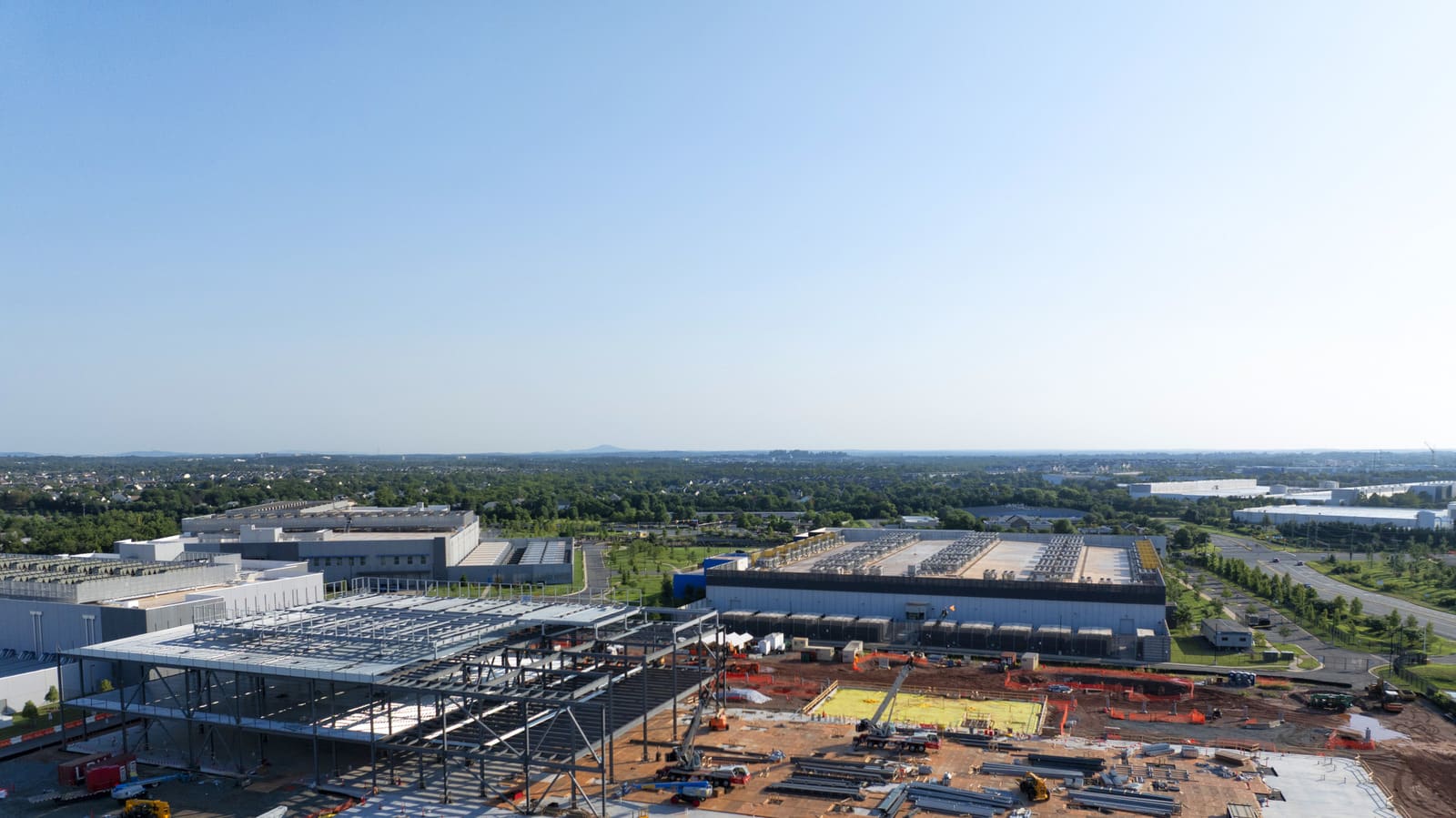
A partly-finished data center outside Philadelphia is running at least 45 industrial generators without environmental permits, according to thermal drone surveillance conducted in late August. The DataOne facility in Vineland, New Jersey, which supplies AI computing power to Microsoft through a partnership with Dutch infrastructure firm Nebius, has been caught in what former EPA enforcement chief Bruce Buckheit calls a clear violation of federal law.
The thermal imaging captured simultaneous operation of 45 of the site's planned 62 generators, each the size of a tractor-trailer. The New Jersey Department of Environmental Protection confirmed it has issued no permits for power generation equipment at the site, nor are any applications currently under review.
At DailyTechWire, we've tracked the infrastructure buildout driving generative AI across Asia and North America. What sets DataOne apart is not just the alleged regulatory breach but the physical magnitude of what's being built. The facility will eventually span 2.6 million square feet, roughly 26 times larger than a standard cloud data center. That exponential leap reflects a hard truth about modern AI workloads: training and inference at scale demand power and cooling infrastructure that dwarfs anything the industry has deployed before.
Microsoft's $17 Billion Bet
DataOne's tie to Microsoft runs through Nebius, the Amsterdam-based AI infrastructure company that signed a $17 billion deal to provide compute capacity. The partnership positions Vineland as a critical node in Microsoft's East Coast AI operations, competing with facilities in Virginia and North Carolina that anchor AWS and Google Cloud.
But the rush to operationalize the site has collided with local opposition and, now, environmental enforcement. Residents filed a lawsuit over noise levels, and the city of Vineland has issued multiple stop-work orders. The facility sits roughly a mile from two schools, amplifying community concern over air quality and diesel emissions.
Bruce Buckheit, who led EPA enforcement actions for years, told investigators that federal rules require a final permit before generators of this type can be brought online. "Certainly before firing them up," he added. He believes DataOne should halt operations immediately and face penalties for illegal emissions.
Gas Power and the AI Stack
Each generator at DataOne burns natural gas or diesel to produce electricity, a stopgap solution while grid interconnection agreements and substation upgrades drag on. Gas-fired backup generation is standard in data center design, but facilities this size typically phase in equipment gradually and secure air-quality permits well in advance.
The emissions profile is significant. Industrial generators release nitrogen oxides, particulate matter, and volatile organic compounds linked to respiratory illness and cardiovascular stress. For residents near the Vineland site, the health calculus is immediate. For climate advocates, the optics are damaging: AI companies tout carbon-neutral pledges while relying on fossil infrastructure to meet training deadlines.
Nebius has positioned itself as a European alternative to Nvidia-backed hyperscale providers, with a focus on sovereign AI and low-latency inference. The Microsoft partnership was announced as a signal that European engineering could compete with Silicon Valley and Shenzhen in the infrastructure layer. Now that narrative is shadowed by allegations of regulatory shortcuts.
Speed to Market, Permitting Later
Buckheit's assessment cuts to a broader pattern. "It seems that this industry, in particular, values speed to market more than almost anything else," he said. "They seem to believe that it's better to ask for forgiveness than for permission."
That ethos has defined much of the generative AI era. OpenAI's launch of ChatGPT in late 2022 set off a land grab for compute, data, and talent. Anthropic, Google DeepMind, and a wave of well-funded startups have raced to ship models, often while legal frameworks around copyright, privacy, and environmental impact remain unsettled.
In Asia, similar tensions have surfaced. Singapore tightened data center moratoriums in 2023 citing grid strain, then selectively reopened approvals for AI-focused facilities that met efficiency benchmarks. South Korea fast-tracked permits for Samsung and SK Hynix fab expansions to secure HBM supply for Nvidia, even as local governments raised concerns over water use and chemical runoff. The pattern is consistent: policy struggles to keep pace with capex.
DataOne has not directly addressed the unpermitted generator allegations. In a brief statement, the company said it "remains committed to meeting all applicable environmental and permitting requirements." The New Jersey DEP said it must complete a full compliance determination before taking action.
What Happens Next
The immediate question is whether state or federal regulators will compel DataOne to shutter the generators until permits are secured. Buckheit's call for fines and an operational halt reflects standard EPA enforcement practice, but the agency's bandwidth and political appetite for crackdowns on AI infrastructure remain uncertain.
For Microsoft and Nebius, the reputational risk is real but not yet acute. Neither company has commented publicly. If the matter escalates to formal enforcement or a consent decree, both will face pressure to explain due diligence failures in vendor oversight.
More broadly, the Vineland episode underscores a mismatch between AI's infrastructure demands and the regulatory architecture designed for slower-moving industries. Data centers have historically been low-profile tenants; AI facilities are industrial plants in all but name. Zoning boards, air-quality agencies, and utility commissions are now gatekeepers in a race where weeks of delay can mean millions in lost revenue.
The outcome in New Jersey may set a precedent. If DataOne faces meaningful penalties and operational restrictions, other developers will adjust timelines and compliance budgets accordingly. If the company negotiates a settlement and keeps building, the message will be clear: move fast, absorb the risk, and settle later. That calculus has worked for much of the tech industry over the past two decades. Whether it holds in the age of gigawatt-scale AI infrastructure is the test now underway in Vineland.