Chuwi's $450 Wildcat Lake Laptop Promises Premium Features at Budget Price
A Chinese manufacturer enters the sub-$500 Windows laptop market with aluminum chassis and Intel's latest silicon, but execution tells a different story
The Sub-$500 Laptop Paradox
The budget laptop segment has operated under a simple rule for years: compromises are mandatory. RAM shortages through 2024 and 2025 made the situation worse, pushing entry-level Windows machines into a race to the bottom on specs and materials. When Apple launched the MacBook Neo at $599, it reset expectations entirely. Good build quality, competent performance, and a price point that undercut most Windows competitors created a vacuum in the market.
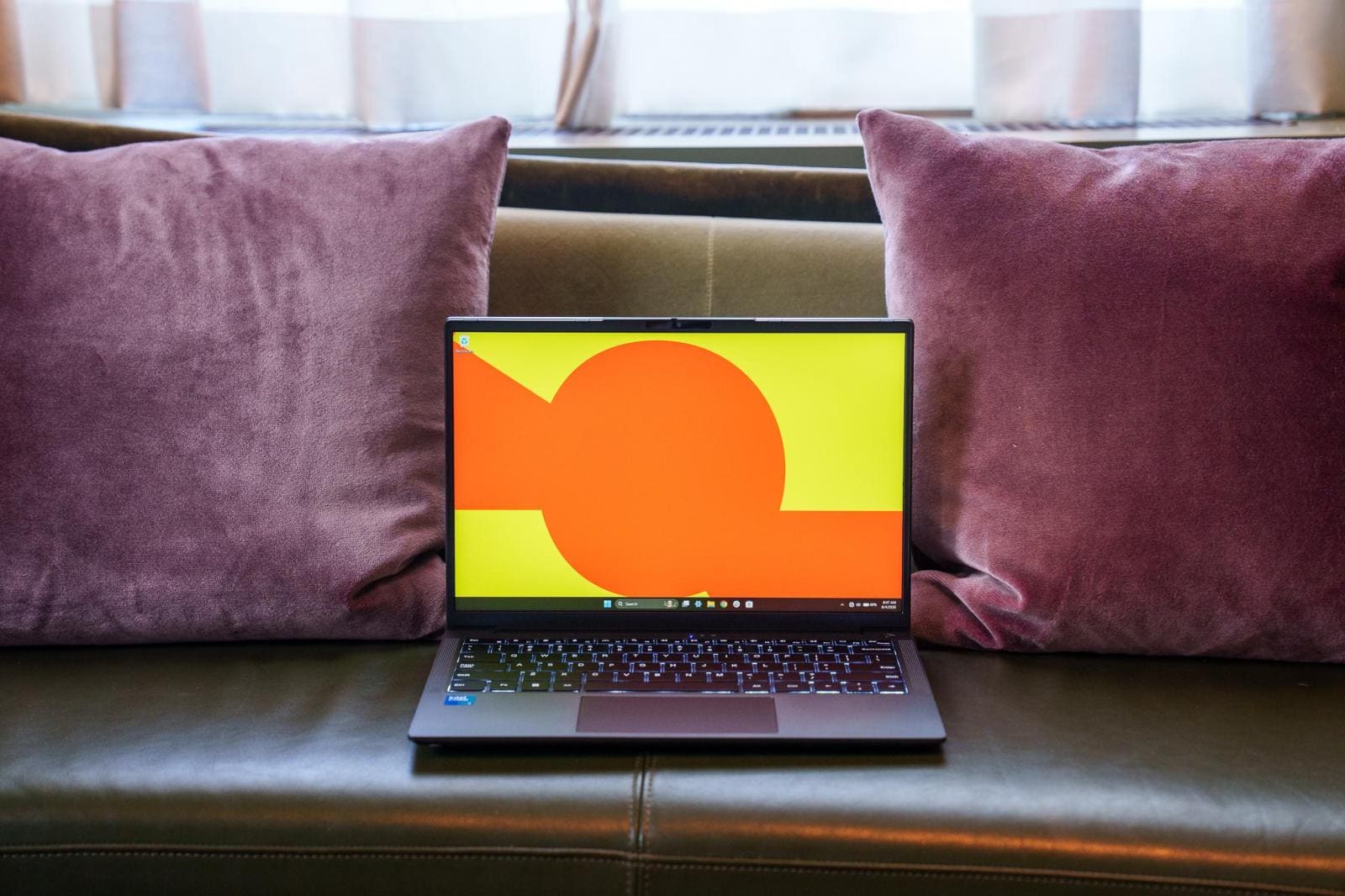
Chuwi, a Shenzhen-based manufacturer with limited name recognition outside enthusiast circles, saw an opening. The company's UniBook enters at $450 with a spec sheet that reads like wishful thinking: aluminum chassis, Intel's new Wildcat Lake processor, and a port selection that larger OEMs have abandoned in favor of minimalism. On paper, it's exactly what the segment needs. In practice, the execution falls short of the ambition.
What $450 Actually Buys
The UniBook's construction uses aluminum for the lid and keyboard deck, a material choice that's become rare below $600. Most competitors at this price rely on plastic or magnesium alloy that feels closer to toy-grade than tool-grade. Chuwi's decision to prioritize materials is notable, even if the fit and finish doesn't match higher-tier devices. There's flex in the chassis under pressure, and the hinge feels less refined than machines twice the price.
Intel's Wildcat Lake processor is the other headline feature. As one of Intel's latest silicon releases, it theoretically offers better efficiency and performance than the aging chips typically relegated to budget devices. The architecture brings improvements in single-threaded tasks and integrated graphics performance, putting it closer to what mainstream users encounter in $800-$1,000 machines. The gap between budget and mid-range has historically been widest in processor selection, so Chuwi's use of current-generation silicon matters.
Port selection is aggressive for a compact form factor. The UniBook includes multiple USB-A ports, USB-C, HDMI, and a headphone jack. This runs counter to industry trends toward minimalism, and it's a clear play for users who resent dongle life. The trade-off is thickness; the UniBook is noticeably chunkier than ultraportables, though still reasonable for a device in this category.
Where the Promise Breaks Down
The display is where budget constraints become impossible to hide. Resolution and color accuracy fall below what's acceptable for any work involving visual precision. Text rendering is serviceable for document editing and web browsing, but the panel's limited brightness makes outdoor use difficult. Viewing angles are narrow enough that sharing a screen with a colleague requires repositioning the entire laptop.
Battery life is another casualty. Despite Wildcat Lake's efficiency gains, the UniBook struggles to reach six hours under moderate use. That's insufficient for a full workday without access to power, and it limits the device's utility as a true portable machine. Competing devices in the $600-$700 range routinely deliver eight to ten hours, a gap that can't be dismissed as marginal.
The keyboard and trackpad are functional but unremarkable. Key travel is shallow, and the trackpad's palm rejection is inconsistent. These are the kinds of compromises that compound over hours of use, turning minor annoyances into deal-breakers for anyone spending significant time on the device.
The Apple Problem
Apple's MacBook Neo, now priced at $699, remains the reference point for this segment. It offers superior build quality, better battery life, a higher-quality display, and the ecosystem integration that makes macOS compelling for users already invested in Apple hardware. The $250 price gap between the Neo and the UniBook is narrower than it appears when factoring in longevity and resale value.
Windows laptops in the sub-$500 range have struggled to articulate a value proposition beyond price. The UniBook attempts to compete on features, but feature count doesn't compensate for execution gaps. For users locked into Windows for software compatibility or enterprise requirements, the choice becomes whether to stretch the budget or accept compromises that affect daily usability.
Market Positioning and Audience
Chuwi's strategy appears aimed at buyers who prioritize specs over brand recognition. The company has built a niche following among users willing to take risks on lesser-known manufacturers in exchange for aggressive pricing. The UniBook fits that profile, offering components that look competitive in comparison charts while skimping on the harder-to-quantify elements like display quality and battery performance.
There's a segment of the market for whom $450 is a hard ceiling, not a starting point. Students, secondary-device buyers, and users in emerging markets where every dollar matters represent real demand. For those buyers, the UniBook's flaws may be acceptable trade-offs. The question is whether those compromises are necessary, or whether saving another $150-$200 would deliver disproportionate improvements in usability.
The Broader Budget Landscape
The sub-$500 laptop category has been squeezed from both ends. Component shortages pushed prices up, while Apple's aggressive pricing on the MacBook Neo pulled the quality bar higher. Chinese manufacturers like Chuwi, Teclast, and Jumper have filled the void left by larger OEMs retreating upmarket, but their success has been mixed. Brand trust matters in a product category where support and longevity are concerns, and unknown names carry risk.
Intel's Wildcat Lake availability at this price point suggests the company is pushing volume in the budget segment, possibly to counter ARM-based competitors. If more manufacturers gain access to current-generation Intel silicon at lower price tiers, the baseline for budget Windows laptops could shift. That would benefit consumers, but only if OEMs balance component costs with the other elements that make a laptop usable long-term.
The Verdict on Compromise
The UniBook's core proposition is that $450 can buy something close to a premium experience if you're willing to overlook specific weaknesses. That's a harder sell than it seems. The display and battery are too central to daily use to be treated as negotiable, and both fall short of what competing devices deliver for $150-$250 more.
For buyers with flexibility on budget, the recommendation is clear: save longer and buy better. The MacBook Neo at $699 offers a more complete package, and Windows alternatives in the $600-$700 range from established brands provide better support and resale value. For buyers with no flexibility, the UniBook delivers current-generation processing and decent build materials, but it's a device defined by its limitations as much as its strengths.
Chuwi's attempt to disrupt the budget segment is notable, but disruption requires more than aggressive pricing and a strong spec sheet. It requires execution across every element that affects user experience, and that's where the UniBook falls short. The gap between what it promises and what it delivers is wide enough to make the $450 price feel less like a bargain and more like a reflection of what's missing.