A Programmable Adapter That Brings USB-C Power to Vintage Electronics
Werewolf's VFlex dongles let legacy devices draw from modern USB-C batteries without permanent modification, opening a path to portable power for decades-old gear.
The Problem With Legacy Power
Desktop monitors from the 2010s, game consoles from the 1990s, and external storage drives from the early 2000s share a common challenge: they depend on proprietary AC adapters with barrel jacks or custom connectors. Lose the adapter, and the device becomes effectively unusable. Need to run it away from a wall outlet, and you're out of luck. USB-C power delivery has become ubiquitous across laptops, tablets, and portable batteries, but legacy electronics predate the standard by years or even decades.
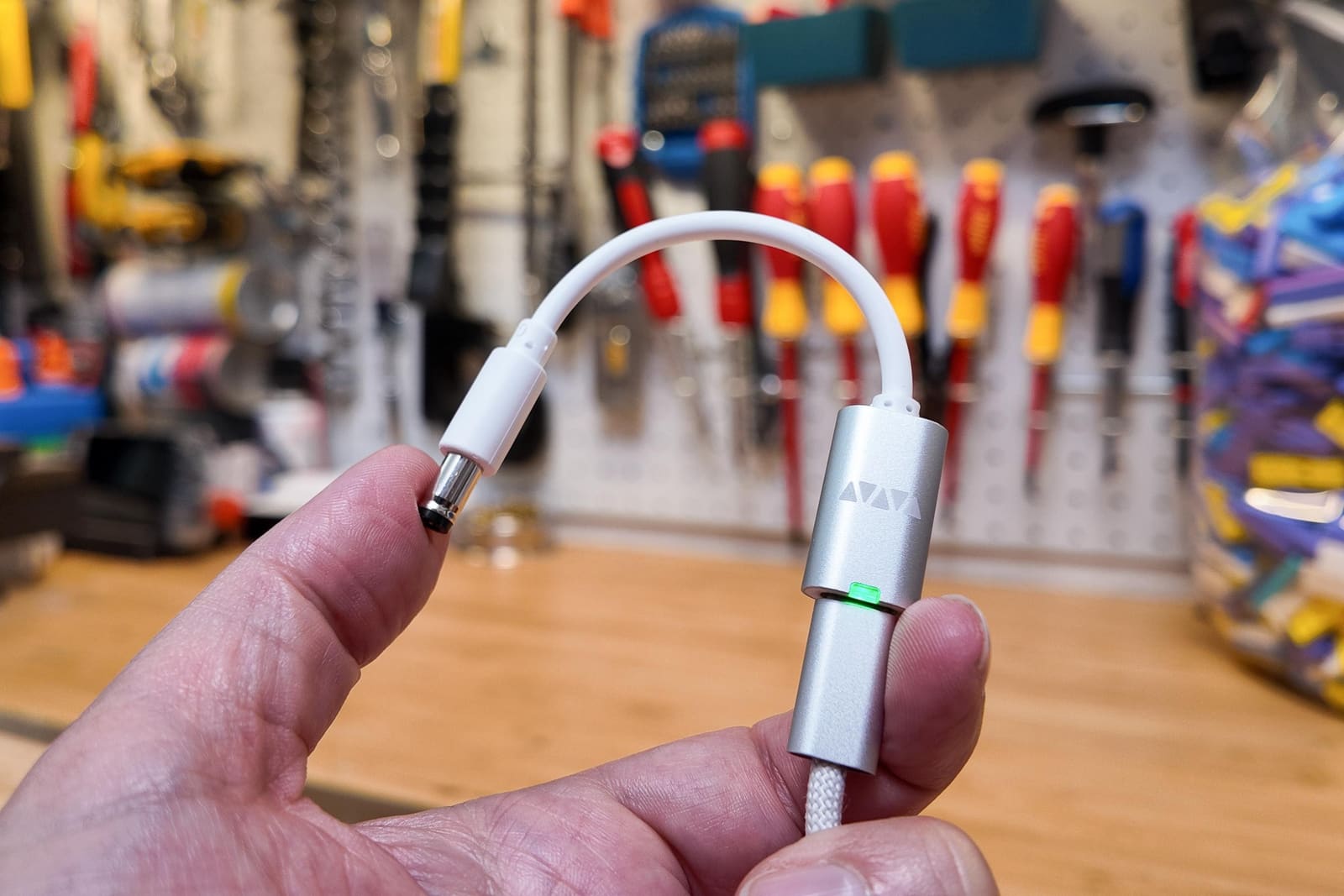
Werewolf, a hardware accessories company, has introduced a solution that sidesteps the need for permanent modification. Its VFlex dongles are small, programmable adapters that sit between a USB-C power source and the original power jack of an older device. The dongles negotiate voltage and current from a USB-C battery or charger, then output it through a standard barrel connector or other legacy interface.
At DailyTechWire, we've tracked the slow but steady expansion of USB-C power delivery into categories that historically relied on bulkier, device-specific power bricks. What makes Werewolf's approach notable is its flexibility: rather than offering a fixed voltage adapter, the VFlex system is user-configurable, supporting a range of voltages and connector types that map to different eras of consumer electronics.
How VFlex Works
Each VFlex dongle contains a microcontroller that communicates with a USB-C power source using the Power Delivery protocol. Users configure the desired output voltage through a companion app or web interface before deployment. The dongle then requests that voltage from any compatible USB-C charger or battery pack, converts it internally, and delivers it to the legacy device through a standard DC barrel jack or other adapter tip.
The system supports output voltages commonly used in consumer electronics, including 5V, 9V, 12V, 15V, and 20V. This range covers a significant portion of devices manufactured between the late 1980s and early 2010s. The dongles ship with interchangeable adapter tips to fit different barrel jack sizes, addressing the lack of standardization that plagued power connectors before USB-C.
Because the VFlex adapter is external and reversible, it requires no soldering, case modification, or internal rewiring. The original power jack remains intact, and the device can still accept its original AC adapter if needed. This makes the solution particularly appealing for vintage or collectible electronics, where permanent modification would reduce value or violate preservation principles.
Use Cases Beyond the Desktop
The ability to power legacy devices from USB-C batteries unlocks mobility scenarios that were previously impractical. A 27-inch monitor designed for desktop use can be run from a high-capacity USB-C power bank in a garage, workshop, or outdoor event setup. Retro game consoles can be brought to gatherings without hunting for wall outlets or packing bulky power bricks. External hard drives from the pre-USB-powered era, which required separate AC adapters, can now draw from the same battery that charges a laptop.
This portability matters in regions where power infrastructure is inconsistent or in professional contexts where equipment must be moved frequently. Video production, field service, and temporary installations all benefit from reducing the number of unique power adapters and wall outlets required.
The VFlex system also addresses a secondary problem: adapter replacement. Original power supplies for discontinued products are often difficult to source, expensive on secondary markets, or incompatible with modern electrical standards in different regions. A programmable USB-C adapter can substitute for multiple lost or failed power bricks, reducing electronic waste and extending device lifespan.
The Broader Shift Toward USB-C Unification
Werewolf's product arrives as part of a wider industry transition. The European Union's mandate requiring USB-C charging ports on consumer electronics by late 2024 has accelerated adoption across smartphones, tablets, and laptops. High-wattage USB-C Power Delivery, which can deliver up to 240 watts under the latest specification, has begun to replace proprietary connectors on gaming laptops and external displays.
However, that transition does not help the installed base of legacy devices. Tens of millions of monitors, external drives, audio interfaces, and other peripherals remain in use with barrel jacks or proprietary power connectors. Retrofit solutions like VFlex create a bridge, allowing users to take advantage of modern charging infrastructure without discarding functional hardware.
This dynamic is particularly relevant in Asia, where electronics longevity and repair culture remain strong. In markets across Southeast Asia and East Asia, consumers and small businesses frequently extend the life of older equipment through adapters, refurbishment, and component-level repair. Products that enable backward compatibility with minimal modification align with both economic incentives and sustainability goals.
Technical Constraints and Trade-Offs
The VFlex system has limitations. It depends on the USB-C power source supporting the voltage requested by the dongle. Not all USB-C chargers or batteries implement the full range of Power Delivery voltages; budget models may only support 5V and 9V. Devices requiring more than 100 watts, or voltages outside the standard PD range, remain incompatible.
Polarity and connector size must also match. Barrel jacks vary not only in diameter but also in polarity, with some devices expecting center-positive and others center-negative. Werewolf ships the VFlex kits with multiple tips and polarity options, but users must verify compatibility before connecting to avoid damaging sensitive electronics.
Efficiency is another consideration. Any voltage conversion introduces loss, typically in the range of 10 to 15 percent depending on load and input-output differential. For battery-powered scenarios, this reduces effective runtime compared to a direct connection. Still, the trade-off is often acceptable given the convenience and flexibility gained.
Market Positioning and Availability
Werewolf has positioned the VFlex system as a kit rather than a mass-market accessory. The product is sold through direct channels and specialty electronics retailers, targeting enthusiasts, makers, and professionals who work with diverse equipment. Pricing reflects the programmable nature of the hardware and the inclusion of multiple adapter tips, placing it above generic voltage converters but below custom or industrial solutions.
The company has not disclosed production volume or sales targets, but early interest suggests demand from overlapping communities: retro gaming enthusiasts, field technicians, content creators, and sustainability-focused consumers looking to extend device life. The product also appeals to users in mobile or off-grid contexts, where USB-C battery ecosystems have become central to power management.
Competing solutions exist, including fixed-voltage USB-C to barrel jack cables and universal laptop adapters with selectable voltages. Werewolf's differentiator is the combination of programmability, compact form factor, and support for a wide voltage range in a single dongle. This reduces the need to carry multiple adapters or guess at compatibility in the field.
What This Means for Device Longevity
The VFlex adapter is a small product with a larger implication: as power standards converge around USB-C, the gap between legacy and modern infrastructure can be bridged without forced obsolescence. Devices that would otherwise become e-waste due to a lost adapter or incompatible power system can remain functional for years longer.
This matters in a hardware landscape increasingly shaped by sustainability regulation and consumer demand for repairability. The ability to power older equipment with modern, standardized components reduces the friction of keeping functional devices in service. It also shifts value from proprietary replacement parts, which manufacturers may discontinue, to open ecosystems where third-party solutions can fill gaps.
Werewolf's approach is not a permanent fix for the fragmentation of legacy power standards, but it is a pragmatic one. It acknowledges that the installed base of non-USB-C devices will remain significant for years, and that users need tools to navigate the transition without discarding working hardware. Whether that transition accelerates or stalls will depend on how quickly high-wattage USB-C infrastructure reaches price parity with older systems, and whether retrofit solutions like VFlex become widely available beyond enthusiast channels.