Samsung Keeps the Fold Formula, Refines the Details
The Galaxy Z Fold 8 Ultra prioritizes camera and battery over radical design change, betting that iterative polish will keep Samsung's foldable lead intact.
The Ultra Label Means Something Different Here
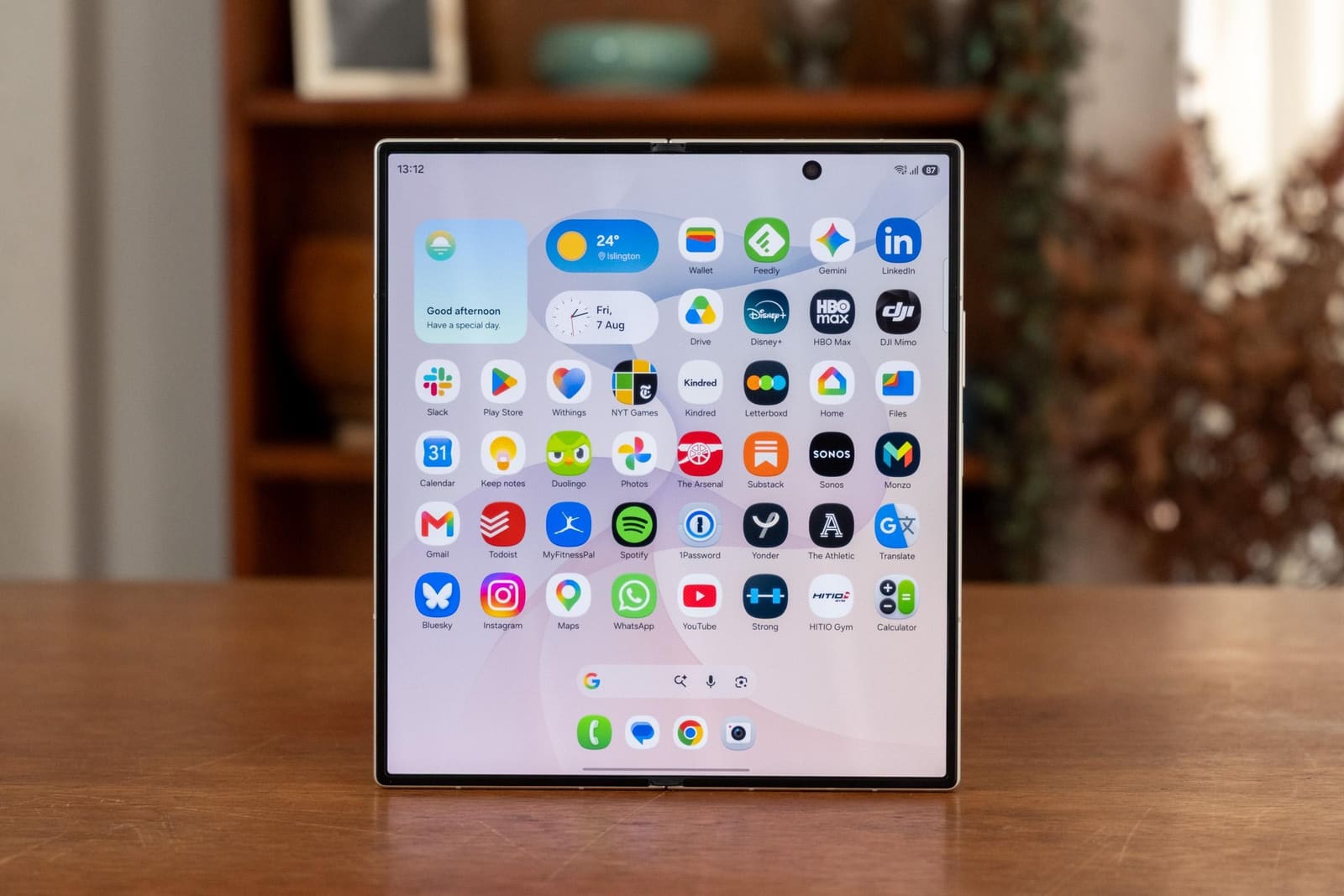
Samsung has stretched its Ultra branding to the foldable lineup, but the Galaxy Z Fold 8 Ultra doesn't follow the playbook established by the S-series flagship. Where the S26 Ultra bundles stylus support, privacy screen technology, and maxed-out specs, the Fold 8 Ultra focuses on narrower improvements: a triple-lens rear camera array, a modestly larger battery, and refined charging speeds. The form factor stays familiar, keeping the slender outer display and nearly square inner panel that have defined Samsung's foldables since the early generations.
At DailyTechWire, we've tracked how Samsung's foldable strategy has diverged from the wider-screen approach favored by competitors in China. The Fold 8 Ultra continues that trajectory. Its outer screen remains narrow enough to slide into a pocket without bulk, but too constrained for comfortable typing or media consumption. The inner display unfolds into a workspace that's closer to a square than the widescreen rectangles offered by Oppo or Honor. This geometry suits multitasking and document editing, but it also limits video playback to letterbox bars or awkward cropping.
The absence of S Pen support is notable. Samsung has offered stylus compatibility on previous Fold models, and the Ultra name typically signals every feature Samsung can pack into a chassis. Leaving it out suggests either engineering constraints around the hinge mechanism or a calculated trade-off to keep thickness in check. Either way, power users who rely on pen input will need to look elsewhere or accept the gap.
Camera Hardware Gets the Upgrade Budget
The triple rear camera system is where Samsung allocated most of the hardware investment. While the company has not disclosed full sensor specifications, the upgrade represents a meaningful step beyond the Fold 7's imaging setup. Foldables have historically lagged behind slab flagships in camera quality because thickness and hinge complexity leave less room for large sensors and optical stabilization hardware. Samsung appears to be closing that gap, at least on the Ultra variant.
This matters in markets where foldables are no longer novelty devices. In Seoul and Shenzhen, foldables account for a growing share of premium phone sales, and buyers expect flagship camera performance regardless of form factor. Samsung's camera push on the Fold 8 Ultra is less about innovation and more about parity with the S-series and competitive pressure from devices like the Xiaomi Mix Fold 4 Pro, which shipped with a Leica-tuned periscope telephoto lens earlier this year.
Battery capacity has also increased, though the exact milliampere-hour figure remains unconfirmed. Foldables consume more power than slab phones due to dual displays and the larger screen area when unfolded. Even modest battery gains can translate into meaningful endurance improvements, particularly for users who keep the inner display active throughout the workday. Faster charging speeds compound the benefit, reducing the time needed to top up between meetings or flights.
What the Fold 8 Ultra Leaves Out
The decision to skip the Privacy Display feature that debuted on the S26 Ultra is harder to explain. Privacy Display uses a lenticular layer to narrow the viewing angle, making the screen unreadable from the side. It's a niche feature, but one that appeals to enterprise buyers and users in open-plan offices or public transit. Samsung may have judged the added cost and thickness incompatible with the foldable's already complex display stack, or simply decided the market for the feature was too small to justify inclusion.
The Fold 8 Ultra's positioning becomes clearer when viewed against the standard Fold 8. That model adopts a wider outer screen and a different aspect ratio for the inner display, breaking from the traditional Fold template. The Ultra, by contrast, is the conservative option: the same design Samsung has refined over multiple generations, with targeted upgrades in areas where users have consistently demanded more. It's a hedge. Samsung is testing a new form factor on the standard Fold 8 while offering the Ultra as a safe bet for buyers who want the proven layout with better hardware.
Iterative Gains in a Maturing Category
Foldables are no longer experimental. Samsung has shipped millions of units across the Fold and Flip lines, and the category has matured to the point where year-over-year changes are incremental rather than revolutionary. The Fold 8 Ultra reflects that maturity. It doesn't reimagine the foldable phone; it refines the existing formula with better imaging, longer battery life, and faster charging.
This approach carries risk. Competitors in China are moving faster on hardware: larger cover screens, faster chips, thinner hinges, satellite connectivity. Samsung's iterative pace works when the brand and ecosystem lock in buyers, but it leaves openings for rivals who can ship more aggressive specs at competitive prices. The Fold 8 Ultra's camera and battery upgrades are meaningful, but they're not enough to widen the gap between Samsung and the chasing pack.
The Fold Formula Under Pressure
Samsung's decision to keep the narrow outer screen and square inner display on the Ultra variant reveals both confidence and caution. Confidence that the design still resonates with a core audience who value pocketability and multitasking over media consumption. Caution because diverging too far from the established template risks alienating that base.
The Fold 8 Ultra is a refinement, not a reinvention. It's Samsung betting that the market for foldables is large enough to support two form factors: a redesigned standard model and a familiar Ultra variant with better components. Whether that bet pays off depends on how quickly buyers demand more than iterative upgrades, and how long Samsung can hold its lead before the competition closes in.