Chinese Families Spend Thousands on AI Learning Tablets After Tutoring Ban
Parents are paying up to $1,800 for devices that scan homework and explain problems, as traditional cram schools remain restricted
A New Kind of Study Companion
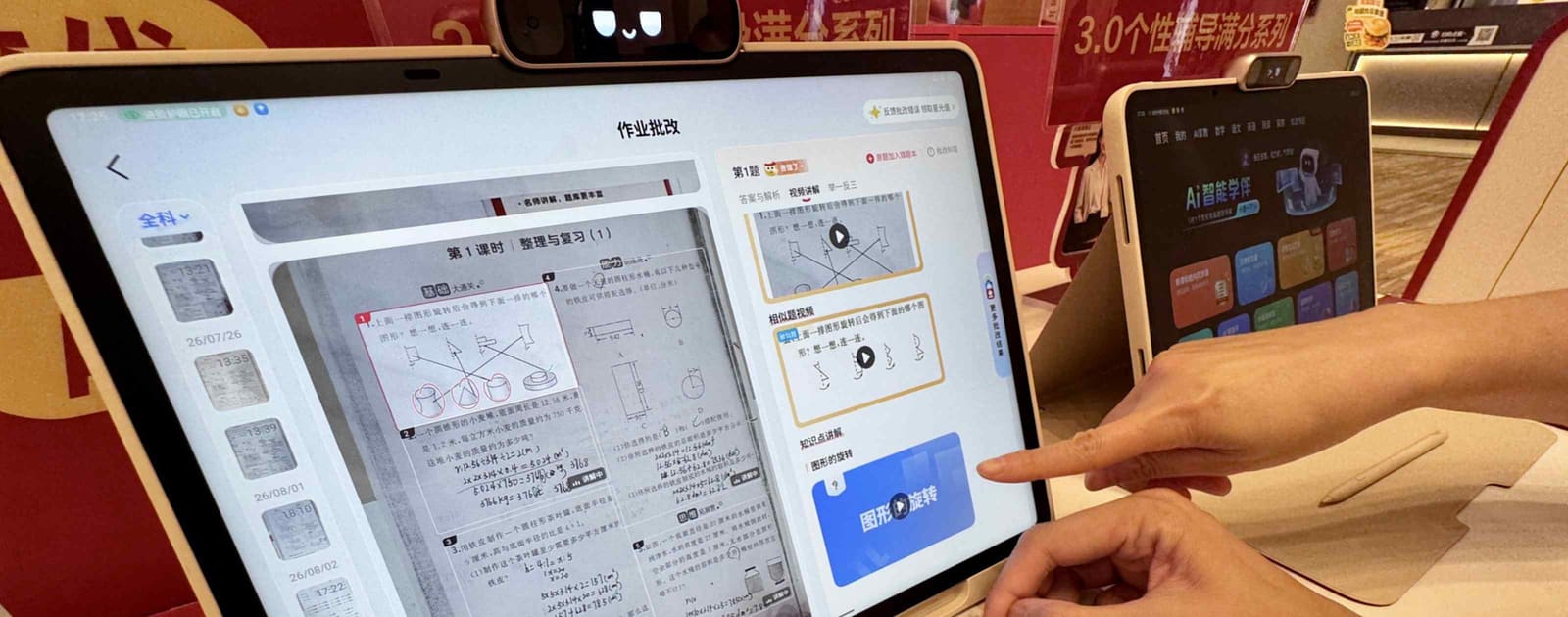
In Dalian and cities across China, a growing number of families are investing in AI-powered learning tablets that can scan homework sheets, verify answers, and deliver step-by-step explanations for math problems, reading comprehension, and science questions. These devices, which range from a few hundred dollars to $1,800 for premium models, represent a shift in how Chinese parents are approaching supplemental education in the post-crackdown era.
The appetite for these tools reflects both the enduring intensity of educational competition in China and the resourcefulness of parents seeking alternatives after Beijing severely curtailed the private tutoring industry in 2021. While traditional cram schools were forced to shut down or pivot to non-academic offerings, technology companies have stepped into the void with hardware and software that promise personalized instruction without violating regulatory boundaries.
The Technology Behind the Tablets
Most of these learning devices combine optical character recognition with large language models fine-tuned on educational content. A student can photograph a worksheet or textbook page, and the system will parse the text, identify the question type, check submitted answers, and generate explanations tailored to the student's grade level. Some models also track performance over time, flagging weak areas and adjusting problem sets accordingly.
The pitch is compelling for parents who previously relied on after-school tutors but now face limited options. Instead of paying for weekly sessions at a tutoring center, families make a one-time hardware purchase and subscribe to content libraries that cover national curriculum standards. The devices are marketed as tireless study partners that can answer questions at any hour, a particularly appealing feature during summer breaks when children have more unsupervised study time.
Price Points and Market Adoption
Entry-level models start around $300 and offer basic scanning and answer-checking features. Mid-range devices, priced between $600 and $1,000, add voice interaction, adaptive problem generation, and integration with popular textbook series. At the high end, tablets approaching $1,800 include larger displays, stylus support for handwriting input, and access to premium video libraries featuring master teachers explaining difficult concepts.
Despite these price tags, adoption has been brisk. Education technology firms targeting the K-12 segment have reported double-digit growth in hardware sales over the past year, with summer months showing particularly strong demand. Parents view the expense as a hedge against falling behind in a fiercely competitive academic environment where high-stakes exams still determine university placement and career trajectories.
Regulatory Gray Zones
The devices occupy a regulatory gray area. Beijing's 2021 crackdown targeted tutoring services that employed human instructors and operated on for-profit models, especially those focused on core academic subjects like math and language arts. AI learning tablets, by contrast, are classified as consumer electronics rather than educational services, allowing manufacturers to sidestep many of the restrictions that decimated the traditional tutoring sector.
Authorities have not issued explicit guidance on whether AI-driven homework assistance constitutes a form of prohibited tutoring. For now, companies are careful to frame their products as study aids rather than replacements for classroom instruction. Marketing materials emphasize that the devices help students complete homework more efficiently and reinforce concepts already taught in school, rather than introducing new material or coaching students for exams.
This positioning has allowed the category to flourish even as regulators continue to scrutinize the broader education technology landscape. However, the possibility of future restrictions remains. If officials decide that AI tutoring tools undermine policy goals around reducing academic pressure and leveling educational access, the market could face sudden headwinds.
Broader Implications for EdTech in Asia
China's experience with AI learning devices offers a preview of how families across Asia might respond to similar policy constraints or simply to the availability of more affordable, scalable tutoring alternatives. In markets where private tutoring is deeply embedded in the culture, from South Korea to India to Singapore, technology-mediated instruction could gain traction as a complement or substitute for human tutors.
At DailyTechWire, we've tracked the rapid evolution of consumer AI applications across the region, and education remains one of the most commercially promising verticals. The combination of parental willingness to spend, large student populations, and advances in natural language processing creates fertile ground for hardware and software providers. The key variable is regulatory appetite: governments that see AI tutoring as a way to democratize access may encourage the trend, while those concerned about intensifying academic competition may move to limit it.
For now, Chinese families are voting with their wallets. The summer break has become a proving ground for these devices, with students using them to review material from the previous year and get a head start on the next. Whether that leads to better learning outcomes or simply shifts the tutoring arms race from human instructors to AI platforms is a question that will take years to answer. What is clear is that the demand for educational support has not disappeared, it has simply found a new form factor.