Google Reshuffles Senior AI Leadership as Model Performance Questions Linger
Jeff Dean's departure and Demis Hassabis's expanded role signal a strategic reset in Mountain View's approach to the intelligence race - but structural challenges may run deeper than personnel.
A Quiet Week That Wasn't
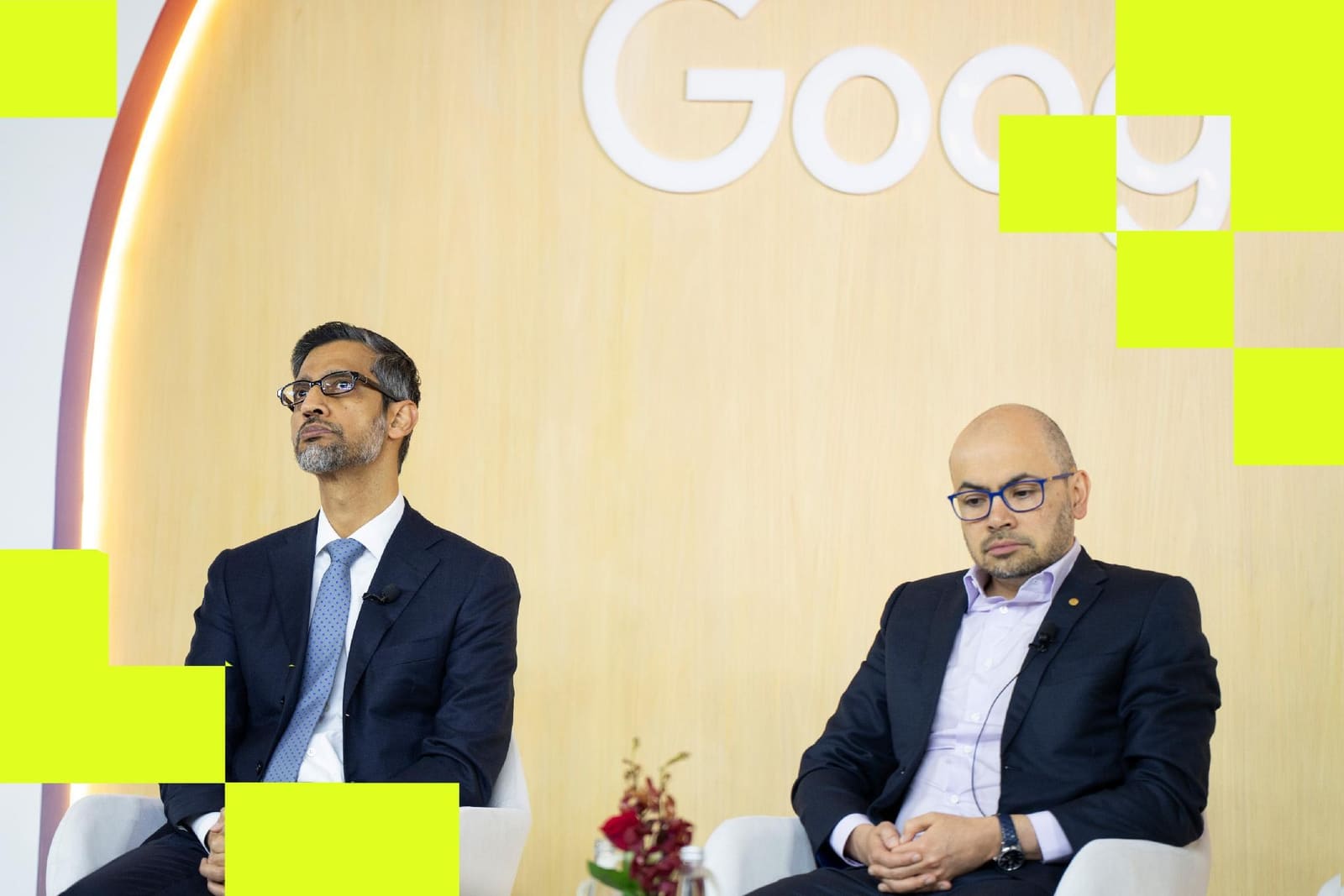
Google announced a series of senior leadership changes across its artificial intelligence organization this week, moves that would normally register as routine corporate housekeeping. Except the names involved - Jeff Dean among them - are anything but routine, and the timing lands in the middle of a sprint where Google's large language models have consistently placed behind Anthropic's Claude and OpenAI's GPT-4 family in both benchmark performance and developer sentiment.
Dean, a figure whose contributions to Google's infrastructure stack are woven into the architecture of modern search and machine learning, is moving on. Others on the AI leadership roster have been reassigned, their mandates redrawn. At DailyTechWire, we've tracked enough of these shake-ups across the region to know that personnel moves at this altitude rarely happen in isolation. They're symptoms, not causes.
The question is what they're symptomatic of.
The Performance Gap Nobody Wants to Name
Google's Gemini models are capable. They power features millions of users touch daily. But capability and leadership are different categories, and in the past eighteen months the gap between Google's output and the work coming from San Francisco's smaller, more focused labs has widened in ways that matter to developers, enterprise buyers, and the venture capital flowing into application-layer startups.
Benchmarks are imperfect instruments, but they tell part of the story. Anthropic's Claude 3.5 Sonnet outperforms Gemini Pro on reasoning tasks and long-context retrieval; OpenAI's o1 series has set a new bar for multi-step problem solving. Google has scale, data, and compute that neither rival can match, yet those advantages haven't translated into the model supremacy the company held during the BERT and Transformer eras.
The divergence isn't just technical. It's also organizational. Google has two AI engines: DeepMind, the London-based research lab it acquired in 2014, and Google Brain, the in-house team that Dean helped build. The two were nominally merged in 2023 under the Google DeepMind banner, but integration in name doesn't always mean integration in practice. Overlapping roadmaps, competing priorities, and the gravitational pull of legacy products - Search, Assistant, Workspace - create friction that leaner competitors simply don't face.
Hassabis and the Bet on Research Depth
Demis Hassabis, DeepMind's co-founder and now the consolidated leader of Google's AI efforts, has a reputation for long time horizons. His background is in neuroscience and game AI; his instincts lean toward fundamental research rather than incremental product iteration. That's an asset when you're chasing AGI milestones or protein folding breakthroughs. It's less clear how it maps onto the grinding, quarter-by-quarter demand to ship models that developers want to build on and enterprises want to buy.
The leadership reshuffle appears designed to give Hassabis more room to maneuver. By moving veterans like Dean out of operational roles - whether through departure or reassignment - Google is signaling a willingness to rethink the structure that got it here. But structure is only part of the equation. Culture, incentive alignment, and the ability to make fast decisions on model releases and API pricing matter just as much, and those are harder to retrofit.
Google has historically struggled with the "innovator's dilemma" in its purest form: the company's existing revenue streams are so massive that new product lines need to clear an absurdly high bar to justify internal resource allocation. Search generates over $200 billion annually. An AI assistant that cannibalizes even a fraction of that traffic is a hard sell internally, no matter how technically sound.
What the Market Is Watching
Investors and builders across Asia are paying attention. Seoul's LLM application startups, Singapore's enterprise AI integrators, and Bengaluru's developer tools companies all depend on foundation model APIs. Right now, the default choices are Claude for nuanced reasoning, GPT-4 for general-purpose tasks, and increasingly, regional players like Alibaba's Qwen for Chinese-language workloads.
Google's models show up in the mix, but rarely as the first choice. That's a problem not just for Google's cloud revenue - where AI API calls are a growing line item - but for its position in the broader stack. If developers default to Anthropic or OpenAI during the prototyping phase, they're less likely to switch later, even if Google's models catch up. Lock-in happens early in the AI application lifecycle.
The shake-up also raises questions about Google's ability to attract and retain top-tier research talent. Dean's departure, regardless of its official framing, will be read as a signal by PhD candidates and senior engineers considering where to take their next role. DeepMind still has cachet, but so does Anthropic, and the latter offers equity upside that Google's mature stock structure can't match.
The Structural Challenge Nobody's Solving
Personnel changes can accelerate decision-making and clarify accountability. What they can't do is resolve the underlying tension between Google's need to protect its core business and its need to lead in a technology that threatens to reshape how people access information.
OpenAI doesn't have a search engine to protect. Anthropic doesn't have a cloud platform with legacy customers. Both can move faster, take bigger risks, and ship models that occasionally break things - because they don't have billions in quarterly revenue riding on stability. Google does, and that's both its moat and its anchor.
The Asia angle is particularly sharp. China's AI labs, operating under different regulatory and competitive constraints, are iterating on open-weight models at a pace that's forcing Western companies to reconsider their closed-model strategies. Alibaba, Baidu, and Tencent are all shipping models that perform well on Chinese-language tasks and are increasingly competitive on English benchmarks. Google's multilingual capabilities are strong, but the company's go-to-market execution in Asia has always lagged its technical potential.
If this leadership reset is meant to address that gap - by giving Hassabis the authority to prioritize model performance over product integration - it's a meaningful shift. But it's also a bet that research depth, given time and resources, will eventually translate into market leadership. That's a hypothesis, not a certainty, and in the current environment, time is the one resource Google's competitors aren't granting it.
What Comes Next
The next six months will clarify whether this reorganization was a course correction or a rearranging of deck chairs. Google has a major developer conference on the calendar, and the company will need to show up with models that genuinely compete, not just participate. That means improvements in latency, cost, and reasoning performance - the metrics that matter to the people actually building on these platforms.
It also means demonstrating that the merged DeepMind structure can ship at velocity, not just publish papers. Google's research output remains world-class, but research citations don't win the infrastructure layer. API adoption does, and right now, the momentum is elsewhere.
Leadership changes are inflection points. They create space for new strategies, new priorities, and new bets. But they're not strategies themselves. Google has the talent, the compute, and the data. What it needs now is the organizational courage to let its AI teams move faster than its existing business lines would prefer. Whether Hassabis and the reconfigured leadership team can pull that off - while Jeff Dean's departure becomes a footnote or a turning point - is the real story we'll be watching from here.