The Budget Laptop Race Intel's Wildcat Lake Chips Didn't Quite Win
Apple's MacBook Neo forced PC makers to respond with better hardware at lower prices, but matching its $599 value proposition proved harder than expected
The Neo Effect on Budget Computing
Apple's MacBook Neo arrived with a clear proposition: solid keyboards, decent displays, and respectable build quality for $599. The device didn't try to compete with the MacBook Air's premium features. Instead, it staked out territory in a segment where Windows laptops had long coasted on mediocrity, a price bracket where "good enough" often meant plasticky chassis, mushy keys, and dim panels.
The Neo's impact rippled through the industry faster than many expected. PC manufacturers, suddenly facing a credible threat in the sub-$600 space, scrambled to respond. But the response revealed something uncomfortable: building a truly competitive budget laptop without cutting corners is harder than it looks, even when Intel hands you the right silicon.
Intel's Wildcat Lake Gamble
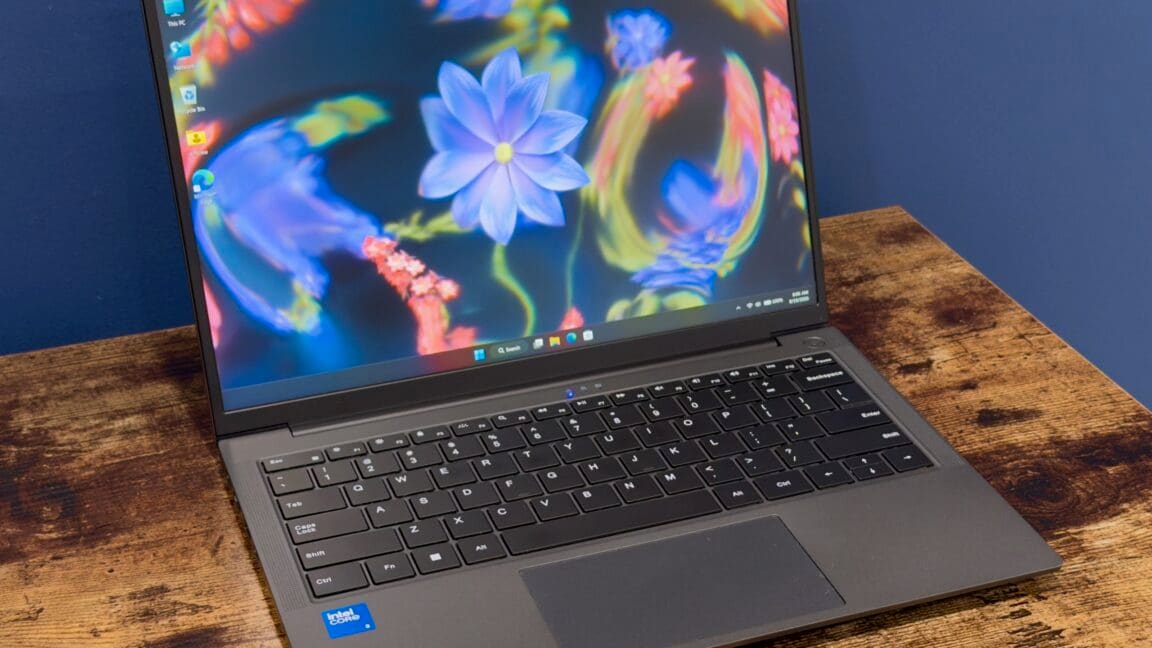
Intel's role in this story matters. The company broke with its established pattern of recycling older architectures for budget systems, a practice that had long kept low-cost Windows machines a generation or two behind in core technology. Instead, Intel developed its Core Series 3 processors, codenamed Wildcat Lake, using the same manufacturing processes and architectural building blocks as its current flagship chips.
The difference lies in configuration, not vintage. Wildcat Lake parts trade raw performance for lower power consumption and cost, but they share DNA with Intel's high-end silicon. That matters for laptop makers trying to hit aggressive price targets without shipping yesterday's technology. Dell, Acer, Asus, and Lenovo all announced Wildcat Lake-based models within months of the Neo's launch, signaling that the industry recognized the competitive pressure.
The $599 Ceiling Nobody Could Crack
Here's where the story gets interesting. Dell's XPS 13, traditionally a premium ultraportable, descended into Neo territory with a $599 starting price. The catch? That rate applied only to students. Everyone else faced a $699 entry point. Acer's Swift Air 14 landed at the same $699 mark for all buyers. Other manufacturers clustered around similar figures, unable or unwilling to match Apple's number.
The pricing gap might seem trivial, but in consumer electronics, psychological thresholds matter. A hundred dollars separates "impulse consideration" from "I'll think about it." The Neo sits comfortably under $600; most Windows responses do not. Some of these machines offered features Apple omitted, touchscreens or additional ports, but those additions miss the Neo's core philosophy: execute the fundamentals flawlessly and skip everything else.
At DailyTechWire, we've tracked this dynamic across multiple product categories. Manufacturers often struggle to compete on simplicity because simplicity requires discipline. It's easier to add a feature than to perfect a hinge mechanism or source a better display panel at volume. The Neo's design language is subtraction, and subtraction is expensive when your supply chain is optimized for addition.
What PC Makers Got Right
Credit where it's due: the Wildcat Lake generation of budget Windows laptops represents a meaningful step forward. Keyboard quality improved across the board. Display brightness and color accuracy climbed from "barely acceptable" to "actually usable." Build materials shifted from creaky plastic to metal or metal-composite blends that at least feel solid in hand.
Lenovo and Asus, in particular, leaned into the challenge, shipping models that closed much of the experience gap even if they couldn't close the price gap. The improvement isn't uniform, budget laptops still vary wildly in quality, but the floor has risen. A buyer shopping in the $600-$700 range today encounters far fewer outright bad machines than they would have two years ago.
The Wildcat Lake Paradox
Intel's Wildcat Lake strategy contains an inherent tension. By giving OEMs access to current-generation architecture at lower price points, Intel enabled better budget laptops. But better components cost more, even at Intel's volume discounts. Laptop makers face a bind: use Wildcat Lake to match the Neo's experience, but absorb thinner margins or raise prices. Most chose the latter.
The result is a market realignment that fell short of full disruption. Apple set a benchmark; PC makers acknowledged it and moved in that direction, but stopped before reaching parity. The gap isn't enormous, a hundred dollars, some spec trade-offs, but it's persistent. And in a category where buyers are acutely price-sensitive, persistence matters.
Why the Basics Are Hard
The Neo's success, and the PC industry's partial response, illuminates a broader truth about hardware design. Building a competent low-cost laptop requires expertise in supply chain management, component sourcing, and design discipline that not every manufacturer possesses. Apple controls its entire stack, from silicon to retail, which grants pricing flexibility and margin management that traditional OEMs lack.
Windows laptop makers operate in a different ecosystem. They buy chips from Intel, displays from a handful of panel suppliers, and assemble in contract facilities that serve multiple brands. Differentiation comes from design and integration, but those are exactly the areas where cost pressure bites hardest. Shaving ten dollars off a bill of materials is easy; shaving ten dollars without degrading the keyboard feel or screen quality is not.
The Neo didn't revolutionize budget computing, but it did prove that the category had been under-served. PC makers heard the message. Whether they can fully act on it without either raising prices or accepting slimmer profits remains an open question. For now, the $599 threshold stands as a line most can approach but few can cross.