Why Your Car's Android System and Your Phone's Are Two Different Things
Understanding the divide between projection-based interfaces and native automotive operating systems matters more as software takes the wheel.
The Naming Problem That Reveals a Deeper Split
Walk into a dealership today and ask about Android in the car, and you might get three different answers. The sales rep mentions Android Auto. The spec sheet lists Android Automotive OS. The marketing brochure promises Google built-in. They sound interchangeable. They are not.
At DailyTechWire, we have tracked the slow, sometimes messy migration of mobile operating systems into vehicles across Asia and beyond. The distinction between these platforms is not just semantic. It represents two fundamentally different approaches to in-car software architecture, with implications for automakers, suppliers, and the drivers caught in the middle.
Projection vs. Native Execution
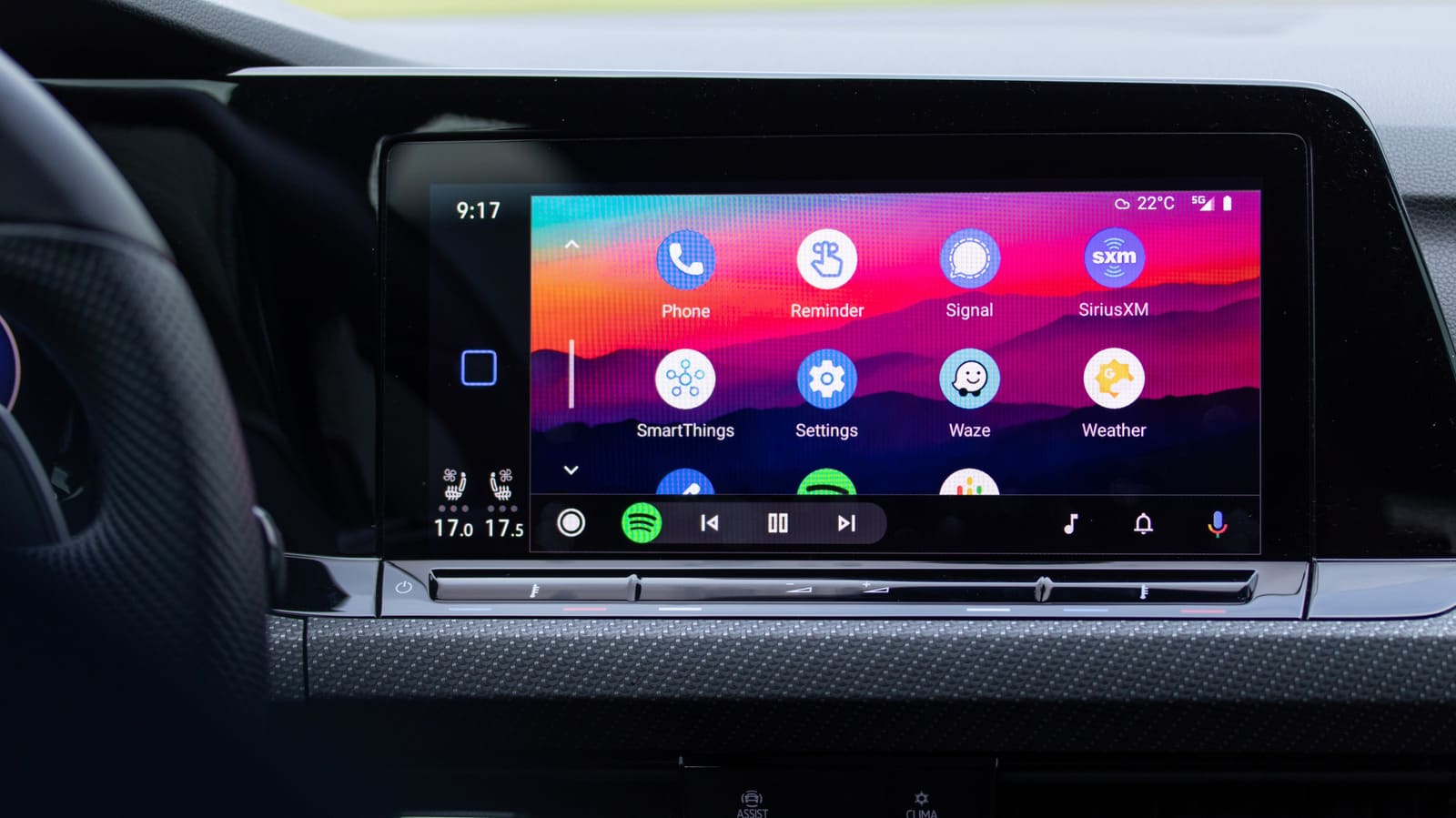
Android Auto is a projection system. Your smartphone does the computational work: running apps, processing voice commands, pulling map data. The car's display acts as a remote screen and input surface. Connect via USB or wireless link, and a simplified, driver-focused interface appears on the dashboard. Navigation, music streaming, messaging, and a curated set of third-party apps become accessible without touching the phone.
The appeal is portability. Unplug from one vehicle, connect to another, and your preferences, logged-in accounts, and app library follow. The car itself can be running any underlying system. It might be a proprietary stack from a tier-one supplier, an older Linux variant, or even an embedded version of QNX. Android Auto does not care. It is agnostic to the host.
This mirrors the logic behind Apple CarPlay, which similarly depends on an iPhone to provide the experience. Even the more ambitious CarPlay variants that extend across multiple displays and surface vehicle controls still require the phone as the intelligence layer.
Android Auto can request certain vehicle data if the automaker exposes it through standardized APIs. Battery level, estimated range, and charge status are common examples in electric vehicles. But the depth of integration is limited by what the car manufacturer chooses to share and what the projection protocol supports.
When the OS Lives in the Hardware
Android Automotive OS flips the model. It is a full operating system installed directly on the vehicle's compute hardware, typically on a system-on-chip from suppliers like Qualcomm or NVIDIA. AAOS handles not just infotainment but can integrate with instrument clusters, climate controls, seat adjustments, and powertrain telemetry.
Automakers license AAOS, then build their own user experiences on top. The open-source nature of the platform allows deep customization. A brand can design unique interfaces, add proprietary features, and control the look and feel while relying on Android's application framework, security model, and update infrastructure underneath.
This is where Google built-in enters the picture. AAOS itself is open source. Google built-in is a separate, licensed package of Google Automotive Services. It includes native versions of Google Maps, Google Play Store access for automotive apps, and Google Assistant, all running without a phone connection. A car can run AAOS without Google built-in, using alternative mapping, voice, and app ecosystems.
Rivian provides a clear example. Its vehicles use AAOS as the foundation but feature a fully custom interface and do not support Android Auto or Apple CarPlay projection. The company wanted complete control over the software experience and saw projection systems as a crutch that delayed the industry's shift to native platforms.
Polestar demonstrates the opposite strategy. Its vehicles run AAOS with Google built-in, offering native Google services, while also supporting Android Auto and Apple CarPlay. Drivers can choose between the car's built-in capabilities and projecting their phone. Polestar 2, which launched in 2020, was the first production vehicle to ship with Android Automotive OS.
The Strategic Calculus for Automakers
The choice between supporting projection, adopting a native OS, or doing both is not just technical. It is strategic. Projection systems let automakers defer software investment. The phone companies and app developers handle updates, feature additions, and user expectations. The car provides a screen and basic connectivity.
Native platforms like AAOS demand more upfront engineering and ongoing maintenance. But they offer control. Automakers can differentiate on software, capture usage data, enable over-the-air updates for vehicle functions, and potentially unlock recurring revenue through subscriptions or in-car services.
We have seen this tension play out across Asia's automotive supply chain. Chinese manufacturers like NIO, XPeng, and Li Auto have invested heavily in proprietary software stacks, viewing software as a core competency rather than a commodity. They see native OS control as essential to the user experience and to competing with Tesla's vertically integrated model.
In contrast, legacy manufacturers in Japan and Korea have moved more cautiously. Many have adopted AAOS as a hedge, licensing a proven platform while building differentiation on top. Honda and Renault have both announced commitments to AAOS for future lineups. Hyundai's luxury brand Genesis has integrated Google built-in into recent models.
What Drivers Actually Experience
For the driver, the practical difference comes down to dependency and depth. With projection systems, the phone is required. If the phone battery dies, the interface disappears. App compatibility is determined by the phone OS and the projection protocol, not the car.
With native systems, the car functions independently. Navigation, voice control, and app access work whether or not a phone is present. Integration can be tighter. Climate controls can appear in the same interface as media playback. Charging settings can sit alongside route planning.
But fragmentation is real. An Android Auto or CarPlay interface is broadly consistent across vehicles. A native AAOS experience varies by automaker. Some implementations are polished and responsive. Others are sluggish, with confusing menus and poor app selection. The open-source foundation does not guarantee quality.
The Convergence That Is Not Quite Happening
Industry observers expected convergence. The assumption was that as native platforms matured, projection would fade. Why mirror a phone when the car can do it all natively?
Reality has been messier. Consumers still value the flexibility of projection. They trust their phone's ecosystem more than their car's. Automakers have discovered that software development is harder and more expensive than anticipated. And the smartphone remains the most frequently updated, most capable computer most people own.
The result is coexistence. High-volume manufacturers are hedging by supporting both. Premium brands are using native platforms to differentiate. Budget segments are sticking with projection to keep costs down.
Google itself has walked a careful line. It promotes AAOS to automakers as a platform play, hoping to extend Android's reach into vehicles the way it did into phones and TVs. But it continues to develop Android Auto, recognizing that projection remains the dominant interface for most drivers.
Forward Signals
Two trends are worth watching. First, the rise of software-defined vehicles is pushing automakers toward native platforms. As more vehicle functions become software-controlled, the line between infotainment and vehicle operation blurs. Projection systems cannot cross that line.
Second, the geopolitical dimension is sharpening. Chinese automakers are building entirely domestic software stacks, wary of dependence on U.S. technology platforms. European regulators are scrutinizing data flows and platform lock-in. India's automotive software sector is nascent but growing, with local startups pitching alternatives to Google and Apple.
The naming confusion between Android Auto and Android Automotive is not just a branding failure. It reflects an industry still figuring out what role software should play in vehicles and who should control it. The phone-centric model and the car-centric model are not converging. They are competing.