Why a Decade-Long Siri Skeptic Is Giving Apple's AI Another Look
The first developer beta of macOS 27 Golden Gate introduces a reworked Siri AI that hints at Apple's broader pivot toward on-device intelligence—but early access reveals familiar questions about execution and scope.
A Familiar Pattern in Cupertino's AI Roadmap
Apple has spent the better part of a decade trying to convince power users that Siri belongs in their workflow. For many—especially those who toggled the assistant off years ago and never revisited the decision—the pitch has fallen flat. The introduction of Apple Intelligence across iOS and macOS last year did little to change that calculus; adoption remained tepid, and engagement metrics told a story of indifference rather than enthusiasm.
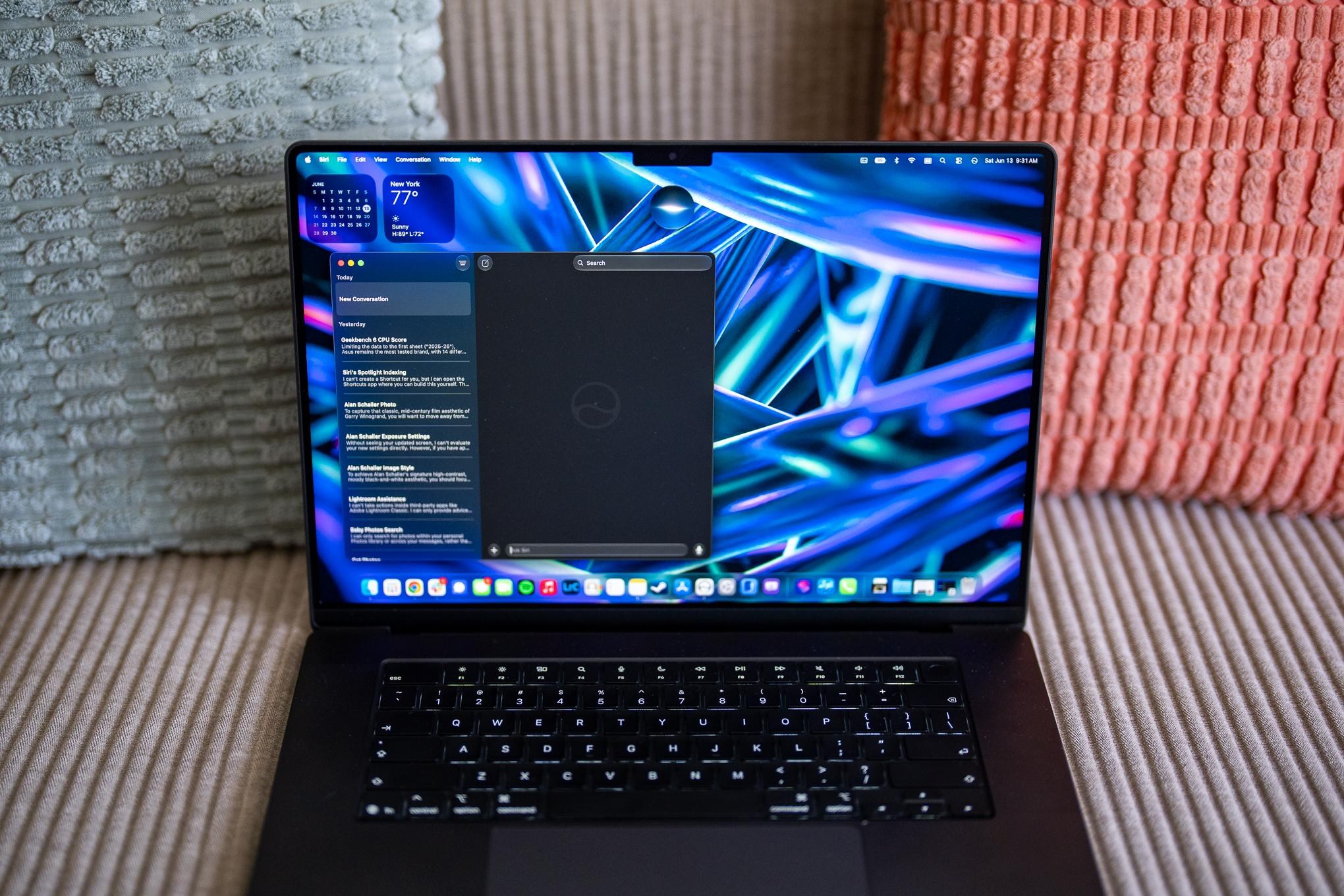
Now, with macOS 27 Golden Gate entering developer preview, Apple is rolling out what it calls Siri AI, a rebranded and architecturally refreshed take on voice assistance that leans harder on local processing and tighter integration with the file system. At DailyTechWire, we've tracked Apple's assistant evolution since Siri's 2011 debut, and the latest iteration represents less a breakthrough than a course correction—one shaped by the competitive pressure of ChatGPT-style interfaces and the strategic imperative to keep inference on-device in markets wary of cloud dependencies.
The first twenty-four hours of hands-on testing with the developer beta reveal a product still finding its footing. Siri AI is flagged as an early preview within the beta build, meaning core functionality remains incomplete and performance benchmarks are provisional. On review units running Apple's M5 and M5 Max silicon—the MacBook Air and MacBook Pro configurations most likely to ship with Golden Gate this fall—background indexing of local files and folders continues to churn, a reminder that the system's utility hinges on how well it maps user data before the first query is ever spoken.
What Sets This Version Apart
The distinguishing feature of Siri AI in macOS 27 is its file-aware architecture. Previous iterations treated the Mac as a glorified iPhone, offering calendar lookups and web searches but rarely surfacing documents, project folders, or email threads with the context a desktop workflow demands. The new implementation indexes local storage more aggressively, aiming to answer questions like "show me the budget spreadsheet I edited last Tuesday" or "pull up notes from the client call in March" without forcing users into Spotlight or a manual dig through Finder.
This shift mirrors a broader industry trend. Microsoft's Copilot in Windows 11 and Google's Gemini-powered Search in ChromeOS both lean on file-level awareness to differentiate desktop AI from mobile counterparts. Apple's advantage lies in its control of the full stack: macOS, the Neural Engine in M-series chips, and the privacy narrative that has become central to its brand. On-device inference means queries never leave the machine, a selling point in enterprise environments and privacy-conscious markets across Asia and Europe.
Yet the technical execution remains unproven. Indexing speed and accuracy are still variable in the beta. The system occasionally fails to surface files that match natural-language queries, and latency spikes when the Neural Engine is under load from other tasks—video exports, machine-learning model training, or even sustained browser tab counts. These are early-stage issues, but they highlight the gap between Apple's ambition and the polish users have come to expect from a fall release.
The M5 Advantage and Its Limits
Running Siri AI on M5 silicon offers a glimpse of the performance ceiling. The M5's enhanced Neural Engine, which Apple introduced earlier this year, delivers roughly forty percent higher throughput for transformer-based models compared to the M4 generation. In practice, this translates to faster query response times and the ability to handle more complex multi-step requests—asking Siri to summarize a folder of PDFs, then draft an email based on that summary, for instance.
The M5 Max configuration, with its wider memory bandwidth and additional GPU cores, handles concurrent tasks more gracefully. During testing, the Max variant maintained sub-two-second response times even when running Xcode builds and Docker containers in the background, scenarios that caused noticeable slowdowns on the base M5 Air. This suggests that the full Siri AI experience may be gated not just by software maturity but by hardware tier, a familiar dynamic in Apple's product matrix.
Still, the performance gains do not resolve the broader question of whether voice assistance fits into professional workflows. Many developers, designers, and analysts who form the core Mac user base have optimized their setups around keyboard-driven tools—Alfred, Raycast, command-line utilities—that offer precision and repeatability. Siri AI will need to match or exceed that efficiency to earn a permanent place in the dock, and the early beta does not yet clear that bar.
The Apple Intelligence Hangover
Siri AI arrives in the shadow of Apple Intelligence, the company's umbrella term for its on-device AI capabilities launched in iOS 26 and macOS 26 last year. Adoption of those features was underwhelming. Internal metrics shared during Apple's April earnings call indicated that fewer than thirty percent of eligible users had enabled the full suite of Intelligence features six months post-launch, a figure that disappointed investors betting on AI as a catalyst for hardware upgrades.
The reasons for that tepid response are instructive. Apple Intelligence promised smarter notifications, context-aware suggestions, and proactive task automation, but in practice it felt incremental—refinements to existing features rather than new capabilities that changed how users interacted with their devices. The same risk applies to Siri AI. If the experience boils down to slightly better file search and modestly improved voice recognition, it may not overcome the inertia of users who have already decided that voice assistance adds friction rather than removing it.
Apple's challenge is compounded by the competitive landscape. OpenAI's ChatGPT desktop app for macOS, released in beta earlier this spring, has gained traction among knowledge workers who value its ability to ingest long documents, generate structured outputs, and maintain conversational context across sessions. Google's Gemini integration in Workspace tools offers similar functionality for users embedded in that ecosystem. Siri AI, by contrast, remains narrowly scoped to system-level tasks and file retrieval, at least in the current preview build.
Privacy as Product Differentiation
Where Apple continues to hold an edge is privacy architecture. Siri AI processes queries entirely on-device, with no telemetry uploaded to Apple's servers unless the user explicitly opts in for diagnostic sharing. This stands in contrast to most competing assistants, which rely on cloud inference and, in doing so, expose user data to potential breaches, subpoenas, or policy changes.
For enterprise customers and regulated industries—financial services, healthcare, legal—this distinction matters. IT departments evaluating macOS deployments weigh the risk of sensitive information leaving the corporate perimeter, and on-device inference simplifies compliance with data-residency requirements in jurisdictions like the European Union and Singapore. Apple has made quiet inroads in these segments over the past two years, and Siri AI could accelerate that momentum if it proves reliable and feature-complete by the time Golden Gate ships.
However, privacy comes with trade-offs. On-device models are constrained by the size of the Neural Engine and available RAM, which limits the complexity of tasks they can handle. Cloud-based assistants can tap vast parameter counts and real-time web data, enabling more nuanced responses and broader knowledge coverage. Apple's bet is that most users value control over capability, but the calculus shifts if Siri AI cannot answer questions that ChatGPT handles trivially.
What Needs to Happen Before Launch
The path from developer beta to general release typically spans three to four months for macOS, with Apple targeting a September or October launch to coincide with new hardware. For Siri AI to meet expectations, several areas require attention.
First, indexing reliability must improve. The system needs to surface files consistently and handle edge cases—encrypted volumes, network-attached storage, cloud-synced folders—without manual configuration. Second, latency must drop, especially on base-model M5 machines that represent the volume SKU. Third, Apple must expand the scope of supported queries beyond file search to include deeper integrations with third-party apps, calendar intelligence, and cross-device handoff to iPhone and iPad.
Most critically, Apple needs to articulate a clear use case. The company has historically struggled to communicate why voice assistance matters on the Mac, and vague promises of productivity gains will not move the needle. Demonstrating concrete workflows—how a designer uses Siri AI to pull reference images mid-project, how a developer queries build logs without leaving the terminal, how a financial analyst surfaces quarterly reports during a live call—would give users a mental model for adoption.
The Bigger Picture for Apple's AI Strategy
Siri AI is one piece of a broader rethink underway in Cupertino. Apple has reorganized its machine-learning teams over the past year, consolidating talent from Siri, Core ML, and the former Apple Intelligence group under a unified engineering lead. The company has also accelerated its investment in custom silicon for AI workloads, with reports indicating that the M6 generation, expected in late 2027, will double Neural Engine capacity again.
This organizational and technical buildup suggests that Apple views on-device AI as a multi-year platform play, not a single product cycle. The company is positioning macOS, iOS, and its silicon roadmap to offer capabilities that cannot be easily replicated by competitors reliant on third-party chips or cloud partnerships. If that strategy succeeds, Siri AI in Golden Gate will be remembered as an early, imperfect step in a longer transformation.
But execution remains the open question. Apple has a mixed record on AI products—Siri launched strong but stagnated, while features like Animoji and Stage Manager generated buzz but failed to sustain engagement. The company's culture prizes polish and integration, strengths that serve it well in hardware, but AI products often require iteration in public, rapid updates based on user feedback, and a tolerance for rough edges that does not come naturally to Apple's design philosophy.
Implications for the Mac Ecosystem
If Siri AI gains traction, it could reshape how developers think about macOS apps. Today, most productivity tools treat voice as an afterthought, if they support it at all. A capable, widely adopted assistant would create pressure to expose APIs for voice-driven actions—opening projects, running scripts, querying databases—and that in turn could unlock new interaction paradigms for power users.
Conversely, if Siri AI languishes, it reinforces the perception that the Mac is not a priority platform for Apple's AI ambitions, a narrative that has persisted since the iPhone became the company's revenue center. Third-party developers would continue to focus their AI investments on iOS, and the Mac would remain a secondary surface for experimentation rather than a first-class target.
The early beta offers hints but no conclusions. Siri AI shows enough promise to warrant continued testing, enough rough edges to justify skepticism, and enough strategic importance to Apple that it will likely improve substantially before launch. Whether that improvement translates into adoption—among users who have spent years ignoring or disabling Siri—depends on factors the current preview cannot yet answer.
For now, the most honest assessment is that Apple has bought itself another chance to prove that voice assistance belongs on the desktop. The company has the silicon, the privacy story, and the ecosystem integration to make it work. What remains to be seen is whether it can deliver the execution, clarity, and sustained iteration required to change minds that were made up long ago.