Oura Ring 5 Signals Smart Wearables' Shift from Function to Form Factor
At 6.09 mm wide and under 3 grams, the $399 Ring 5 addresses Asia-Pacific's demand for discreet health tracking—but sizing constraints hint at manufacturing trade-offs in miniaturization
A 40% Reduction That Changes the Conversation
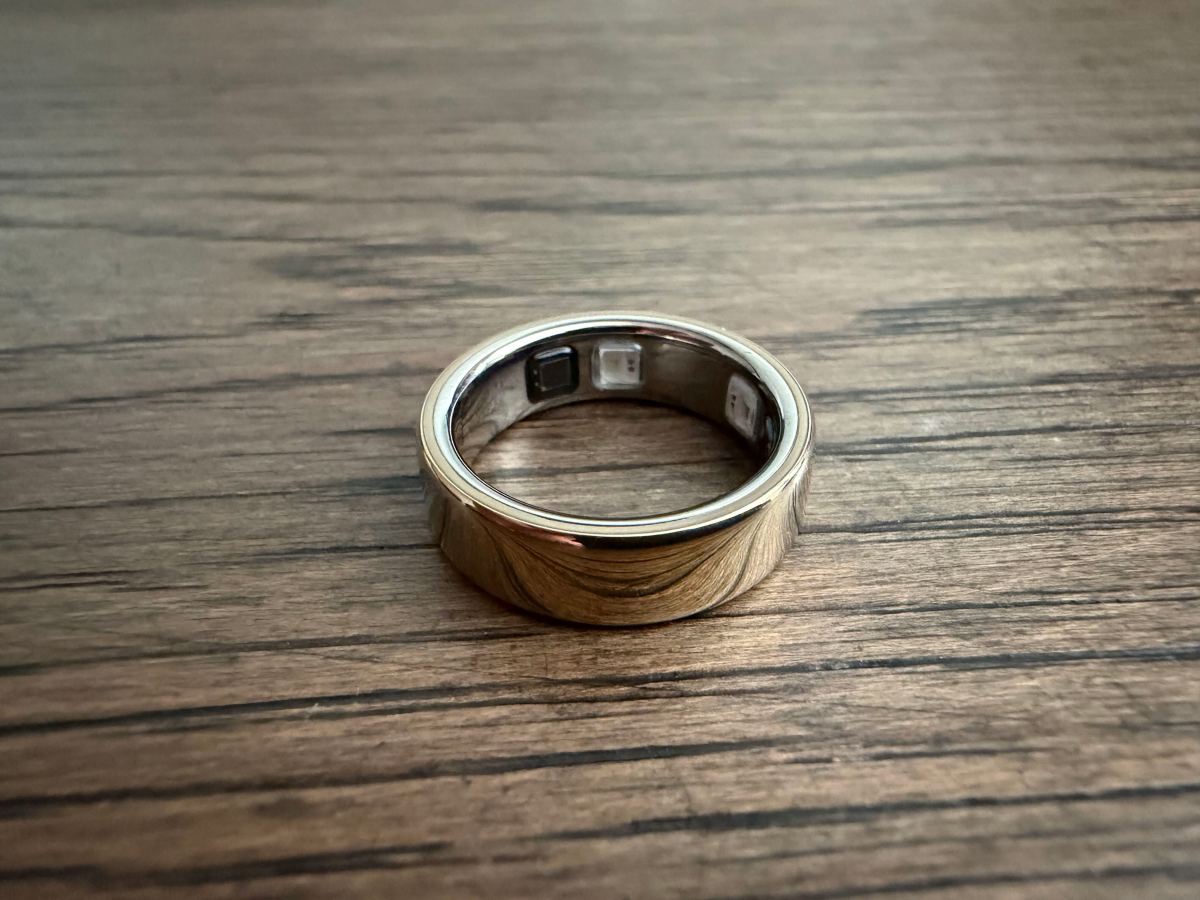
The Oura Ring 5 measures 6.09 mm wide and 2.28 mm thick—down from 7.90 mm and 2.88 mm on the previous generation—and weighs between 2 and 2.69 grams depending on size, according to Oura. That 40% volume reduction represents more than incremental refinement; it's a response to two years of user feedback and mounting competition from subscription-free rivals like RingConn and Ultrahuman, both of which have released lighter rings that undercut Oura's value proposition in Asia-Pacific markets where discretion and battery efficiency matter as much as sensor accuracy.
At DailyTechWire, we've tracked how wearable form factor has become a strategic differentiator in Seoul, Singapore, and Bengaluru—cities where smartwatch adoption plateaued precisely because bulky designs clashed with jewelry norms and professional dress codes. Oura's miniaturization acknowledges that health tracking is no longer a niche pursuit of quantified-self enthusiasts; it's a mainstream expectation, and mainstream users will not compromise on aesthetics.
The Manufacturing Trade-Off: Fewer Sizes, Higher Margins
The Ring 5 ships in sizes 6 through 13, down from the Ring 4's range of 4 to 15. Oura attributes the narrower sizing to the challenges of manufacturing smaller rings in the new form factor, and says it focused on the most popular sizes while monitoring demand for the discontinued options. That explanation is plausible—miniaturization at this scale requires tighter tolerances and more expensive tooling—but it also reveals a strategic bet: Oura is prioritizing margin over market coverage, banking on the assumption that users in the middle of the size distribution will drive revenue growth.
This decision carries risk in Asia, where hand sizes skew smaller than in North America and Europe. By eliminating size 4 and size 5, Oura may cede ground to regional competitors like Ultrahuman, which still offers extended sizing. The company's claim that it will monitor demand suggests it's keeping the door open to re-expand the range, but only if the business case justifies the capital expenditure. In other words, Oura is treating the Ring 5 as a test of whether form factor improvements can command a premium even with reduced accessibility.
Battery Life Extends as Sensor Density Increases
Oura claims the Ring 5 delivers six to nine days of battery life, up from five to eight days on the Ring 4. That improvement is noteworthy given the device's smaller volume and reduced space for battery cells. Early real-world use suggests the estimate holds: a unit that arrived at 50% charge reached 75% after 30 minutes on the charger, and retained 25% capacity after five days of continuous wear. If Oura has achieved higher energy density without sacrificing sensor fidelity, it would mark a meaningful advance in wearable battery chemistry—one that could cascade to other form factors in the company's roadmap.
The battery question is particularly relevant in markets like Indonesia and the Philippines, where users expect wearables to last through multi-day trips without access to charging infrastructure. Oura's ability to extend battery life while shrinking the device suggests it has optimized power management at the firmware level, likely through more selective sensor polling and improved sleep-tracking algorithms that reduce the frequency of heart-rate and SpO2 measurements during inactive periods.
Premium Finishes and the Subscription Paradox
The Ring 5 starts at $399 for Silver, Brushed Silver, and Black finishes, with Gold, Stealth, and Deep Rose priced at $499. The $100 premium for aesthetic variants reflects Oura's effort to position the device as jewelry first and health tracker second—a move that aligns with the company's subscription model, which charges $5.99 per month for access to detailed health metrics. That dual-revenue structure has drawn criticism from users who argue that a $400 device should not require ongoing payments to unlock its core functionality, especially when competitors like RingConn offer similar tracking without subscriptions.
Oura's response has been to double down on design quality. The Ring 5 introduces a new physical vapor deposition (PVD) coating process that Oura says improves scratch resistance and retains the device's "out-of-the-box" look longer than previous generations. Early testing suggests the coating is more durable: a unit exposed to rust from a swing chain showed no permanent scratching, and the residue cleaned off with a cloth. If the PVD finish proves durable over months of wear, it could justify the premium pricing—but only if users believe the aesthetic value outweighs the ongoing subscription cost.
Software Parity and the Upgrade Calculus
The Ring 5 launches alongside new software features—Blood Pressure Signals and Nighttime Breathing—that will also roll out to the Oura Ring Gen3 and Ring 4. That software parity complicates the upgrade decision for existing users: if the Ring 4 receives all the same algorithmic improvements, the primary reason to upgrade is form factor, not functionality. Oura is effectively betting that comfort and aesthetics are worth $399 to $499 for users who already own a functional device—a bet that may succeed in image-conscious markets like Seoul and Singapore, but could face resistance in price-sensitive regions like India and Vietnam.
The software rollout also underscores Oura's platform strategy. By ensuring that older devices receive new features, the company avoids fragmenting its user base and maintains the value of its subscription revenue. But that strategy has a downside: it reduces the urgency to upgrade hardware, which could slow replacement cycles and pressure Oura to innovate faster on the form-factor side to justify new purchases.
Why It Matters: Miniaturization as Moat in a Crowded Market
The Ring 5's 40% size reduction is significant not because it solves a technical problem—smart rings already worked—but because it addresses a perception problem. For two years, potential buyers have split into two camps: those who swear by Oura's health insights, and those who refuse to wear a device that looks like a gadget. The Ring 5 attempts to convert the second group by making the hardware invisible, or at least jewelry-adjacent.
That shift matters in Asia-Pacific, where wearable adoption is accelerating but form-factor expectations are higher than in the West. In markets like Japan and South Korea, where minimalism and craftsmanship are cultural values, a 6 mm ring has a better chance of mainstream acceptance than a 7.9 mm one. The question is whether Oura's miniaturization lead is defensible. RingConn and Ultrahuman have already demonstrated that lightweight smart rings can be manufactured at lower price points without subscriptions. If they match Oura's new form factor within 12 to 18 months—and there's no reason to think they won't—Oura's advantage will narrow to software and brand, neither of which is a durable moat in consumer hardware.
The Ring 5 also raises a broader question about the end state of wearable miniaturization. At 2 grams and 6 mm, Oura is approaching the physical limits of what can house a battery, sensors, and wireless charging coils. Further reductions will require breakthroughs in battery chemistry or sensor integration—advances that are capital-intensive and unlikely to arrive on annual product cycles. That suggests the wearable form-factor race may be nearing its conclusion, and the next phase of competition will shift back to software, data accuracy, and ecosystem integration.
The Open Question: Can Jewelry-Grade Design Sustain a Subscription Model?
Oura's bet is that users will pay $400 to $500 for a ring that looks like jewelry, and then pay $72 per year to unlock the health data it collects. That model works if users perceive the ring as a long-term accessory—something they wear daily for years, not a gadget they replace every 18 months. The Ring 5's durability claims—scratch-resistant PVD coating, extended battery life—suggest Oura is designing for longevity, not planned obsolescence.
But longevity cuts both ways. If users keep their rings for three to five years, Oura's revenue shifts from hardware sales to subscription fees, which means the company must continuously deliver new software features to justify the monthly charge. The Blood Pressure Signals and Nighttime Breathing features launching this month are a start, but they're incremental—not the kind of step-function improvements that persuade users to maintain subscriptions year after year. Oura's challenge is to prove that a jewelry-grade smart ring can support a software-as-a-service business model, or risk becoming a one-time purchase in a category that demands recurring revenue to fund R&D.
The Ring 5 is a well-executed miniaturization play, but it leaves unresolved the tension between Oura's hardware ambitions and its subscription dependencies. In Asia-Pacific, where users are increasingly skeptical of recurring fees and competitors are proliferating, that tension may define whether Oura remains a category leader or becomes a cautionary tale about the limits of design-driven differentiation in consumer electronics.


