America's Robotics Protectionism May Backfire on Its Own Innovation
Washington's latest export controls shut out foreign humanoids and quadrupeds, but the move risks isolating US firms from the very competition that drives breakthroughs.
A Defensive Crouch
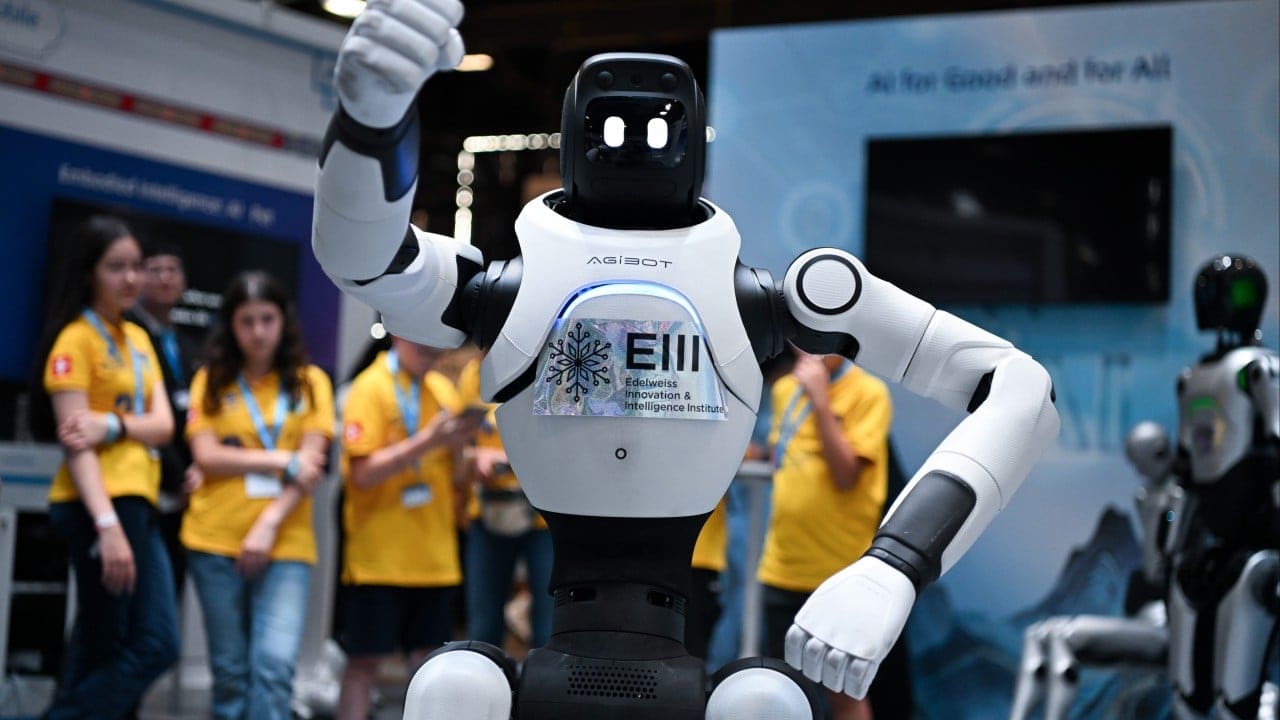
Last month, Brendan Carr, chairman of the Federal Communications Commission, announced additions to the agency's Covered List: foreign-made humanoid robots, quadrupeds, and power inverters are now denied the authorization nearly every networked device needs to operate in the United States. The decision, built on recommendations from a White House robotics task force, arrived with the familiar language of national security and technological sovereignty. Yet for an industry still racing to translate lab prototypes into commercial scale, the policy reads less like strategy and more like retreat.
At DailyTechWire, we've tracked how regulatory barriers in one jurisdiction often ricochet through supply chains and partnerships elsewhere. In robotics, where hardware, software, and real-world testing loops are tightly coupled, shutting the door on foreign platforms doesn't simply protect domestic players. It also narrows the dataset, slows iteration cycles, and removes the benchmarking pressure that has historically sharpened American technology.
The Mechanics of the Covered List
The FCC's Covered List was originally designed to keep telecommunications equipment deemed a security risk out of US networks. Inclusion means a device cannot receive the certification required for lawful sale or deployment. Extending the list to robotics brings hardware such as humanoid assistants, four-legged inspection platforms, and the inverters that manage their power into the same framework once reserved for base stations and switches.
According to the FCC, the decision follows months of inter-agency review, including input from the Department of Homeland Security and the Defense Innovation Unit. The stated concern centers on networked devices that could, in theory, relay sensor data, movement patterns, or environmental mapping back to foreign servers. The logic mirrors earlier restrictions on drones and surveillance cameras: if a robot connects to the cloud, it becomes a potential vector.
What the policy does not acknowledge is the degree to which American robotics firms rely on foreign components, reference designs, and collaborative testing environments. Actuators from Shenzhen, vision modules from Hangzhou, and locomotion algorithms refined in Seoul labs are woven into many US platforms. The Covered List does not ban components outright, but it signals a regulatory climate in which integration with foreign ecosystems carries compliance risk.
What US Firms Stand to Lose
Robotics is not software. A humanoid that can navigate a hospital corridor or a quadruped that inspects offshore infrastructure requires thousands of hours of real-world testing, across varied terrain, lighting, and edge cases. Chinese and South Korean labs have been running these experiments at scale, often in environments US firms cannot easily replicate: dense urban clusters, mixed-use industrial zones, and public spaces where deployment permissions are granted faster.
By walling off foreign robots, US developers lose a critical reference set. They cannot as easily reverse-engineer a competitor's gait control, benchmark their own latency against a Hangzhou startup's inference pipeline, or stress-test interoperability with a Seoul-made power inverter that has already logged ten thousand operating hours. Innovation in robotics, more than in many other domains, benefits from close observation of what works elsewhere and what fails under load.
The policy also complicates partnerships. A Boston-based robotics lab that wants to co-develop a logistics platform with a Taiwanese hardware manufacturer now faces a murkier regulatory path. Does the partnership trigger Covered List scrutiny? Will the resulting device need separate certification tracks for domestic and export markets? These questions add friction to deals that, in a less fragmented landscape, would move faster.
The Competitive Landscape in Asia
While Washington erects fences, Seoul, Shenzhen, and Singapore are accelerating. South Korea's Ministry of Trade, Industry and Energy has allocated additional funding for humanoid commercialization, with a focus on eldercare and manufacturing assist roles. Chinese robotics firms, many of them veterans of the logistics and warehouse automation waves, are now fielding quadrupeds for pipeline inspection, mining reconnaissance, and disaster response, domains where ruggedness and autonomy matter more than consumer polish.
These platforms are not merely cheaper. In several categories, they are technically ahead. A quadruped from a Hangzhou firm recently demonstrated continuous operation across seventy-two hours in a desert environment, a benchmark few US models have matched in public trials. A humanoid assistant deployed in a Seoul hospital can navigate crowded hallways and operate elevators without human intervention, a feat that requires sensor fusion, real-time mapping, and fail-safe protocols that take years to refine.
The FCC's Covered List does nothing to close these capability gaps. It does, however, ensure that American engineers will have fewer opportunities to study, adapt, or collaborate with the teams producing them. In a technology race, restricting access to the competition is rarely a winning move.
Security Concerns Are Real but Narrow
The national security argument is not without foundation. A robot equipped with cameras, LIDAR, and network connectivity can, in principle, collect and transmit sensitive data. If that robot operates in a defense facility, a research lab, or critical infrastructure, the risk profile changes.
But the Covered List is a blunt instrument. It treats all foreign robotics hardware as uniformly suspect, regardless of where it will be deployed, who owns the data pipeline, or whether the device even requires cloud connectivity. A quadruped used for university research or a humanoid deployed in a private warehouse faces the same restriction as one patrolling a military installation. The policy offers no tiered framework, no pathway for third-party audits, and no mechanism for case-by-case review.
Other jurisdictions have adopted more calibrated approaches. The European Union's proposed AI Act includes risk-based categories, allowing high-risk systems to be deployed under stricter oversight rather than banned outright. Singapore's Infocomm Media Development Authority has piloted certification schemes that let foreign robotics platforms operate in controlled environments while data sovereignty requirements are verified. These models preserve optionality without abandoning caution.
What Comes Next
The immediate effect of the Covered List expansion will be felt in procurement and pilot programs. US municipalities evaluating quadrupeds for infrastructure inspection will now face a narrower vendor pool. Hospitals testing humanoid assistants will need to confirm that every networked component clears FCC requirements. Universities running robotics research may find that certain reference platforms are no longer available for purchase or import.
Over the medium term, the policy may push foreign firms to establish US subsidiaries, onshore final assembly, or partner with domestic integrators who can navigate the certification maze. This is not without precedent. Chinese drone manufacturers, after facing similar restrictions, opened facilities in California and Texas, employing American engineers and routing data through US-domiciled cloud providers. The result was compliance, but also a transfer of manufacturing know-how and a more complex global footprint.
For American robotics firms, the risk is isolation. If the most aggressive testing, fastest iteration, and deepest component ecosystems remain concentrated in Asia, US developers may find themselves working with older reference designs, slower feedback loops, and fewer opportunities to validate their platforms against world-class competition. In a field where hardware maturity is measured in operating hours and edge-case coverage, that gap compounds quickly.
A Policy That Favors Stasis
The FCC's decision reflects a broader instinct in US technology policy: when in doubt, restrict. It is an instinct rooted in legitimate security concerns, but one that often neglects the competitive costs of closure. Robotics, unlike semiconductors or telecommunications infrastructure, is still in its formative phase. The platforms that will dominate in five years have not yet been built. The algorithms that will define autonomy are still being refined in labs from Pittsburgh to Pohang.
In this environment, the firms that learn fastest, test most aggressively, and integrate the widest range of components are the ones most likely to lead. Policies that narrow the field, reduce the reference set, and complicate collaboration do not protect American innovation. They protect American incumbents from the discomfort of competition. For an industry still racing to prove itself, that may be the more dangerous vulnerability.