Google Play Now Lists Rival App Stores Directly in the US
A dedicated section inside Google's storefront surfaces third-party marketplaces, starting with Aptoide's game-focused catalog - a shift driven by litigation and regulatory pressure.
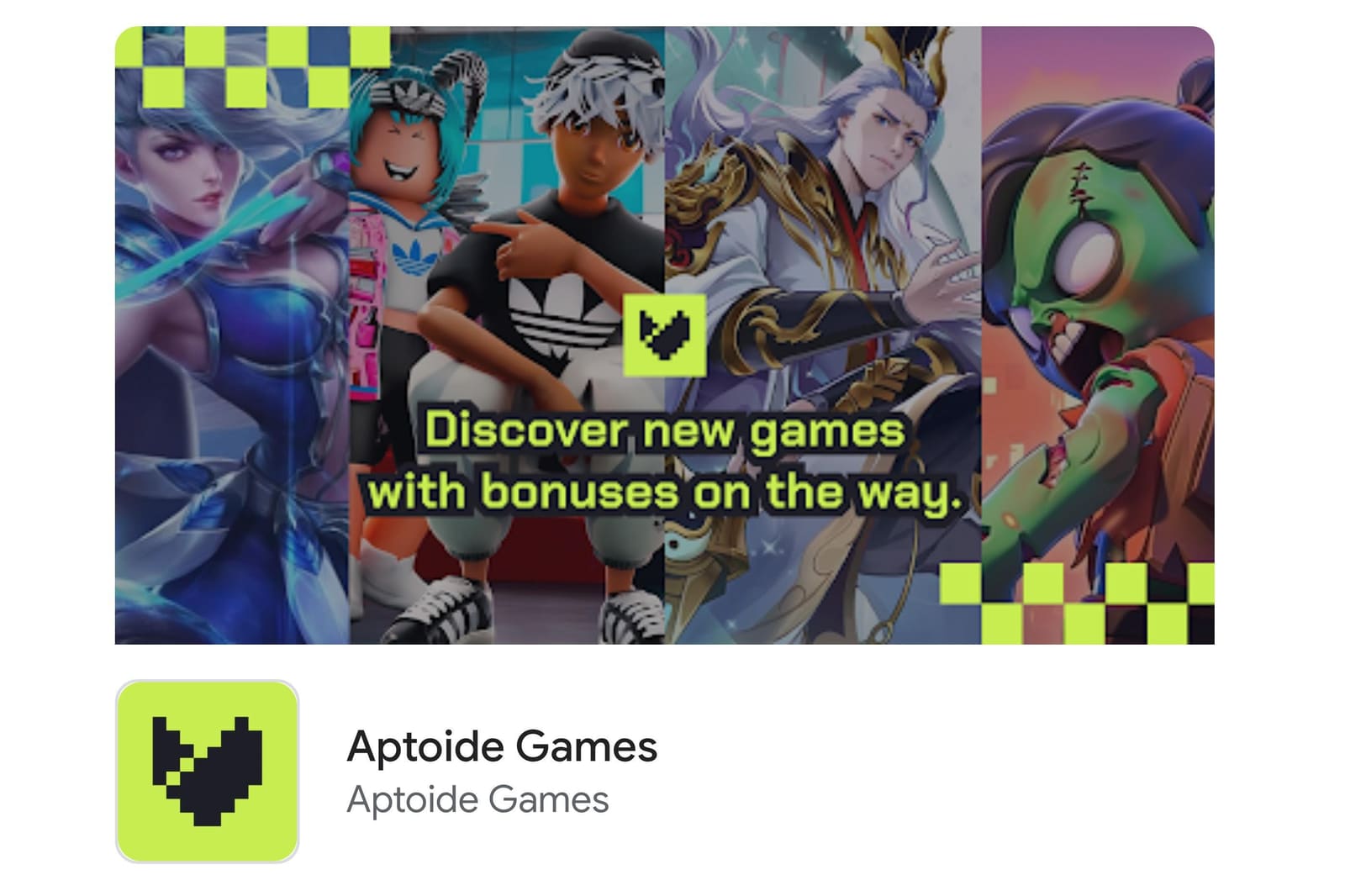
A Storefront Inside the Storefront
Users in the United States can now browse Google Play and find something unfamiliar: a section dedicated to third-party app stores, each offering its own catalog. Aptoide, a marketplace centered on mobile games, is the inaugural tenant. The move represents a structural departure for Google, which until now has kept rival distribution channels outside its walled garden - available only through pre-installation agreements with device makers or manual sideloading.
At DailyTechWire, we've watched Android's openness evolve through regulatory cycles in Brussels, Seoul, and Washington. This latest step formalizes what was technically possible but practically obscure: the ability to discover and install competing storefronts without leaving the official Play interface. Google has built the plumbing for a multi-store ecosystem within its own app, and the litigation trail points to why.
The Epic Catalyst
The change follows a protracted legal battle between Google and Epic Games, the studio behind Fortnite. Epic challenged Google's commission structure and distribution controls, arguing they constituted anti-competitive conduct. While the broader case wound through appeals, interim remedies and settlement discussions have pressed Google to lower barriers for alternative stores. The appearance of a dedicated third-party section in Play is consistent with those pressures, even if Google has framed the feature as a user-choice initiative.
Third-party Android stores have existed for years - Amazon's Appstore powers Fire tablets, Samsung bundles Galaxy Store on its devices, and dozens of regional marketplaces operate across emerging markets. Yet discovery remained a friction point. Installing an APK from outside Play required toggling security settings and navigating browser downloads, steps that deterred casual users. By surfacing rivals inside its own app, Google removes that friction and potentially deflects further regulatory scrutiny.
What Aptoide Brings
Aptoide specializes in games, a category that generates the majority of mobile app revenue and has been the flashpoint for commission disputes. The platform has operated independently for over a decade, primarily in markets where Play penetration is weaker or where users seek content unavailable through official channels. Its catalog includes both developer-uploaded titles and curated game collections.
For developers, Aptoide offers a lower commission rate than Google's standard 15 to 30 percent take. That margin matters especially for studios operating on thin unit economics or those targeting price-sensitive regions. The store also supports direct APK distribution, giving developers more control over update timing and versioning - a feature that appeals to teams running live-service games with frequent patches.
Listing Aptoide inside Play does not mean Google is endorsing its catalog wholesale. The third-party section includes disclaimers about security and content moderation standards, signaling that Google retains its own liability shield while opening the door to competition. Users who download Aptoide will still need to grant installation permissions, and Android's runtime security model applies regardless of the originating store.
Implications for the Asia-Pacific Distribution Map
The move has immediate relevance across Asia, where alternative app stores already command significant share. In China, where Play is unavailable, domestic stores - Tencent's MyApp, Huawei AppGallery, Xiaomi GetApps - dominate. In India, regional players like Indus AppStore and gaming-focused platforms have grown alongside Play. South Korea's Telecommunications Business Act, which took effect in 2021, mandates that platform operators allow third-party payment systems, a precursor to the kind of store-within-a-store model now emerging in the US.
If Google rolls out the third-party section globally, Asian developers and publishers gain a new distribution vector. Studios that have built audiences on regional stores can now list those stores inside Play, potentially converting users who might never have discovered them through sideloading. For venture-backed app-store startups - several of which have raised capital in Singapore, Seoul, and Jakarta over the past two years - the policy shift offers a path to scale without the traditional chicken-and-egg problem of persuading users to leave Play.
The economics, however, remain unresolved. Google has not disclosed whether it will charge rival stores a listing fee or take a cut of transactions initiated through apps downloaded from those stores. If Google imposes a toll, the competitive benefit diminishes; if it does not, the company risks cannibalizing its own revenue stream. Regulatory frameworks in the EU, under the Digital Markets Act, and in South Korea are already specifying that gatekeepers cannot impose discriminatory fees on rival services. US policy may follow a similar trajectory, especially if state attorneys general or the Department of Justice pursue enforcement under existing antitrust statutes.
Developer and User Trade-Offs
For developers, the calculus involves trust, reach, and margin. Play's install base in the US is effectively universal among Android users, but its commission structure and content policies can be restrictive. Alternative stores offer lower fees and more permissive rules, but fragmented audiences and weaker fraud-prevention infrastructure. A developer listing on Aptoide must weigh whether the incremental revenue from a lower commission offsets the cost of supporting another distribution channel and the risk of piracy or malware uploads that could damage brand reputation.
Users face a different set of trade-offs. A unified storefront simplifies discovery, but multiple stores introduce complexity around updates, billing, and support. If a game purchased through Aptoide encounters a bug, does the user contact the developer, Aptoide, or Google? The answer depends on where the transaction occurred and which entity holds the payment relationship. Google's terms of service for the third-party section will likely disclaim responsibility, shifting liability to the individual stores - a structure that mirrors the web's app-distribution model but may confuse users accustomed to Play's integrated experience.
Regulatory Momentum and Platform Strategy
The broader trend is clear: platform gatekeepers are being compelled, through litigation and legislation, to open their ecosystems. Apple faces parallel pressure in the EU, where the Digital Markets Act requires iOS to support alternative app marketplaces and sideloading. The company has implemented those changes reluctantly, layering on notarization requirements and core-technology fees that critics argue undermine the spirit of the law. Google's approach - building a dedicated section within Play - may prove more durable if it satisfies regulators while preserving some measure of control over user experience and security.
The timing also reflects shifting leverage in the mobile value chain. As hardware commoditizes and 5G infrastructure matures, the battleground has moved to services and distribution. Cloud-gaming platforms, super-apps, and web-based progressive apps all challenge the app-store model. By allowing rival stores inside Play, Google hedges against a future where users bypass traditional app distribution altogether, opting instead for browser-based experiences or direct developer relationships.
What Comes Next
Aptoide is the opening act. Google has signaled that the third-party section is designed to accommodate additional stores, and other candidates are likely evaluating the opportunity. Epic's own store, which launched on Android in 2020 and expanded to iOS in the EU in 2024, is an obvious contender. Regional players in Southeast Asia, Latin America, and Africa may follow, especially if Google extends the feature beyond the US.
The next six months will reveal whether the model gains traction. If Aptoide's install numbers climb and user complaints remain manageable, other stores will queue up. If the section becomes a vector for malware or user confusion, Google may tighten eligibility criteria or retreat behind security justifications. Regulators, meanwhile, will watch closely to ensure the policy translates into genuine competition rather than performative compliance.
For developers and publishers across Asia, the lesson is to diversify. Relying solely on Play - or any single storefront - exposes revenue and user access to platform risk. The emergence of a multi-store Android ecosystem, however imperfect, creates optionality. Studios that invest in flexible distribution pipelines, robust analytics across channels, and clear user communication will be best positioned to navigate the fragmentation ahead.
Google's decision to list rival stores inside Play is less a gesture of openness than a response to legal and regulatory pressure. Yet the outcome may still benefit the ecosystem if it lowers barriers for developers and expands choice for users. The test will be whether the infrastructure Google has built can support genuine competition or whether it becomes another form of rent extraction, dressed in the language of compliance.