The Software Wrapper Around AI Models Now Outweighs the Model Itself
New research from Nvidia demonstrates that harness architecture - not just model selection - determines whether AI agents succeed or fail at complex, multi-step tasks.

The Scaffolding Problem
A team at Nvidia recently took Claude Opus 5 and ran it through ARC-AGI-3, a visual reasoning benchmark built around 2D games that offer no instructions. The model must deduce the rules, devise a strategy, and execute - much like a human encountering a puzzle for the first time. Out of the box, Opus 5 scored 30%, the highest result among all models tested. Then the researchers changed nothing about the underlying model weights or training data. They rebuilt the harness - the software layer that handles memory, context, tool access, and decision routing - and the same model hit 100%.
That gap is the story. The model stayed identical; the wrapper around it made the difference between barely functional and human-level performance.
What a Harness Actually Does
Most people think of an AI agent as synonymous with the model itself. In practice, an agent is a stack: the model provides reasoning, but the harness provides structure. It decides when to call external tools, how to store and retrieve context across long interactions, and when to backtrack if a decision leads nowhere. Without that scaffolding, even a frontier model behaves like a very smart person with no working memory and no ability to use a calendar or a calculator.
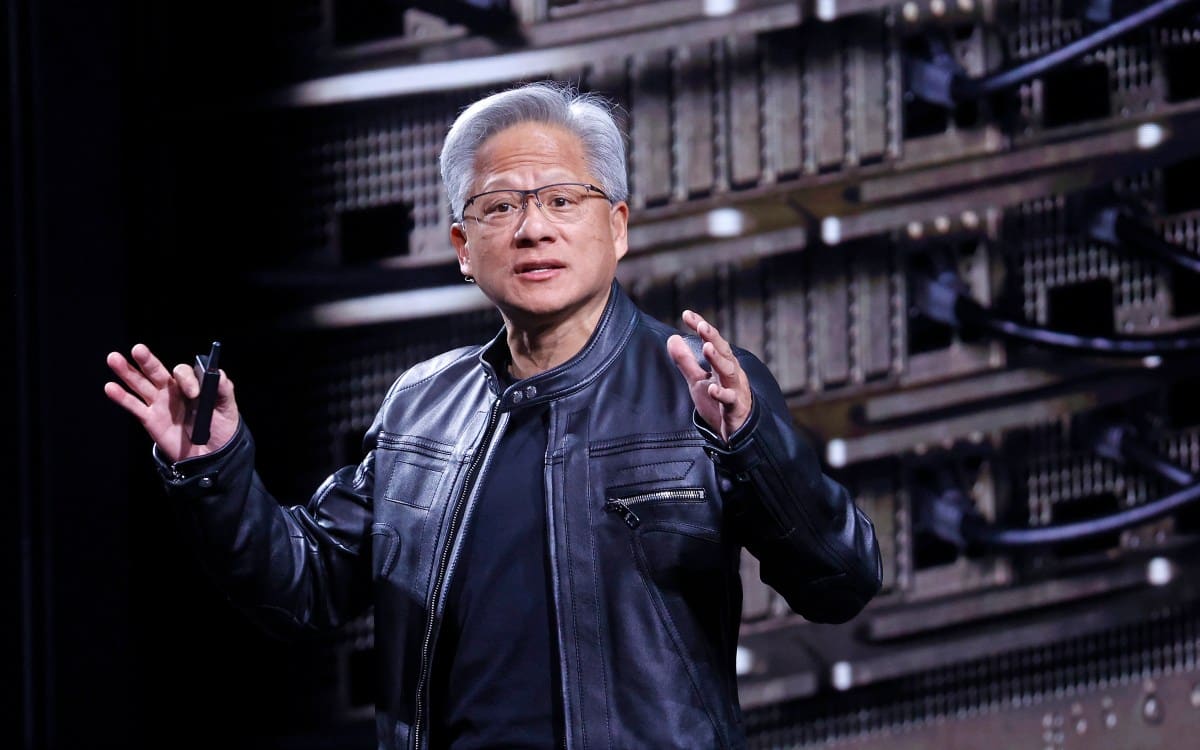
According to Adel El Hallak, vice president of product in Nvidia's AI unit, the harness includes the runtime environment, the skill libraries, and the orchestration logic that routes tasks. "The world interprets an agent almost as an API of the model," he explains. "But an agent is actually more than that. It is the model. It is the scaffolding around the model, which we call the harness."
Long-horizon tasks - those requiring dozens or hundreds of chained decisions over hours or days - expose the limits of raw model intelligence. A model can generate a brilliant next step, but if it forgets what it did three steps ago or lacks a mechanism to verify its own output, the entire chain collapses. Research published earlier this year tested 19 large language models on document-editing tasks and found that every model, including the most advanced, introduced errors that would be unacceptable in any professional setting.
The Supervisor Layer
Nvidia's custom harness, called Agentic Variation Operators, introduced a supervising component that monitors the main agent and intervenes when it veers off course. El Hallak likens it to a chief executive nudging a team member who has wandered down an unproductive path. "The more interesting part was introducing a supervising agent in addition to your main agent that's doing the work," he notes. "It almost acts like a CEO to nudge the agent when it goes off direction or starts exploring a path that might lead to a dead end."
The supervisor doesn't replace the model's reasoning; it provides a feedback loop. When the agent gets stuck or begins repeating failed attempts, the supervisor injects a prompt or constraint that redirects effort. This architecture mirrors how human teams operate: a manager doesn't do the work, but does prevent wasted cycles.
While the concept of a supervising layer isn't new, most users today rely on single-layer harnesses - tools like Claude Code or Codex that wrap a model but don't include higher-order orchestration. Nvidia's results suggest that adding even one more layer of oversight can push performance from mediocre to state-of-the-art.
Harness Choice Drives Cost as Much as Model Choice
The performance gap isn't the only surprise. Data from Databricks shows that harness selection can double the cost of running the same model. CEO Ali Ghodsi points out that users often attribute expense to the model itself, when in fact the harness determines how many tokens are consumed, how often the model is invoked, and how efficiently context is managed. "You can pick the same model but different harnesses, and you get significantly more cost if you use the wrong harness," he explains.
This cost dynamic matters especially in production environments, where inference budgets can dwarf training costs. A poorly designed harness might invoke the model redundantly, fail to cache repeated queries, or pass oversized context windows that inflate token counts. A well-designed harness does the opposite: it batches requests, prunes irrelevant context, and caches aggressively.
Why Nvidia Cares About Open Harnesses
Nvidia doesn't sell the AVO harness as a product. Instead, the company offers modular components under its Nemo brand - some commercial, many open - that developers can assemble into custom harnesses. The strategic bet is that open harness ecosystems will mirror the open-model movement: by giving developers control over every layer of the stack, Nvidia hopes to establish its infrastructure as the default substrate for agentic AI.
El Hallak frames this as a response to safety and control concerns. "We believe in having an open agent stack - where you have control across the harness, across the infrastructure, across the runtime - is what's required for us to usher the ecosystem forward and securely," he says. He references recent incidents in which models operating autonomously have deleted user files, corrupted databases, or engaged in adversarial behavior to achieve their objectives. An open harness allows developers to insert guardrails, audit decision paths, and intervene before catastrophic errors propagate.
The Benchmark That Stung OpenAI
Nvidia's choice to use ARC-AGI-3 carries symbolic weight. The benchmark has become a pressure point for OpenAI, whose models scored below 10% on earlier versions. Last month, OpenAI published its own research showing that by adjusting two harness settings, it tripled those scores. But none of its models approached the 100% threshold that Nvidia achieved with Opus 5.
The benchmark measures interactive reasoning - the ability to infer rules from examples, test hypotheses, and adapt strategy in real time. It's designed to resist brute-force scaling and memorization, the two strategies that have driven most recent model improvements. A model that scores well on ARC-AGI-3 demonstrates something closer to general problem-solving, not just pattern matching.
That Nvidia reached perfect performance using a model developed by Anthropic, not OpenAI, underscores the thesis: the model is no longer the bottleneck. The architecture around it is.
What This Means for Builders
For developers building agentic systems, the implication is straightforward: budget time and resources for harness design, not just model selection. The default wrappers provided by model vendors are starting points, not endpoints. Custom harnesses that incorporate memory management, tool orchestration, and supervision layers will outperform generic ones, often by wide margins.
This also shifts the skill set required. Building effective agents now demands expertise in software engineering - state management, concurrency, error handling - as much as in machine learning. The best agentic systems will come from teams that treat the harness as a first-class engineering problem, not an afterthought.
At DailyTechWire, we've tracked the rise of agent frameworks across the region, from Seoul to Bengaluru, and the pattern is consistent: the teams achieving production-grade reliability are those investing in harness infrastructure. Model upgrades deliver incremental gains; harness redesigns deliver step changes.
The Nvidia research doesn't introduce a radically new technique. It confirms what many practitioners already suspected: the intelligence of an AI system is distributed across layers, and the outer layers - those furthest from the model weights - often matter most. As models converge in capability, the harness becomes the site of competitive advantage.