Harvey's Bet on Moonshot AI Signals Western Appetite for Chinese Foundation Models
The OpenAI-backed legal tech firm chose Kimi K3 over Western alternatives for its first in-house model, underscoring how cost and performance are reshaping AI infrastructure choices.
A Quiet Infrastructure Decision with Loud Implications
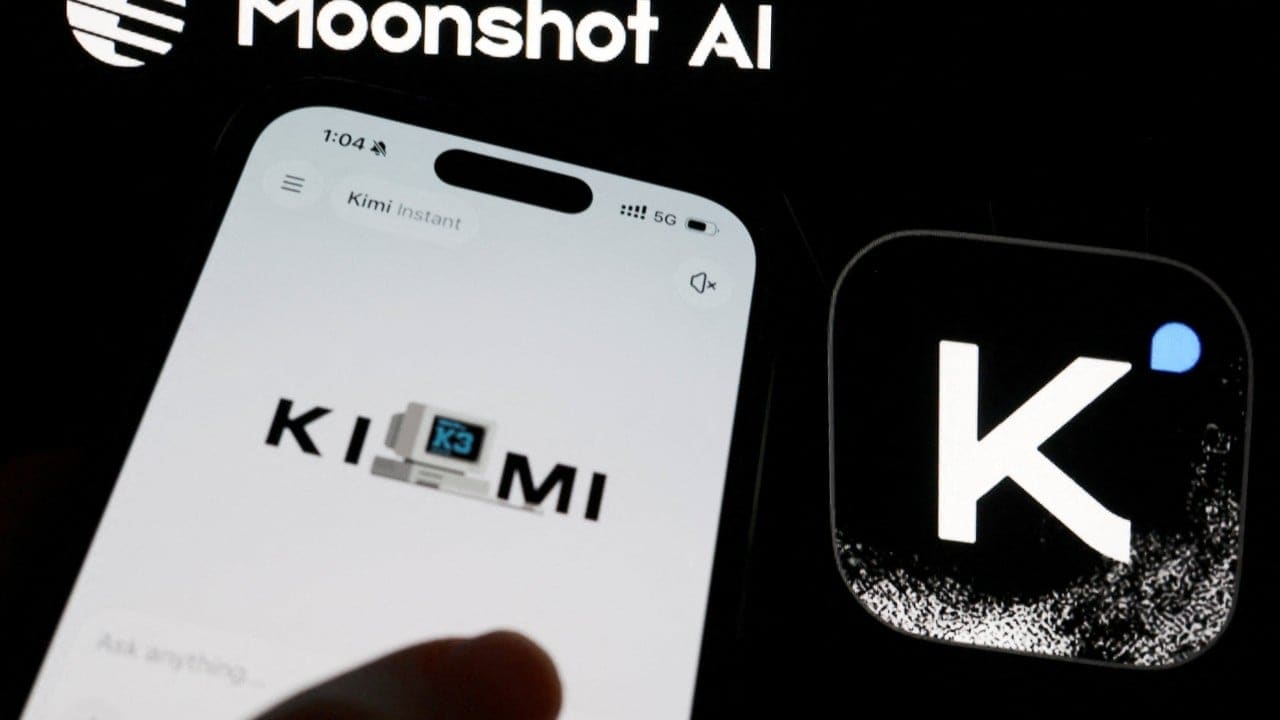
San Francisco-based Harvey announced this week that its latest model, Harvey Tenet, was post-trained atop Moonshot AI's Kimi K3 open-weight base. The choice is striking not because Harvey lacks options - its investor roster includes OpenAI, Sequoia Capital, and Andreessen Horowitz - but because it represents a calculated pivot away from the Western foundation-model ecosystem that has dominated enterprise AI for the past two years.
Harvey is a legal tech provider focused on generative AI tools for law firms and corporate legal departments. Its decision to adopt a Chinese foundation model for production workloads marks one of the most visible endorsements yet of Moonshot AI's Kimi K3 by a venture-backed Western firm. At DailyTechWire, we've tracked a steady uptick in cross-border model adoption since late 2025, driven by a confluence of cost pressure, licensing flexibility, and inference performance gains that open-weight architectures can deliver when fine-tuned aggressively.
The move also highlights a strategic tension: Harvey's relationship with OpenAI - both as investor and API supplier - did not translate into exclusive model loyalty. That gap between capital ties and infrastructure choices is becoming a recurring theme across the applied-AI layer, where engineering economics often trump investor optics.
Why Kimi K3 Appeals to Enterprise Builders
Moonshot AI released Kimi K3 as an open-weight model earlier this year, positioning it as a competitive alternative to Meta's Llama series and Mistral's offerings. The model's architecture prioritizes long-context handling and multilingual performance, two attributes that matter acutely in legal workflows, where documents routinely exceed tens of thousands of tokens and cross-border matters demand robust language coverage.
Open-weight models like Kimi K3 offer enterprises several advantages over closed API services. First, they enable on-premise or private-cloud deployment, a non-negotiable requirement for many law firms handling privileged client communications. Second, they allow unlimited fine-tuning and post-training without per-token API fees, which can compound rapidly at Harvey's scale. Third, they eliminate dependency on a single vendor's rate limits, uptime SLAs, and policy changes - factors that have burned more than one production AI team over the past year.
Harvey's decision to post-train on Kimi K3 rather than adopt it wholesale also reflects a broader pattern we've observed: few enterprises deploy foundation models as-is. Instead, they treat base weights as raw material, layering domain-specific data, reinforcement learning from human feedback, and task-specific heads to carve out defensible performance moats. In this paradigm, the provenance of the base model matters less than its training stability, parameter efficiency, and licensing terms.
The Economics of Model Independence
Harvey's pivot arrives amid a broader reckoning over foundation-model costs. Training and serving large language models at scale remains capital-intensive, and many startups that rode the initial wave of OpenAI and Anthropic API integrations are now confronting margin compression as usage scales. For firms like Harvey, which serve clients on enterprise contracts with predictable pricing, volatile API costs pose a structural risk.
Chinese labs have leaned into this opening. Moonshot AI, along with peers like Zhipu AI and Baichuan, has released a succession of open-weight models over the past eighteen months, often with permissive licenses that allow commercial use and derivative works. These models are not uniformly superior to Western counterparts on every benchmark, but they are competitive enough - and free enough - to trigger serious evaluation by cost-conscious engineering teams.
The shift also reflects a maturation of the AI stack. Two years ago, few enterprises had the in-house expertise to post-train or fine-tune foundation models reliably. Today, tooling from Hugging Face, Weights & Biases, and a constellation of open-source projects has lowered the barrier. Harvey's ability to take Kimi K3 and build Harvey Tenet on top of it is less a feat of research than a testament to how accessible post-training infrastructure has become.
Regulatory and Geopolitical Headwinds
Harvey's choice is not without friction. US export controls on advanced semiconductors and AI training clusters, tightened repeatedly since 2022, have constrained Chinese labs' access to cutting-edge compute. Yet Moonshot AI has managed to train and release Kimi K3 despite these restrictions, suggesting either stockpiled hardware, architectural efficiency gains, or access to alternative supply chains.
For Western firms adopting Chinese models, the calculus involves weighing technical merit against reputational and compliance risk. Legal clients, particularly those in regulated industries or with government contracts, may scrutinize the provenance of the AI systems processing their data. Harvey's announcement did not detail how it addresses these concerns, but the firm's willingness to proceed publicly suggests it has either secured client buy-in or compartmentalized Kimi K3-based workloads to non-sensitive use cases.
There is also the question of future access. If US-China tech decoupling accelerates, American firms relying on Chinese foundation models could face supply-chain disruption - not in the form of physical components, but in updates, security patches, and ecosystem support. Open-weight licensing mitigates some of this risk by allowing firms to fork and maintain models independently, but it does not eliminate the strategic vulnerability of depending on a foreign lab's research pipeline.
What This Means for the Foundation Model Landscape
Harvey's adoption of Kimi K3 will not, by itself, redraw the map of enterprise AI. But it is a data point in a larger pattern: the foundation-model market is fragmenting along economic and geopolitical lines, and no single provider - Western or Chinese - commands the structural lock-in that x86 or cloud hyperscalers once enjoyed.
For Chinese labs, Harvey represents a validation play. Moonshot AI can now point to a marquee Western customer backed by OpenAI and top-tier venture firms - a powerful signal to other enterprises evaluating whether Chinese models are "ready" for production. For Western incumbents, it is a reminder that capital relationships do not guarantee infrastructure loyalty, and that open-weight models - regardless of origin - exert downward pressure on API pricing and margin.
The legal tech sector may prove an especially fertile testing ground for this dynamic. Law firms are conservative buyers, but they are also acutely cost-sensitive and protective of client data. If Harvey can demonstrate that a Chinese open-weight model, heavily post-trained, delivers comparable or superior performance to closed Western APIs at a fraction of the cost, other legal AI vendors will take notice. The same logic applies to adjacent verticals - finance, healthcare, consulting - where document-heavy workflows and privacy concerns align with the strengths of on-premise, open-weight deployments.
We are watching to see whether Harvey's move prompts a wave of similar announcements, or whether it remains an outlier. Either outcome will tell us something important about how enterprise buyers weigh technical merit, cost, investor signaling, and geopolitical risk in an AI landscape that is no longer cleanly divided between a handful of San Francisco labs and everyone else.