China's Telco Giants Race to Monetize AI Inference at Scale
State carriers turn token processing into a billable product as enterprise demand for large-language-model infrastructure outpaces public cloud alternatives
The Shift to Tokenized Billing
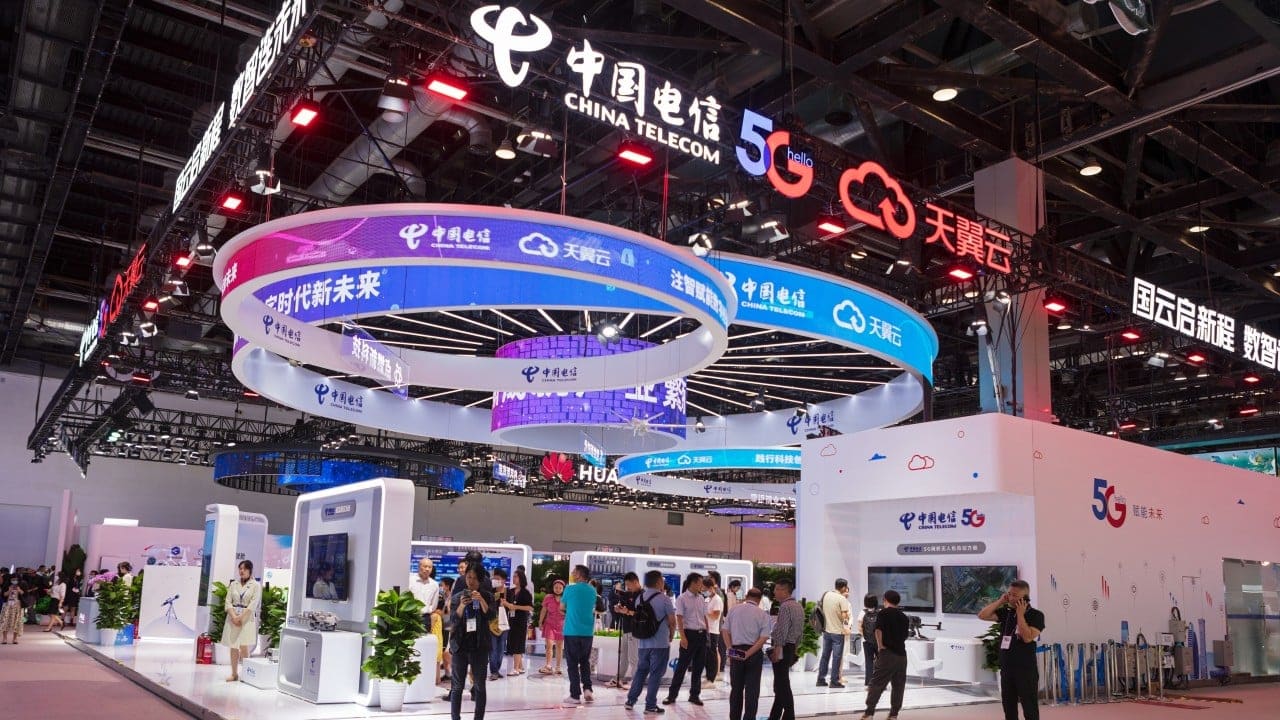
China's three dominant state-owned carriers have begun treating AI tokens as a billable commodity, marking a fundamental change in how telecom infrastructure intersects with machine learning workloads. In their mid-year financial updates, China Mobile, China Telecom, and China Unicom each highlighted token throughput alongside traditional revenue metrics, a move that reflects the industry's recognition of inference as a discrete, measurable product rather than a bundled compute service.
At DailyTechWire, we've tracked the evolution of telco cloud offerings across Asia for the past eighteen months. What distinguishes this wave from earlier enterprise AI pilots is the granularity of the billing model. Tokens, the atomic units of text or data ingested and generated by large language models, have become the meter by which carriers price access to their inference infrastructure. This mirrors pricing strategies already deployed by hyperscalers in the West, but the telco angle introduces lower latency and tighter integration with private enterprise networks, a selling point in markets where data sovereignty and on-premise deployment remain non-negotiable for many verticals.
Why Telcos See an Opening
The rationale behind the carriers' pivot is straightforward. Enterprise customers running customer service bots, document analysis pipelines, or internal search tools generate predictable, high-volume inference workloads. These workloads do not require cutting-edge research clusters or the latest accelerator chips; they need stable throughput, low jitter, and transparent cost structures. Telcos, with nationwide fiber backhaul, existing data center footprints, and long-standing enterprise relationships, can deliver exactly that.
China Mobile reported that its computing and AI-related services contributed measurably to revenue growth in the first half of the year, though the company did not break out token volume separately. China Telecom and China Unicom followed similar patterns, emphasizing the role of AI workloads in offsetting pressure on legacy voice and messaging lines. The implicit message is that inference is no longer experimental; it is a line item on the P&L.
The Infrastructure Play
Behind the revenue rhetoric lies a considerable infrastructure buildout. All three carriers have expanded GPU clusters and inference-optimized server deployments over the past year, often in partnership with domestic chip designers and server OEMs. These installations are not designed for training runs, which demand tightly coupled, high-bandwidth interconnects and enormous power budgets. Instead, they prioritize cost-per-token efficiency, energy management, and the ability to serve thousands of concurrent requests with predictable latency.
This architectural choice reflects the carriers' assessment of where enterprise AI spending will concentrate. Training remains the domain of a small number of well-funded research labs and hyperscalers. Inference, by contrast, is a horizontal market. Every insurance company, logistics provider, and municipal government experimenting with generative AI needs somewhere to run those models at scale. Telcos are betting that their edge presence and existing sales channels give them a distribution advantage that pure-play cloud providers cannot easily replicate.
Competitive Dynamics and Margin Questions
The move is not without risk. Public cloud providers, including Alibaba Cloud, Tencent Cloud, and Huawei Cloud, already offer inference APIs with competitive per-token pricing and deeper integration with training pipelines. For customers who want to fine-tune models or iterate rapidly on prompt engineering, those platforms remain the default choice. Telcos, by contrast, are positioning themselves as the infrastructure layer for production workloads that have already been validated elsewhere.
Margin structure is another open question. Token-based billing is transparent, but it also invites price competition. If inference becomes a true commodity, carriers may find themselves in a race to the bottom, compressing margins in the same way that bandwidth commoditization squeezed legacy transit businesses. The counterargument, articulated in various analyst calls, is that bundling inference with connectivity and managed services creates enough differentiation to sustain pricing power. Whether that holds depends on how quickly enterprise buyers become sophisticated enough to separate infrastructure from application value.
Regional Context and Policy Alignment
The carriers' emphasis on AI aligns with broader state priorities. Beijing has made self-sufficiency in computing infrastructure a policy goal, particularly as export controls limit access to advanced chips from the United States. By building out domestic inference capacity, the telcos contribute to that objective while also creating a revenue stream that is less vulnerable to international sanctions or supply chain disruptions.
This dynamic is not unique to China. Across Asia, state-linked telecoms in South Korea, India, and Southeast Asia are exploring similar models, often with government backing. The difference is scale and speed. China's carriers operate at a size that allows them to deploy thousands of inference nodes across multiple provinces in a matter of quarters, creating network effects that smaller players cannot match.
What This Means for the Market
For enterprise buyers, the telco token model offers a new procurement option. It is particularly attractive for organizations that prioritize latency, data residency, or integration with existing telecom contracts. For developers and AI product teams, it represents another deployment target to test and optimize for, with its own cost curve and performance characteristics.
For the carriers themselves, success hinges on execution. Token throughput is easy to measure but hard to monetize sustainably without clear differentiation. If the service becomes interchangeable with public cloud inference, pricing pressure will erode margins. If, on the other hand, telcos can bundle inference with edge compute, private 5G, and managed AI operations, they may carve out a defensible position in the value chain.
The next twelve months will clarify which scenario prevails. In the meantime, the fact that all three state carriers are publicly reporting token-related metrics signals that inference has graduated from pilot to product. That alone is a meaningful shift in how Asia's telecom incumbents are thinking about their role in the AI stack.