Zoox Wins Federal Clearance to Launch Paid Robotaxi Service
Amazon's autonomous vehicle unit secures NHTSA exemption for steering-wheel-free fleet, setting precedent for Tesla Cybercab and next-generation robotaxis
The Regulatory Unlock
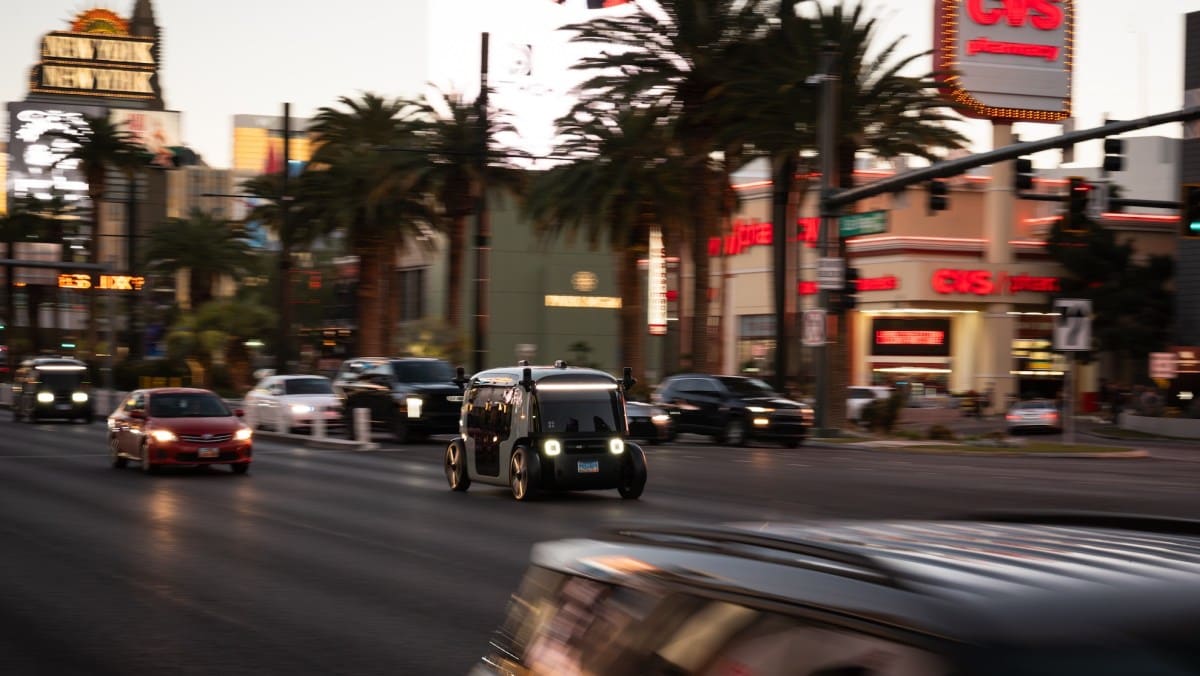
Zoox will begin charging passengers for rides on August 10, marking the first time Amazon's autonomous vehicle subsidiary can operate as a true business rather than a technology demonstration. The milestone hinges on a newly issued exemption from the National Highway Traffic Safety Administration that permits the company to deploy up to 2,500 vehicles without traditional controls for two years.
The distinction matters because Zoox has been ferrying passengers in Las Vegas and San Francisco for months, and recently expanded early rider programs to Miami and Austin. But none of that activity generated revenue. Federal motor vehicle safety standards require steering wheels, pedals, and mirrors in passenger vehicles. Zoox's purpose-built robotaxis have none of these. The company's previous exemption allowed it to demonstrate the technology; this one allows it to sell rides.
At DailyTechWire, we've tracked exemption requests across the autonomous vehicle sector for years, and this approval represents the clearest signal yet that regulators are willing to accommodate designs that break from century-old automotive architecture. The two-year, 2,500-vehicle cap gives NHTSA time to collect real-world safety data while Zoox scales incrementally.
Why Design Freedom Matters
The exemption's implications extend far beyond one company. Any AV developer pursuing a steering-wheel-free design now has a regulatory template. Tesla is the most obvious beneficiary. The automaker is developing a two-seater Cybercab with no manual controls, and CEO Elon Musk has repeatedly argued that human-driven fallback systems add cost and complexity without improving safety in a fully autonomous vehicle.
But the precedent also matters for startups and international players considering U.S. market entry. Rearview mirrors, for instance, serve no function in a vehicle bristling with exterior cameras and lidar. Eliminating them reduces drag and manufacturing cost. The same logic applies to dashboard controls, seatbelt chimes calibrated for human reaction times, and crash structures optimized for a steering column that no longer exists.
Zoox's exemption doesn't guarantee approval for every non-traditional design, but it establishes that NHTSA will evaluate these requests on safety performance rather than adherence to legacy hardware requirements. That shift has been years in the making, and it accelerates the timeline for purpose-built robotaxis to reach commercial scale.
Uber's Expanding AV Footprint
While Zoox crosses into revenue generation, Uber is quietly assembling what amounts to an autonomous vehicle empire. The ride-hail giant has struck partnerships and investment deals with nearly every major AV developer, from Waymo and Cruise to newer entrants like Wayve and Waabi. According to Uber, the company plans to commit $10 billion over the coming years to deploy 120,000 driverless vehicles across its platform.
CEO Dara Khosrowshahi disclosed the figure during the company's recent earnings call, confirming earlier estimates. The strategy is straightforward: Uber provides demand aggregation and fleet management infrastructure, while hardware and software partners supply the vehicles. The model allows Uber to scale autonomous rides without the capital intensity of building its own robotaxi from scratch, a path the company abandoned in 2020 when it sold its internal AV unit to Aurora.
The $10 billion commitment spans multiple deals. Uber has invested in and partnered with Waymo, Motional, Serve Robotics, and others. It recently expanded its Waymo partnership to include London, pending regulatory approval, and has signed agreements in markets from Tokyo to Dubai. The company is also working with Chinese AV developers, though export control concerns have slowed some of those integrations.
What makes Uber's strategy noteworthy is its breadth. Rather than betting on a single technology or vendor, the company is hedging across geographies, hardware platforms, and regulatory environments. That diversification reduces risk but also creates complexity. Each partnership requires custom integration work, and Uber must manage relationships with companies that compete directly with one another in certain markets.
Moove's Fleet Play
While Uber orchestrates partnerships, a less familiar name is positioning itself as the connective tissue between AV developers and commercial deployment. Moove, originally an African fintech company offering vehicle financing to ride-hail drivers, has evolved into a fleet operator managing 42,000 vehicles across 13 countries. The company recently raised $250 million at a $2.1 billion valuation, according to Moove, with plans to scale its autonomous vehicle fleet management business.
Moove now operates Waymo's fleets in Phoenix, Miami, and Las Vegas, and will do the same in London once Waymo launches there. Co-CEO Ladi Delano has indicated the company intends to buy Waymo robotaxis outright and already owns assets from another AV developer it has not named. The model mirrors traditional car rental and fleet management businesses, but tailored to the operational demands of autonomous vehicles: charging infrastructure, remote assistance, cleaning, and maintenance optimized for high-utilization robotaxis.
The $250 million round, led by Mubadala Investment Company with participation from Woven Capital and Ion Pacific, will fund hiring of approximately 350 people and expansion into new markets. Moove's evolution illustrates a broader trend: as AV technology matures, the bottleneck shifts from software and sensors to the logistics of operating fleets at scale. Waymo and Cruise have built their own operations teams, but many smaller developers lack the capital or expertise to do so. That creates an opening for specialized fleet operators.
Moove's geographic footprint also matters. The company operates in emerging markets where ride-hail penetration is high but vehicle ownership rates are lower, and where regulatory frameworks for AVs are still taking shape. That gives Moove early-mover advantage in regions that could represent significant growth for robotaxi services over the next decade.
The Cost of Commercialization
Lucid Motors, meanwhile, offered a sobering counterpoint to the optimism around autonomous vehicles and electrification. The luxury EV maker reported second-quarter results with a message that CEO Silvio Napoli framed as a return to fundamentals. The company outlined four priorities, including a $1.4 billion cost savings plan, and delayed its midsize Cosmos EV until the second half of 2027.
Lucid is also banking on a robotaxi program with Uber and Nuro, though details remain sparse. The partnership underscores how even premium EV brands are exploring autonomous ride-hail as a revenue stream, but it also highlights the financial pressure facing companies that have yet to achieve profitability. Lucid has raised billions and delivered thousands of vehicles, yet continues to burn cash as it scales production and develops new models.
The delay of the Cosmos is particularly significant. Lucid positioned the vehicle as a more accessible entry point than its flagship Air sedan, which starts above $80,000. Pushing the Cosmos into late 2027 means Lucid will face intensified competition from Ford's Fathom, which launches in 2027 starting at $28,350 according to Ford, and a wave of midsize EVs from Chinese automakers entering global markets.
Lucid's challenges reflect broader dynamics in the EV sector: high capital requirements, price competition, and the difficulty of achieving scale in a market still dominated by internal combustion vehicles. Autonomous ride-hail offers a potential escape valve, allowing automakers to capture utilization-based revenue rather than relying solely on vehicle sales. But that strategy depends on AV technology reaching maturity and regulatory approval, neither of which is guaranteed.
The AI Infrastructure Layer
Nvidia's release of Alpamayo 2 Super, an AI model designed for autonomous driving, adds another dimension to the competitive landscape. The model is available on Hugging Face under an open license that permits commercial use and derivative works, according to Nvidia. That allows AV developers, automakers, and fleet operators to adapt the model to their own datasets, driving policies, and deployment environments.
The move reflects Nvidia's broader strategy of positioning itself as the infrastructure provider for AI-powered autonomy. The company already supplies the compute hardware used by most AV developers, and now it's offering pre-trained models that reduce the time and cost required to bring a system to market. Open licensing accelerates adoption and creates network effects: as more developers fine-tune Alpamayo for specific use cases, the model improves and Nvidia's hardware becomes more entrenched.
The release also signals increasing commoditization of foundational AV models. A few years ago, perception and prediction algorithms were closely guarded trade secrets. Now, the differentiation is shifting to integration, data quality, and operational execution. Developers still need proprietary datasets and domain expertise, but the baseline capability is becoming more accessible.
That trend has mixed implications. It lowers barriers to entry, potentially accelerating innovation. But it also intensifies competition and compresses margins for companies that can't differentiate on other dimensions. For established players like Waymo and Cruise, the advantage lies in years of real-world data and operational infrastructure. For newer entrants, open models like Alpamayo offer a faster path to minimum viable performance.
Legal and Regulatory Headwinds
Not everyone is celebrating the autonomous vehicle rollout. Teamsters California sued the California Department of Motor Vehicles, alleging that the agency failed to properly study and disclose the economic impacts of allowing self-driving heavy-duty trucks on state roads. The lawsuit represents the latest front in organized labor's campaign against AV deployment, particularly in freight and logistics.
The Autonomous Vehicle Industry Association dismissed the suit as frivolous, but the legal challenge underscores the political and economic tensions surrounding automation. Heavy-duty trucking employs hundreds of thousands of drivers in California alone, and the prospect of autonomous trucks threatens those jobs. The Teamsters argue that the DMV's environmental review process, which is required under California law, did not adequately account for employment impacts.
The case is unlikely to halt AV truck development, but it could slow permitting and deployment in California, the largest freight market in the U.S. It also sets a precedent for similar challenges in other states. Labor unions, trial lawyers, and safety advocacy groups have emerged as a loose coalition opposing rapid AV rollout, and their legal strategies are becoming more sophisticated.
For AV developers, the lesson is clear: technology and regulatory approval are necessary but not sufficient. Public acceptance, political support, and workforce transition plans are increasingly critical to commercial success.
What Comes Next
Zoox's commercial launch is a milestone, but it's also a test. The company must now demonstrate that its purpose-built robotaxis can operate profitably at scale, that passengers will pay for rides, and that safety performance meets or exceeds human-driven alternatives. The two-year exemption clock is already ticking.
For the broader AV sector, the next 18 months will clarify which business models and technologies can survive contact with commercial reality. Uber's $10 billion deployment commitment and Moove's fleet expansion suggest confidence, but profitability remains elusive for most players. Meanwhile, regulatory frameworks continue to evolve, labor opposition is intensifying, and the technology itself is still improving.
The steering wheel may be disappearing, but the road ahead remains anything but smooth.