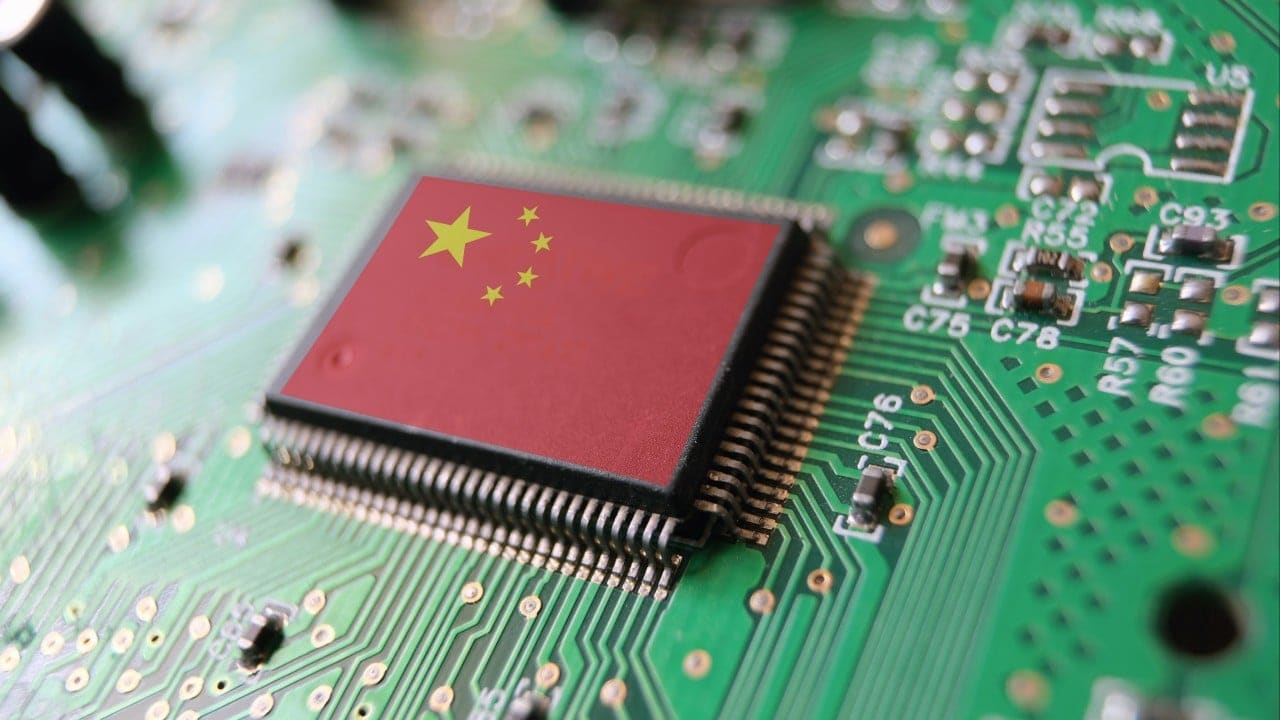
YMTC Climbs to Third Place in Global NAND Market as China Narrows Memory Gap
Wuhan-based chipmaker captured 14% of Q2 bit shipments, marking Beijing's first breakthrough in a market long dominated by Korean and Japanese incumbents
A Decade in the Making
China's push to build domestic semiconductor capacity has logged its most visible milestone yet: Yangtze Memory Technologies Corporation now ships more NAND flash storage, by bit volume, than every global rival except two. The Wuhan fabricator claimed 14 per cent of worldwide NAND bit shipments in the second quarter, edging past a Japanese incumbent and landing squarely behind Samsung and SK hynix in a market that has historically belonged to Korean and American firms.
At DailyTechWire, we've tracked the capital flows, fab expansions, and quiet recruitment drives across Wuhan, Chengdu, and Nanjing for the better part of five years. YMTC's ascent is neither sudden nor accidental. It reflects patient state backing, process-node improvements that have closed the performance gap on 128-layer and 232-layer designs, and a customer base that has grown comfortable qualifying Chinese NAND in smartphones, consumer SSDs, and even enterprise workloads where latency and endurance matter.
Volume Leadership, Revenue Reality
Bit shipments measure total storage capacity leaving the factory gate, not the price those bits command. Here the picture bifurcates. While YMTC has secured volume share through aggressive pricing and partnerships with domestic handset makers and module assemblers, revenue share lags far behind the 14 per cent bit figure. Samsung and SK hynix continue to capture the lion's share of margin in high-density, high-reliability segments: data-center SSDs, enterprise arrays, and automotive-grade modules that command premiums of two to three times consumer pricing.
YMTC's product mix still skews toward consumer and mobile applications. The company has demonstrated technical capability in 232-layer Xtacking architecture, a vertical integration approach that stacks peripheral logic beneath the memory array to reduce die size and improve I/O speed. Yet qualification cycles for hyperscale cloud operators and tier-one server OEMs remain lengthy, and export-control restrictions on advanced packaging and testing equipment have slowed the rollout of the highest-density SKUs that would unlock data-center revenue.
Geopolitical Tailwinds and Headwinds
Beijing's semiconductor strategy has always rested on two pillars: subsidized capital expenditure and guaranteed domestic demand. YMTC benefits from both. State-affiliated investment vehicles have funded multiple phases of fab expansion, while procurement guidelines steer government agencies, state-owned enterprises, and strategically important manufacturers toward domestically sourced components wherever technically feasible.
Export controls imposed by Washington and coordinated with Tokyo and The Hague have, paradoxically, accelerated this substitution dynamic. Restrictions on advanced lithography tools and high-bandwidth memory have made it harder for YMTC to leapfrog incumbents on the technology roadmap, but they have also convinced Chinese system integrators that supply-chain resilience requires a second source. The result is a floor under YMTC's volume even when global NAND pricing softens.
At the same time, those controls have created a ceiling. YMTC cannot yet source extreme-ultraviolet lithography systems, which limits the cost and performance trajectory of future nodes. The company has compensated through clever architecture, etching more layers vertically rather than shrinking transistors horizontally, but physics and economics impose limits. Each additional layer adds process complexity, cycle time, and defect risk. Competitors with access to EUV can achieve similar or better density with fewer layers, translating to lower cost per bit at scale.
The Margin Question
Volume share is a lagging indicator; margin share tells the strategic story. YMTC's average selling price per gigabyte remains below that of Samsung, SK hynix, and Micron, reflecting both product mix and competitive positioning. The company has been willing to trade margin for market penetration, a classic playbook in capital-intensive industries where scale eventually drives unit economics.
Whether that crossover arrives depends on three variables. First, can YMTC move upmarket into enterprise and data-center SKUs that carry higher ASPs and stickier customer relationships? Early design wins with domestic cloud providers suggest progress, but global hyperscalers remain cautious. Second, will the Chinese government continue to subsidize capacity expansion even as global NAND supply outpaces demand, keeping prices depressed? Third, how will incumbents respond? Samsung and SK hynix have already signaled capital discipline, curtailing new fab investment to stabilize pricing. If YMTC continues to add capacity, it risks deepening the supply glut and prolonging the margin squeeze for everyone, including itself.
What It Means for the Industry
YMTC's third-place ranking by bit shipments is more than a symbolic milestone. It signals that China has achieved the scale, process maturity, and ecosystem integration necessary to be a structural player in memory, not merely a subscale follower. For system OEMs, that introduces supply diversification and pricing leverage. For incumbents, it introduces a competitor with patient capital, lower cost of capital, and a captive domestic market that can absorb volume even in downturns.
The next test is revenue share. Bit shipments reflect manufacturing output; revenue reflects customer willingness to pay, which in turn reflects trust in performance, reliability, and long-term support. YMTC has proven it can build NAND at scale. The harder question is whether it can build NAND that commands a premium, or at least parity pricing, in the segments that matter most to global technology infrastructure. The answer will shape not only the memory industry's competitive landscape but also the broader trajectory of China's semiconductor self-sufficiency ambitions.