DeepSeek's Latest V4 Pro Update Divides Developers
The Chinese AI start-up's quiet refresh shows uneven progress, with benchmark scores trailing expectations while specialized cybersecurity performance draws praise from researchers.
A Quiet Refresh with Mixed Results
DeepSeek rolled out an updated iteration of its flagship model last week with little fanfare. The new version, labeled DeepSeek-V4-Pro-0813, arrived as a refresh to the preview released in April, accompanied only by a terse note on the company's website highlighting "significantly enhanced agent capabilities." For a start-up that has drawn attention across Asia's AI ecosystem over the past year, the low-key approach stood in contrast to the usual drumbeat of model launches.
Early feedback from developers and researchers paints a fractured picture. While the model has shown notable strength in specialized domains, particularly cybersecurity tasks, its performance on standard industry benchmarks has left many in the community questioning whether the update represents meaningful progress or a lateral move.
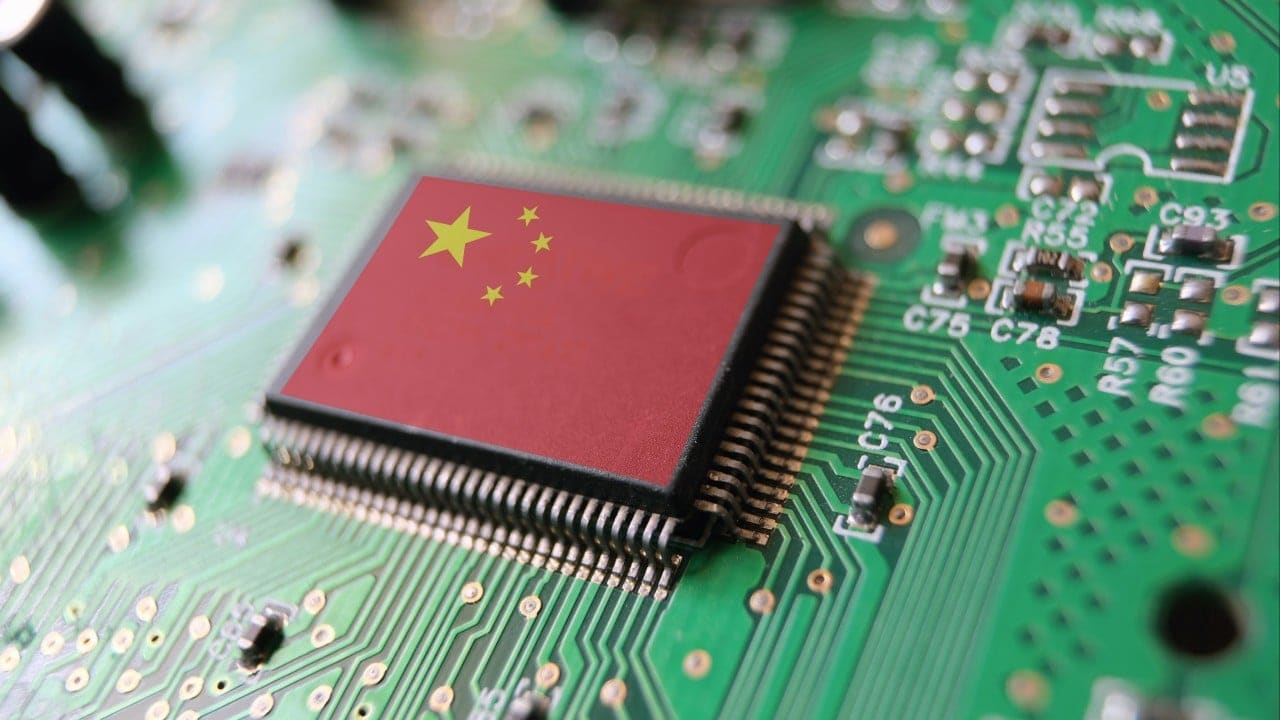
At DailyTechWire, we've tracked DeepSeek's trajectory since its emergence as one of the more technically ambitious players in China's crowded large-language-model scene. The company has positioned itself as a research-first organization, often prioritizing architectural experimentation over the kind of polished product releases that characterize competitors like Baidu or Alibaba Cloud. This latest update fits that pattern, but the developer response suggests the trade-offs may be growing harder to justify.
Benchmark Performance Falls Short
The updated model's scores on widely used evaluation suites have drawn criticism. Developers who tested the release reported results that, in several cases, trail not only leading international models but also some of DeepSeek's own earlier iterations. The gap is particularly visible in reasoning tasks and multi-turn dialogue coherence, areas where the April preview had shown competitive footing.
One possible explanation lies in the emphasis DeepSeek appears to have placed on agentic workflows, the ability of a model to plan, execute, and adapt over multi-step tasks without constant human guidance. This focus may have come at the expense of raw performance on the static, single-turn prompts that dominate most benchmarks. It's a trade-off that reflects broader debates in the AI research community about what metrics actually matter for real-world deployment.
Still, the underwhelming scores have practical consequences. For developers evaluating which model to integrate into applications, benchmark numbers remain a quick filter, even if imperfect. A model that lags on these tests faces an uphill battle in enterprise procurement processes, where risk-averse buyers lean heavily on quantifiable comparisons.
A Bright Spot in Cybersecurity
Where the model has earned genuine enthusiasm is in cybersecurity applications. Researchers working on vulnerability detection, threat modeling, and code auditing have reported that the updated version handles domain-specific queries with a level of nuance and accuracy that outpaces many alternatives. The model appears particularly adept at parsing complex codebases to identify potential exploits and at generating plausible attack scenarios for red-team exercises.
This strength aligns with a trend we've observed across the region: AI labs are increasingly betting on vertical specialization rather than trying to win on general-purpose leaderboards. For a start-up like DeepSeek, which lacks the distribution muscle of a Tencent or the cloud infrastructure of an Alibaba, carving out dominance in a high-value niche makes strategic sense.
Cybersecurity is an especially attractive target. The global shortage of skilled practitioners has pushed organizations to experiment with AI-assisted tooling, and the technical complexity of the domain creates a moat that favors models trained on deep, specialized corpora. If DeepSeek can establish a reputation here, it could open partnership channels with financial institutions, telecommunications operators, and government agencies across Asia, all of whom face mounting pressure to harden their defenses.
Pricing Friction
The other point of contention is cost. DeepSeek adjusted its pricing structure alongside the model update, and the new rates have drawn complaints from developers who had been testing earlier versions. While the company has not published a detailed breakdown, early adopters report that inference costs per token have increased, in some cases substantially.
For small teams and independent researchers, this shift is more than a minor inconvenience. Many had gravitated toward DeepSeek precisely because it offered a lower-cost alternative to the dominant international models, whose API fees can quickly spiral on compute-intensive workloads. If that price advantage erodes, the calculus changes.
DeepSeek's move may reflect the reality that subsidizing inference at scale is unsustainable without either significant venture backing or a clear path to monetization. The start-up has raised capital from domestic investors, but it operates in an environment where even well-funded players are under pressure to demonstrate unit economics. Raising prices is a logical step, but it risks alienating the developer community that has been central to the company's early traction.
The Agent Capabilities Bet
The emphasis on agentic performance is the thread that ties these developments together. DeepSeek's update statement specifically called out improvements in this area, and the architectural choices, benchmark trade-offs, and cybersecurity strengths all point to a model optimized for multi-step, tool-using workflows rather than conversational fluency or one-shot task completion.
This is a forward-looking bet. Agentic AI, the idea that models can autonomously manage complex processes by chaining together actions, retrieving information, and adapting plans on the fly, has become a focal point for labs worldwide. If this capability matures, it could unlock applications that go far beyond the chatbot and content-generation use cases that dominate today's market.
But it's also a risky bet. The infrastructure to support truly autonomous agents, including robust sandboxing, reliable tool APIs, and safety guardrails, is still immature. Developers are cautious about deploying systems that can take actions without tight human oversight, especially in domains like cybersecurity where mistakes carry real consequences. DeepSeek is building for a future that hasn't fully arrived yet.
Regional Context and Competitive Pressure
DeepSeek's trajectory is best understood within the broader dynamics of China's AI sector. The regulatory environment has tightened over the past two years, with new compliance requirements around data handling, content moderation, and model registration adding overhead for domestic labs. At the same time, export controls on advanced chips have forced companies to optimize models for less powerful hardware, a constraint that has paradoxically driven some interesting architectural innovations.
The competitive landscape is also shifting. While the first wave of Chinese large-language models competed largely on feature parity with GPT-3 and GPT-4, the current phase is marked by differentiation plays. Baidu is leaning into enterprise integration, Alibaba into cloud services, and smaller labs like DeepSeek into research-driven specialization. The question is whether niche strength is enough to sustain a standalone business or whether these players will eventually be absorbed by larger platforms.
DeepSeek's challenge is to convert technical credibility into commercial traction. The cybersecurity wins are a start, but the company needs to build out partnerships, demonstrate reliability at scale, and manage the perception that its pricing and performance are moving in opposite directions. The developer community's mixed reaction to this update is a warning signal that goodwill is not infinite.
What Comes Next
The updated model is unlikely to be DeepSeek's final word. The version numbering scheme, with its date-stamped suffix, suggests a cadence of iterative releases rather than monolithic launches. If the company can tighten the feedback loop, incorporating developer input more rapidly and transparently, it may yet rebuild momentum.
For now, the V4 Pro update stands as a case study in the difficult choices facing mid-tier AI labs. Pursue general-purpose excellence and risk being outspent by giants. Specialize and risk irrelevance if the chosen domain doesn't scale. Price aggressively and burn capital. Price sustainably and lose users. There are no easy answers, and DeepSeek's path forward will depend as much on market timing and partnership strategy as on model architecture.
The cybersecurity strength is real, and in a region where digital threats are escalating and expertise is scarce, that could be enough to carve out a defensible position. But the window is narrow, and the competition is not standing still.