What Makes a Conference Worth Your Time as a Founder
Disrupt 2026 arrives in San Francisco this October with 200 sessions, investor matchmaking, and the Startup Battlefield finale. Here's how to decide if it belongs on your calendar.
The Value Proposition for Early-Stage Teams
A founder competing in last year's Startup Battlefield saw a 3x oversubscription rate after confirmation, along with more than 100 investor inbound messages. Another walked away from the stage and fielded nearly 30 back-to-back investor conversations that followed them to their booth. These outcomes reflect a particular kind of event design: concentrated access, high signal-to-noise ratio, and an audience that shows up ready to deploy capital or make hires.
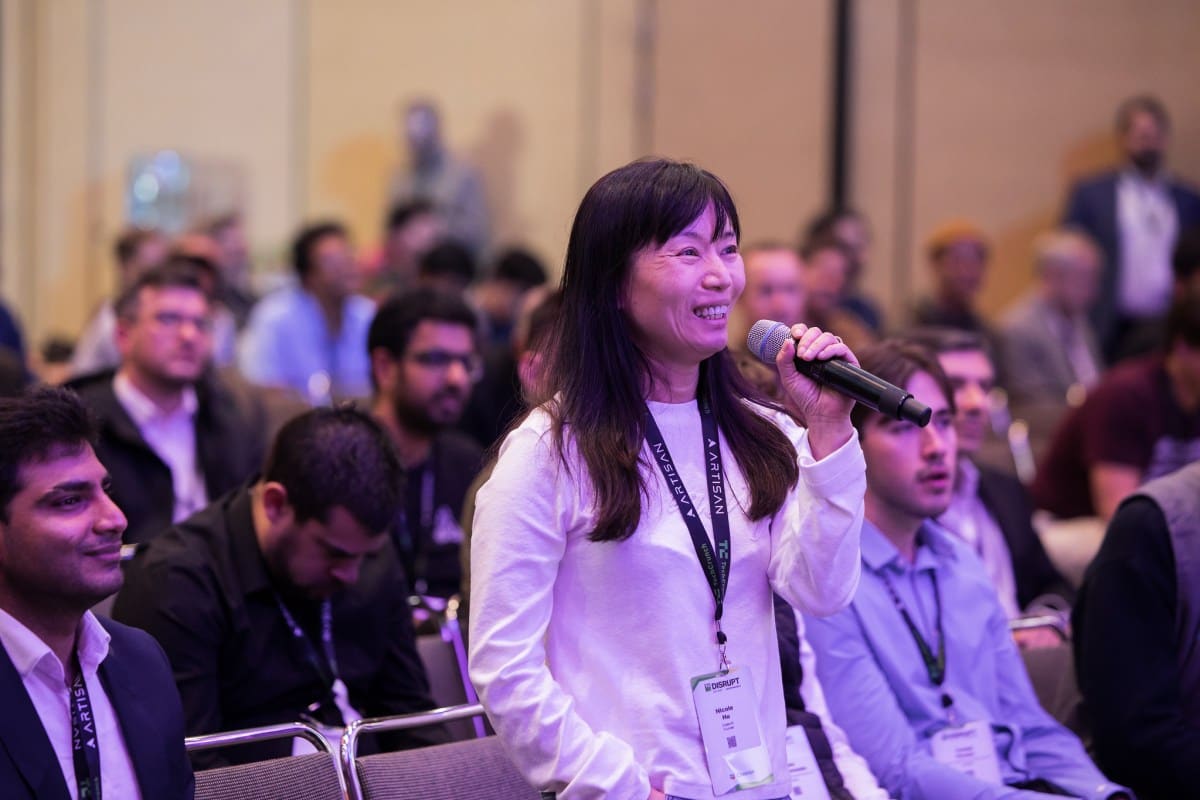
Disrupt 2026 runs October 13-15 at San Francisco's Moscone West. The event brings together founders, investors, and operators across more than 200 sessions, six curated stages, and structured networking opportunities including the Deal Flow Café and investor matchmaking tools available to Founder Pass holders. For teams at different stages, the value calculus shifts.
How Different Stages of Founding Map to Programming
Pre-seed and idea-stage founders benefit most from the Builders Stage, Startup Battlefield semifinalist pitches, and time spent in the Expo Hall. These are the venues where thesis validation happens and where you find out who else is building in adjacent spaces. Roundtables tied to specific industries offer another layer of pattern-matching.
Teams with early revenue or actively raising prioritize capital access. Investor matchmaking, the Deal Flow Café, and the structured networking built into the event app become central. Sessions focused on VC perspectives and fundraising mechanics on the Builders Stage fill the gaps between meetings.
Founders scaling or hiring use Disrupt differently. Talent acquisition, strategic partnerships, and market visibility drive attendance. The same networking infrastructure that facilitates investor meetings also connects teams with potential hires and partners. Side Events, organized around industries and interests, extend those conversations beyond the main floor.
Startup Battlefield Mechanics and Repeat Participation
The Startup Battlefield winner receives $100,000 and a surge of attention from investors and press. But the real value for the 200 startups selected to compete lies in the preparation process and the exposure that comes from pitching onstage in front of top-tier VCs and the Disrupt audience.
Applications for 2026 closed on August 20. The program is expanding to more international markets, and the 2027 process will mirror this year's structure. One pattern worth noting: most Battlefield participants, including several winners, have gone through the process multiple times. The competition serves as both a forcing function for refining your pitch and a repeatable channel for visibility.
Watching the pitches offers its own return. You see what works, what doesn't, and where investors push back. You also meet the teams behind the ideas, whether in scheduled follow-ups or spontaneous conversations in the Moscone hallways.
Six Stages, Each Built Around a Different Founder Need
The Disrupt Stage features the biggest conversations in technology: CEOs, founders, and industry leaders defining what comes next. These are the sessions that shape post-event discussion.
The Builders Stage delivers tactical advice. Fundraising, hiring, go-to-market strategy, product development, and scaling are covered in sessions designed to offer practical takeaways for Monday morning.
The AI Stage focuses on how the fastest-growing startups are building, deploying, and monetizing AI today. Sessions cover agents, models, infrastructure, and what it takes to win in a crowded field.
The Real World AI Stage explores AI moving into the physical world: robotics, autonomous systems, manufacturing, healthcare, and defense. The focus is on turning AI breakthroughs into real-world products and businesses.
The Smart Money Stage follows capital: fintech, stablecoins, payments, embedded finance, and AI-driven financial services. This stage examines how technology is reshaping the movement of money.
The Smart Systems Stage covers the infrastructure behind every AI breakthrough: chips, compute, energy, networking, and data centers. These are the innovations that will determine the next generation of technology companies.
Confirmed Speakers and What They're Discussing
RJ Scaringe from Rivian will discuss building a generational company. Panos Panay of Amazon covers designing products people love. Paolo Ardoino from Tether speaks on money, AI, and infrastructure. Toni Schneider and Rose Wang of Bluesky ask whether social can start over. Amjad Masad of Replit explores the thesis that every founder becomes technical. Andrew Feldman from Cerebras discusses winning the AI compute race.
Additional speakers will be announced as the event approaches. The full lineup spans all six stages and Side Events.
Pricing, Timing, and Logistics
Founder tickets are currently $300 off their final price until August 21. A limited-time offer available until 11:59 p.m. PT on August 7 provides an additional $100 discount. Co-founders can secure a 10% discount on a second ticket, and larger teams qualify for additional per-ticket discounts.
San Francisco hotel costs have risen alongside the city's role as an AI and startup hub. Four partner hotels offer reduced accommodation rates for Disrupt attendees.
Before arriving, review the regularly updated schedule of speakers and Side Events. Book networking opportunities in advance to avoid conflicts. Prepare your own elevator pitch; the most valuable Disrupt moments often happen in unscheduled conversations.
The Question Behind the Programming
Disrupt 2026 is organized around one central question: How do you build an enduring company in the AI era? Every session, stage, and structured interaction is designed to offer a practical answer. Whether you're raising your first round, scaling your team, or deciding how AI changes your product roadmap, the event assumes you'll walk away with something actionable.
At DailyTechWire, we've tracked the conference circuit across Asia and the West for years. The events that deliver value share a few traits: they concentrate decision-makers in one place, they prioritize substance over spectacle, and they create environments where serendipity scales. Disrupt has maintained that formula for more than two decades. The 2026 edition leans harder into AI infrastructure, capital formation, and the tactical realities of building in a compressed fundraising environment.
The real test isn't whether a conference feels worth it in the moment. It's whether the connections, insights, and opportunities that emerge from three days in October compound over the following six months. For founders at the right stage, with the right preparation, that compounding effect is where the return lives.