SK Hynix Bets $38 Billion on AI Memory Demand
South Korea's second-largest chipmaker is building two new fabs to chase data center profits, leaving consumer electronics in the cold
A Bet Too Big to Hedge
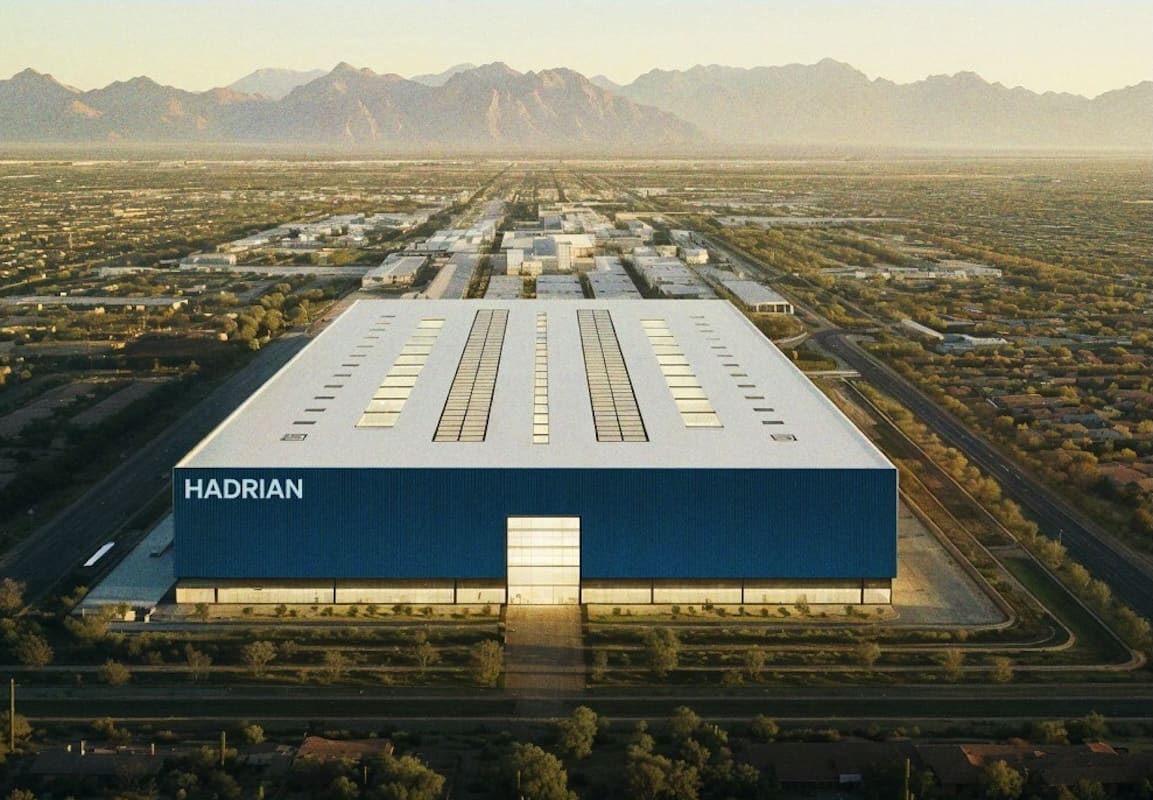
SK Hynix has committed 54 trillion Korean won - roughly $38.1 billion - to construct two memory fabrication plants in South Korea, a capital expenditure that dwarfs most venture rounds and signals how deeply chipmakers believe the AI data center wave will run. The investment splits into $24.9 billion for a Yongin facility focused on high-bandwidth memory and DRAM, and $13.2 billion for a NAND plant in Cheongju. Production at the first cleanroom is slated to begin in June 2029.
At DailyTechWire, we've tracked how memory suppliers have pivoted toward hyperscaler clients over the past eighteen months, and this move by SK Hynix - the world's second-largest producer of DRAM and NAND after Samsung - crystallizes that strategic tilt. The company framed the decision as a response to market velocity: officials noted the investment followed a comprehensive demand review and aims to capture growth opportunities at their current pace.
The scale of the commitment raises a question that venture analysts and supply-chain watchers are asking with increasing urgency: what happens if AI infrastructure spending plateaus before 2029?
Margin Over Volume
Memory prices have surged as data center operators compete for the latest HBM modules and high-density DRAM packages. That pricing power has delivered record profitability to SK Hynix, Samsung, and Micron, but it has also reshaped their go-to-market priorities. Where consumer electronics once absorbed the bulk of production - smartphones, gaming consoles, laptops - manufacturers now reserve their highest-margin output for enterprise customers willing to pay a premium.
Micron's exit from consumer memory underscores the trend. By abandoning retail channels entirely, the company freed capacity to serve AI workloads exclusively. SK Hynix has not articulated an equivalent consumer withdrawal, but the allocation pattern is already visible: data center clients receive priority, and consumer OEMs face longer lead times and steeper quotes.
The result is a bifurcated market. Hyperscalers lock in supply through multi-year agreements and co-development partnerships, while consumer device makers - operating on thinner margins and shorter product cycles - scramble for spot inventory. For end users, that translates to higher prices on everything from flagship phones to mid-range gaming rigs, a dynamic unlikely to reverse while fab capacity remains tight.
The 2029 Question
SK Hynix's first new line will not ship product until mid-2029, a timeline that assumes construction, equipment installation, and yield ramp proceed without delay. Even in an optimistic scenario, the gap between today's capacity constraints and meaningful supply relief spans more than three years. Counterpoint Research estimates that memory prices will remain elevated through the end of 2028, given that demand growth continues to outpace planned additions.
That forecast hinges on sustained AI infrastructure investment. If hyperscalers maintain or accelerate their current buildout tempo, the new fabs will slot neatly into a supply-constrained market. But a growing cohort of analysts warns that capital expenditure on AI hardware may decelerate sooner than chipmakers expect, particularly if model efficiency improvements reduce per-inference memory requirements or if enterprise adoption of generative AI tools disappoints.
The risk is asymmetric. SK Hynix and its peers have front-loaded billions in capital, much of it earmarked for specialized HBM production lines that serve a narrow customer base. If that base contracts - or if pricing power erodes as new capacity arrives - the return profile of these investments shifts dramatically. The memory sector has a long history of boom-bust cycles, and the current upcycle's duration remains an open question.
What It Means for the Ecosystem
For startups building AI infrastructure software or edge inference solutions, the memory supply picture carries strategic implications. High DRAM and NAND costs inflate cloud compute bills, which in turn pressure unit economics for any application reliant on large-context models or real-time data pipelines. Teams optimizing for memory efficiency gain a competitive edge, and architectures that minimize state or cache requirements become more attractive.
The consumer electronics sector, meanwhile, faces a prolonged squeeze. Device makers lack the leverage to negotiate favorable allocations, and their customers - accustomed to annual performance and storage upgrades - may encounter stagnant specifications or higher price tiers. That could slow replacement cycles and dampen demand for adjacent components, from application processors to display panels.
South Korea's broader industrial strategy also comes into focus. The government has supported domestic semiconductor expansion through tax incentives and infrastructure investments, viewing chip production as a pillar of economic security. SK Hynix's capital commitment reinforces that alignment, but it also concentrates risk: if global memory demand softens, the impact will ripple through regional employment, supplier networks, and export revenues.
The next three years will test whether the AI data center thesis can support the scale of capacity being built. SK Hynix is placing a $38 billion wager that it can. For everyone else in the value chain - from cloud platform engineers to laptop buyers - the outcome will shape costs, availability, and the pace of innovation well into the next decade.