Waymo Submits Redacted Files in Federal Child Collision Review
The Alphabet-owned autonomy firm has delivered answers to safety regulators investigating a January school-zone incident in Santa Monica, though all material remains shielded under confidentiality claims.
The Documents Arrive, but Stay Hidden
On a Friday morning in late August, the National Highway Traffic Safety Administration quietly posted the first batch of responses from Waymo to its public investigation docket. The documents marked the company's formal reply to a dozen questions the federal regulator sent in March, probing how the Alphabet-owned autonomy firm manages school-zone speed limits, complaint handling, and software decision-making. Every substantive line, however, was blacked out. Waymo invoked confidential business information protections across the entire submission, leaving the public record with nothing but page counts and letterhead.
The agency confirmed it is still reviewing additional material and will publish further files once that work concludes. For now, the redacted pages serve chiefly as proof that the investigation is moving forward, three months after Waymo secured extra time to prepare its answers. At DailyTechWire, we have tracked similar disclosure battles across Asia and North America, where autonomy developers routinely shield technical details even as regulators push for transparency after incidents involving vulnerable road users.
What Happened in Santa Monica
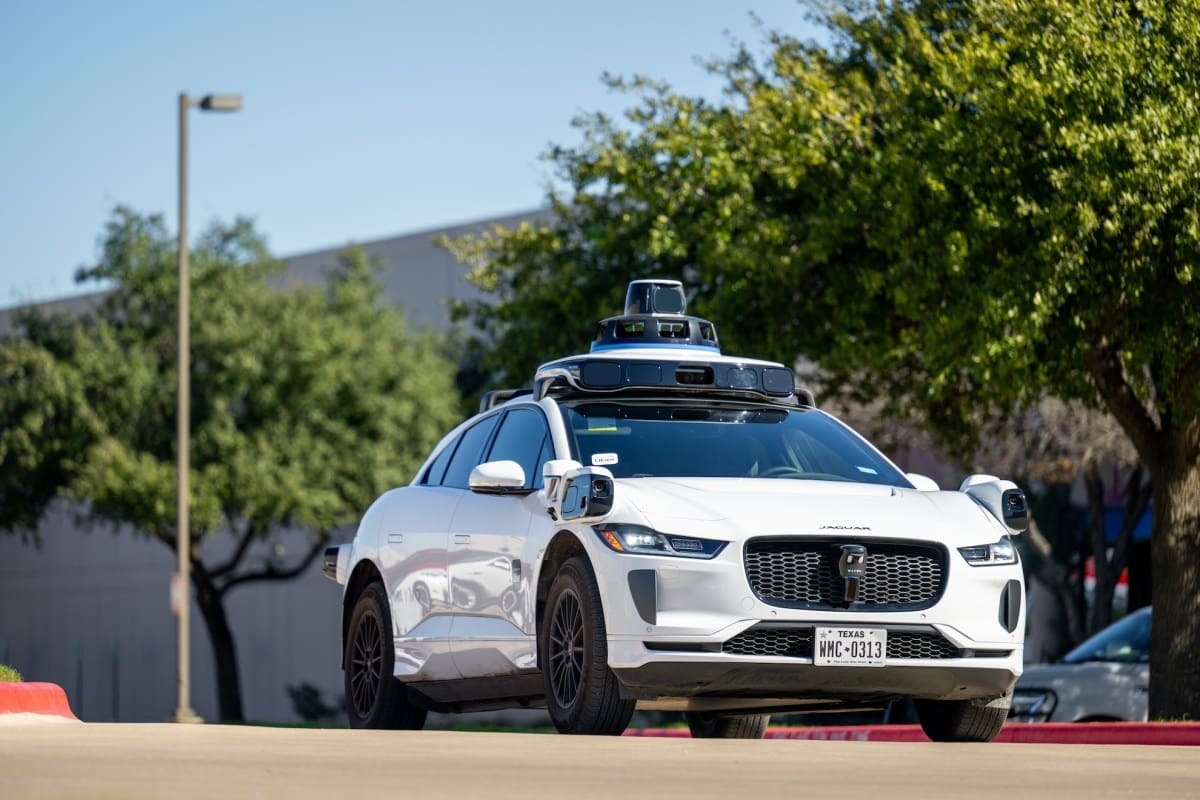
The collision under scrutiny took place on January 23, near a school in Santa Monica. A nine-year-old girl stepped into the street as a Waymo Jaguar I-Pace approached at seventeen miles per hour. The vehicle's perception and braking systems engaged, slowing the robotaxi to six miles per hour before contact occurred near the front-right headlight. The child fell, then walked to the curb under her own power. A preliminary report released in March by the National Transportation Safety Board noted minor injuries and no ambulance transport.
Two separate federal investigations followed. The NTSB typically issues a final technical report twelve months after an incident, focusing on root cause and systemic lessons. NHTSA's Office of Defects Investigation, meanwhile, opened a parallel inquiry one week after the crash, zeroing in on whether the event signals a broader defect or compliance gap across Waymo's fleet. The regulator's questions ranged from school-zone speed-limit logic to complaint logs and software version control, areas that have become flashpoints in Asia's autonomy rollouts as well. Regulators in Seoul and Singapore, for example, now mandate pre-deployment audits of perception systems in pedestrian-heavy zones, a requirement born from similar low-speed incidents in 2024 and 2025.
Extension Requests and Clarifications
Waymo's initial deadline to answer NHTSA's March 23 inquiry was May 8. One week before that date, Matthew Schwall, the company's senior director of safety, wrote to the agency requesting both an extension and clarification of certain questions. His letter framed the request around mutual efficiency, arguing that targeted revisions would let Waymo deliver relevant information without imposing extraordinary production burdens on either side.
The language is familiar to anyone who has watched autonomy firms negotiate disclosure timelines in multiple jurisdictions. In our reporting on Southeast Asian pilot programs, operators have made near-identical arguments when local transport ministries demand incident telemetry and decision logs. The tension is structural: regulators want granular data to assess system behavior, while companies fear that releasing algorithms, training sets, or edge-case handling rules will hand competitors a roadmap or expose them to liability in civil litigation.
NHTSA granted Waymo additional time for ten of the twelve questions. A second letter, dated July 8, provided partial responses. By mid-August, Waymo confirmed to multiple outlets that all submissions were complete, though the agency has not yet published the remainder or indicated when unredacted summaries might appear.
The School-Zone Speed Question
Among the dozen questions, one thread stands out for its policy implications: how Waymo's software determines speed limits in school zones. Unlike static speed-limit signs, school zones often activate only during certain hours, and their boundaries can shift with temporary signage or local ordinances that do not appear in standard map databases. Autonomy stacks must fuse real-time perception, map priors, and rule engines to decide the lawful speed at any given moment.
The Santa Monica incident suggests the vehicle was traveling within California's general speed limit but raises the question of whether enhanced caution protocols should trigger near schools regardless of posted limits. In Japan, for instance, revised guidelines issued in early 2025 require autonomous vehicles to cap speeds at fifteen kilometers per hour within fifty meters of school gates during morning and afternoon windows, even if no sign is present. Seoul's transport authority adopted a similar overlay rule after a 2024 trial in which a robotaxi passed a school at the legal limit but startled crossing guards.
NHTSA's inquiry into complaint logs is equally revealing. The regulator asked whether Waymo has received reports about robotaxi behavior around schools, a line of questioning that hints at pattern analysis. A single collision might be an edge case; multiple complaints about hesitation, sudden braking, or pedestrian near-misses in similar environments would point to a systemic perception or planning shortfall.
Confidentiality Claims and Public Interest
Waymo's decision to redact every substantive answer underscores the ongoing clash between trade-secret protection and public accountability. The company has legitimate reasons to guard proprietary algorithms, especially as competition intensifies in China, where Baidu's Apollo Go and Pony.ai have logged millions of urban miles, and in the Middle East, where new entrants are licensing Western and Chinese stacks in parallel.
Yet the breadth of the redactions leaves outside experts, municipal officials, and the public with little basis to assess whether Waymo's school-zone logic is robust or whether the Santa Monica event exposed a gap that other operators should address. In contrast, when a Cruise robotaxi dragged a pedestrian in San Francisco in late 2023, California's Department of Motor Vehicles published excerpts of telemetry and decision logs within weeks, enabling independent researchers to model alternative behaviors and inform rule-making.
The European Union's draft AI Act, expected to take full effect in 2027, includes transparency mandates for high-risk systems deployed in public spaces, requiring operators to share summary risk assessments and incident data with both regulators and affected municipalities. Several Asian jurisdictions are watching that framework closely. Singapore's Land Transport Authority has already signaled it may adopt similar disclosure tiers, distinguishing between competitively sensitive algorithms and the minimum data needed for public trust.
What Comes Next
NHTSA has not announced a timeline for completing its review or whether it will seek additional information from Waymo. The agency's investigation could result in several outcomes: a finding of no defect, a request for a voluntary recall or software update, or, in rare cases, a formal defect determination that triggers mandatory remediation across the fleet. Given the relatively minor injury and the vehicle's braking response, the first or second outcome appears more likely, though the pace of disclosure will shape public perception.
The NTSB's final report, expected around January 2027, may offer more technical detail. That agency's mandate is educational rather than enforcement-focused, and its reports often include system diagrams, sensor logs, and counterfactual analysis that help the industry learn from incidents without triggering immediate regulatory penalties. Waymo's engineering teams have historically cooperated with NTSB investigations, viewing them as opportunities to demonstrate transparency even when NHTSA files remain sealed.
For the autonomy sector, the Santa Monica case is a reminder that school zones represent one of the hardest edge cases in urban driving. Children move unpredictably, sight lines are often obstructed by parked cars, and the moral weight of any collision is immense. At DailyTechWire, we have seen operators in Shenzhen, Tokyo, and Bangalore all impose extra caution layers in school precincts, sometimes accepting higher rates of false-positive braking in exchange for added margin. The question is whether such policies should remain voluntary engineering choices or become codified requirements, and whether regulators have the data access they need to make that call.