Waymo Built Its Own Silicon to Power Robotaxi Scale
The Alphabet-backed autonomous vehicle company now designs custom 5 nm chips capable of 1,000 TOPS, signaling a vertical integration push that could reshape the economics of self-driving fleets.
The Chip That Changes the Calculus
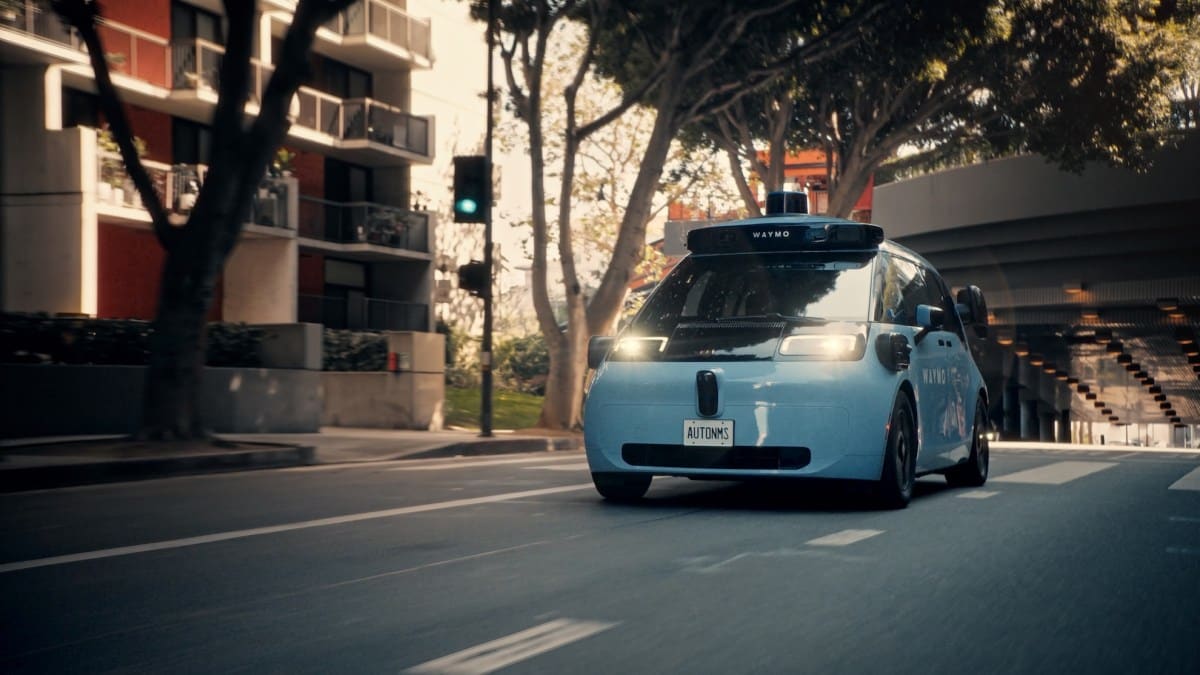
Waymo now builds its own silicon. The Alphabet-backed autonomous vehicle operator disclosed this week that it designed a custom 5 nanometer ASIC chip for its sixth-generation self-driving system, the architecture powering the Ojai robotaxis now carrying passengers in Los Angeles, Phoenix, and San Francisco. The chip handles the torrent of raw data flowing from 13 high-fidelity cameras before it reaches the central decision-making compute stack, delivering more than 1,000 trillions of operations per second.
That performance figure places Waymo's in-house silicon roughly on par with Nvidia's DRIVE AGX Thor, a flagship automotive processor designed for automated driving. But the strategic significance runs deeper than clock speeds. By designing its own preprocessing chip, Waymo is signaling a vertical integration strategy that extends beyond software and fleet operations into the semiconductor layer itself, a domain once reserved for specialized chip vendors and Tier 1 automotive suppliers.
The company has long touted the cost advantages of its sixth-generation platform. Now we understand one mechanism: custom silicon tailored precisely to the data pipeline of a multi-camera, lidar-equipped robotaxi eliminates waste inherent in general-purpose chips. Every watt and every dollar of bill-of-materials cost matters when you are trying to operate thousands of vehicles around the clock in dense urban environments.
Partners, Not Lone Wolves
Waymo is not fabricating chips in a vacuum. The company listed seven partners contributing to its compute architecture: AMD, Micron, Nvidia, Samsung, SanDisk, Socionext, and TSMC. Several of these names appear on a Waymo partner list for the first time, suggesting that the sixth-generation platform required a broader supply chain than earlier iterations.
TSMC's presence is particularly telling. The Taiwanese foundry dominates bleeding-edge process nodes, and a 5 nm ASIC implies access to manufacturing capacity that remains tightly allocated among the world's largest chip buyers. Waymo's ability to secure that capacity, even at modest initial volumes, underscores Alphabet's leverage and the seriousness with which the parent company views autonomous mobility as a long-term bet.
Nvidia's continued involvement, despite Waymo now building its own preprocessing chip, suggests a division of labor: custom silicon for the data-intensive front end, proven third-party platforms for the inference and planning tasks that benefit from mature software ecosystems and toolchains. At DailyTechWire, we have tracked similar hybrid strategies among Chinese EV makers who design their own domain controllers while relying on Nvidia or Horizon Robotics for core inference accelerators.
Why Vertical Integration Now
The timing of this disclosure is not accidental. Waymo has opened its Ojai fleet to all riders in three major U.S. cities and continues to expand service areas at a pace that would have been unthinkable two years ago. Expansion requires unit economics that can survive without indefinite subsidy. Custom silicon is one lever; others include the Ojai's simplified sensor suite compared to earlier Jaguar I-PACE-based vehicles, and operational efficiencies from fleet scale.
Vertical integration also insulates Waymo from supply chain volatility. The automotive chip shortage of 2021 and 2022 exposed the fragility of just-in-time manufacturing when a handful of suppliers control critical components. By designing its own preprocessing chip, Waymo reduces dependency on roadmap decisions made by vendors juggling dozens of automotive customers with conflicting priorities.
There is a risk, of course. Custom silicon demands upfront engineering investment, multi-year development cycles, and the burden of maintaining hardware and firmware that cannot be outsourced. If Waymo's fleet growth stalls, the fixed costs of chip development become harder to amortize. But the company appears to be betting that scale is inevitable, and that owning the full stack from sensor to silicon to software is the only path to margins that satisfy Alphabet's investors.
The Broader Autonomous Compute Race
Waymo is not alone in rethinking compute architecture. Tesla has long designed its own inference chips for Autopilot and Full Self-Driving, a strategy that gave the automaker control over power budgets and performance roadmaps independent of Nvidia's product cycles. Chinese autonomous driving startups, including those backed by automakers like Geely and BYD, are increasingly co-designing chips with semiconductor partners or acquiring chip design teams outright.
The shift reflects a maturation of the autonomous vehicle industry. Early-stage research could rely on off-the-shelf GPU clusters and development boards. Production fleets operating 24/7 in varied weather and lighting conditions require purpose-built hardware optimized for inference latency, thermal management, and cost per vehicle. The companies that can afford to design that hardware in-house gain an edge; those that cannot must accept the constraints and economics dictated by merchant silicon vendors.
Waymo's disclosure also raises questions about the competitive dynamics in automotive semiconductors. Nvidia has dominated autonomous driving compute for years, but its chips serve many masters. A customer building custom silicon for preprocessing or even full inference is still a customer for development tools, simulation platforms, and perhaps lower-volume compute for R&D fleets. The relationship becomes more nuanced, less binary.
What This Means for Robotaxi Economics
The ultimate test is whether Waymo's vertical integration translates into a cost structure that supports profitable operations. The company has not disclosed the per-unit cost of its custom chip, nor the total R&D investment required to bring it to production. But the performance claim of over 1,000 TOPS in a 5 nm process suggests a die size and power envelope that would have been expensive to achieve with discrete components or older-generation ASICs.
If Waymo can drive down the cost of each Ojai through custom silicon, simplified sensors, and operational scale, the company moves closer to a business model that does not require perpetual capital infusions from Alphabet. That would be a turning point not just for Waymo, but for the broader autonomous vehicle industry, which has yet to demonstrate that robotaxis can be profitable at scale in the absence of regulatory tailwinds or monopoly market positions.
The chip is one piece. Fleet utilization, maintenance costs, insurance, and the ability to command pricing power in competitive urban markets all matter just as much. But compute is the enabler. A robotaxi that cannot process sensor data fast enough to react in dense traffic is a liability, not an asset. Waymo's bet is that building its own silicon gives it the performance, efficiency, and cost structure that no off-the-shelf solution can match.
The Vertical Integration Playbook
Waymo's move echoes a pattern we have seen across Asia's tech giants. Alibaba designs its own Yitian server chips; Baidu built Kunlun for AI inference; Xiaomi is reportedly exploring custom silicon for its EVs. The logic is consistent: when a technology becomes central to your competitive advantage and you operate at sufficient scale, vertical integration shifts from a luxury to a necessity.
For Waymo, the sixth-generation platform represents a bet that autonomous mobility is no longer a research project but a scaling challenge. Custom silicon is how you signal to investors, partners, and competitors that you are playing a different game, one measured in millions of rides per year and the marginal cost per mile. Whether that bet pays off will depend on execution across hardware, software, operations, and regulation. But the chip is a marker. Waymo is building for scale, and it is building in-house.