Washington Weighs Chip Tariffs That Could Reshape AI Infrastructure Costs
A proposal to tax semiconductors and the devices containing them has drawn sharp criticism from industry voices who warn of cascading effects on data center economics and innovation timelines.
A Framework Taking Shape
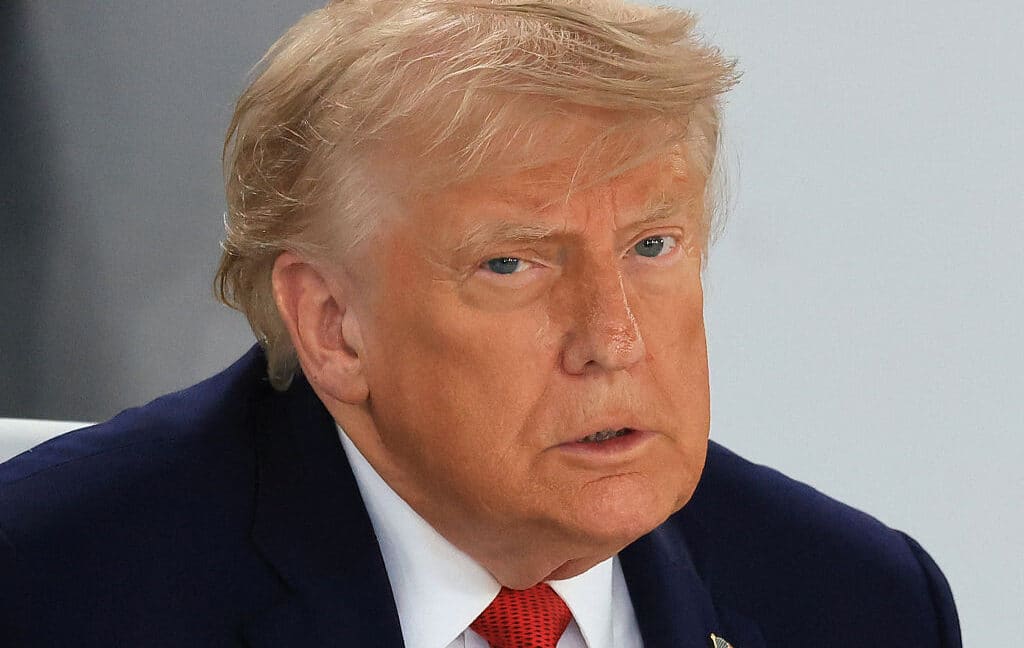
The Trump administration is exploring a tariff structure that would place duties on semiconductors and, potentially, on a far wider category of finished products that incorporate them. According to people briefed on the deliberations, the framework under discussion could apply levies not only to chips themselves but also to servers, gaming consoles, and other hardware central to data center operations. The policy remains in flux, with final details expected in the coming weeks or months, but the direction of travel has already provoked a backlash from executives and investors who see the move as fundamentally misaligned with stated goals of bolstering domestic AI leadership.
At DailyTechWire, we've tracked the interplay between export controls, capital deployment, and supply-chain geography across Asia and North America for the past three years. What stands out in this latest proposal is the breadth of its potential reach. Unlike earlier semiconductor tariffs that targeted specific nodes or manufacturing origins, the framework now under consideration would sweep in a much larger universe of end products, creating a cascading cost structure that touches everything from hyperscale cloud builds to edge inference appliances.
Why the Industry Is Alarmed
The criticism has been blunt. Industry representatives have described the approach as counterproductive, with one characterization circulating in policy circles labeling it among the least effective methods imaginable for achieving competitive advantage. The core argument is economic: tariffs on chips raise input costs for American companies building AI infrastructure, while doing little to shift fabrication capacity back onshore in the near term. Because leading-edge logic and high-bandwidth memory remain concentrated in Taiwan, South Korea, and to a lesser extent Japan, any duty applied at the border translates directly into higher capital expenditure for data center operators, cloud providers, and enterprises deploying large language models or computer vision workloads.
The timing compounds the challenge. The past eighteen months have seen record investment in AI compute, with hyperscalers and startups alike racing to secure GPU clusters, custom accelerators, and the networking fabric that binds them. A sudden increase in component costs threatens to slow that cadence, particularly for mid-tier players who lack the balance-sheet depth of the largest cloud providers. For venture-backed infrastructure companies, higher chip prices mean longer payback periods and tighter unit economics, which in turn can chill follow-on funding rounds and delay product launches.
What the Tariff Scope Could Mean
The proposal's scope is what sets it apart from earlier trade measures. If finalized as described, the tariffs would not stop at bare silicon. Servers, the workhorses of modern data centers, could face duties based on the value of the chips inside them. The same logic would apply to gaming consoles, which share architectural DNA with AI training rigs, and to other categories of compute hardware. This creates a compounding effect: a tariff on a GPU raises the cost of that component, and a separate tariff on the server that houses it raises the cost again.
For operators planning multi-hundred-million-dollar data center builds, the arithmetic matters. A ten percent duty on a server carrying eight high-end accelerators can add tens of thousands of dollars per rack, and a facility with thousands of racks sees that figure balloon into the tens of millions. Those costs either get passed downstream to customers in the form of higher inference API pricing, absorbed as lower margins, or deferred through stretched deployment schedules. None of these outcomes aligns well with the goal of maintaining American leadership in AI research and commercialization.
The Regional Context
From a regional perspective, the tariff proposal sits awkwardly alongside other policy efforts aimed at reshoring semiconductor production. The CHIPS and Science Act, signed in 2022, committed tens of billions of dollars in subsidies and tax credits to encourage domestic fab construction. TSMC's Arizona facility, Samsung's Texas expansion, and Intel's Ohio project are all moving forward, but even optimistic timelines place meaningful volume production several years out. In the interim, the global AI buildout depends on chips fabricated in Hsinchu, Hwaseong, and other Asian manufacturing hubs.
Tariffs imposed now would effectively tax the very supply chain that American companies rely on while domestic alternatives remain offline. The policy creates a window of heightened cost without a corresponding increase in supply security. For policymakers in Seoul and Taipei, the signal is mixed: Washington wants to reduce dependence on Asian fabs, but in the near term it is raising the cost of doing business with the partners who supply the most advanced nodes.
Implications for Startups and Cloud Builders
The impact on startups deserves particular attention. Large cloud providers can absorb cost shocks through scale, long-term supply agreements, and the ability to pass incremental expenses to enterprise customers. Venture-backed companies building specialized AI infrastructure, custom silicon, or vertical SaaS products on top of inference engines have less room to maneuver. Higher server costs mean higher burn rates, which compress runway and force difficult tradeoffs between headcount, marketing, and product development.
We've followed funding rounds across the region, and the pattern is clear: investors are increasingly sensitive to capital intensity. A tariff-induced cost increase makes hardware-dependent business models less attractive, which could tilt capital toward software-only plays or toward companies willing to build and operate infrastructure outside the United States. The latter outcome would be particularly ironic, given that the stated aim of the tariff framework is to strengthen domestic industry.
What Comes Next
The framework is not yet final, and the range of people briefed on the deliberations suggests that internal debate continues. The administration could narrow the scope, phase in the duties over a longer period, or carve out exemptions for certain categories of hardware deemed critical to national competitiveness. Alternatively, it could proceed with the broad approach now under discussion, accepting the near-term cost increase as the price of a longer-term reorientation of supply chains.
For now, the tech industry is left in a state of uncertainty. Data center operators are running scenario analyses, supply chain teams are modeling cost impacts, and policy shops are drafting position papers. The next few weeks will clarify whether the tariff proposal moves forward in its current form or whether industry pushback and internal administration debate lead to a revised approach. Either way, the conversation underscores a deeper tension: the gap between the pace of policy change and the capital cycles that govern semiconductor manufacturing and AI infrastructure investment.