Nvidia's H200 China Sales Reveal the True Cost of Export Controls
The chipmaker's first licensed shipments to China generated less than 1% of data-centre revenue, underscoring how US policy has reshaped the world's largest AI market
The Numbers Tell a Stark Story
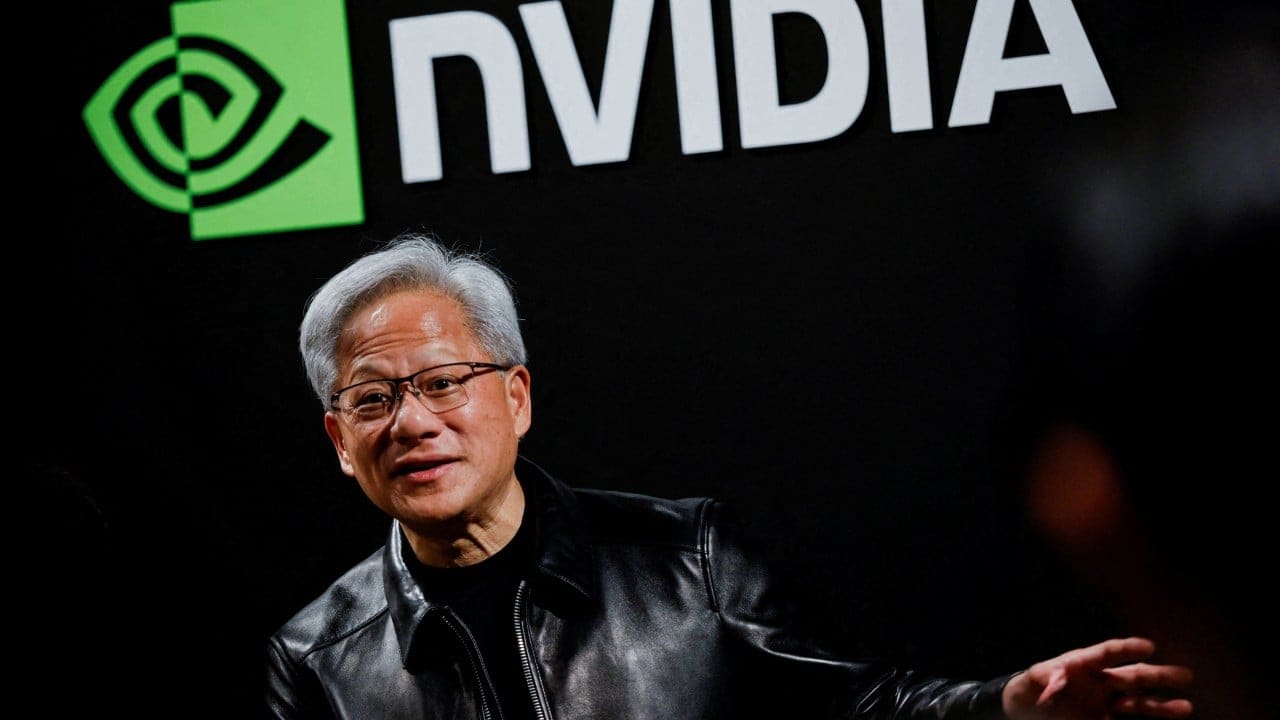
Nvidia shipped its first H200 data-centre processors to China during the quarter ending July 26, marking the end of a months-long freeze. The milestone came under a new US licensing framework that Washington approved in January. Yet the financial reality is unambiguous: those sales accounted for less than 1% of the company's $89 billion data-centre revenue for the period.
At DailyTechWire, we've tracked how export controls have systematically redrawn the boundaries of the global semiconductor industry. This disclosure offers the clearest quantitative evidence yet of how thoroughly US policy has severed Nvidia from what was once its second-largest market. The sub-1% figure is not a temporary dip but a structural recalibration, one that reflects both the narrow scope of licenses granted and the speed at which Chinese buyers have pivoted to alternative architectures.
A Policy Framework Built for Constraint
The licensing mechanism approved by the US government in early 2026 was never designed to restore Nvidia's China business to its pre-control scale. Instead, it functions as a valve, permitting limited flows of high-performance chips for specific, vetted use cases while maintaining pressure on China's AI infrastructure buildout.
The H200, part of Nvidia's Data Centre Hopper family, represents a newer generation of inference and training accelerators. Its arrival in China follows a quarter in which Nvidia reported zero shipments of Hopper-class products to the region. That earlier blackout period, which coincided with the final months of regulatory uncertainty before the licensing framework took effect, left Chinese cloud providers and AI labs scrambling for capacity.
Even with licenses now in place, the volumes remain negligible. For context, Nvidia's $89 billion quarterly data-centre haul reflects surging demand across North America, Europe, and parts of Asia outside China. The company has become the primary supplier of compute for frontier model training, with hyperscalers and AI-native firms queuing for H100 and H200 clusters. China's absence from that demand curve is no longer a matter of logistics or supply-chain bottlenecks. It is policy.
What Fills the Vacuum
Chinese firms have not been idle. Over the past eighteen months, domestic chip designers including Huawei, Biren, and Moore Threads have accelerated development of training and inference ASICs. Huawei's Ascend 910B, in particular, has gained traction among state-backed cloud operators and enterprises with ties to government procurement. While these chips lag Nvidia's flagship products in raw performance and ecosystem maturity, they are available without export-license risk.
At the same time, Chinese buyers have turned to older Nvidia architectures and export-compliant SKUs. The A800 and H800, purpose-built for the Chinese market with reduced interconnect bandwidth to meet earlier US thresholds, continue to circulate. Gray-market channels and inventory stockpiled before successive rounds of controls tightened also provide a buffer, though one that is finite and increasingly expensive.
The strategic question for Beijing is whether this patchwork can sustain the country's AI ambitions. Frontier models require not just individual chips but dense, high-bandwidth clusters running for weeks or months. Latency, power efficiency, and software tooling all matter. Nvidia's CUDA ecosystem remains the de facto standard for AI development globally. Chinese alternatives are improving, but they are climbing a steep curve while the rest of the world continues to scale on Nvidia's roadmap.
Revenue Reallocation and Geopolitical Hedging
For Nvidia, the loss of China as a major revenue source has been more than offset by explosive growth elsewhere. The company's data-centre segment has nearly tripled year-over-year, driven by generative AI deployments and enterprise adoption of large language models. Demand from US hyperscalers alone has absorbed capacity that might once have flowed to Alibaba Cloud, Tencent, or ByteDance.
Yet the company's disclosure also signals a hedging strategy. By securing licenses and making token shipments, Nvidia maintains a legal and commercial foothold in China. Should US policy shift or bilateral tensions ease, the infrastructure for resumed sales remains in place. The sub-1% revenue share is a placeholder, not an exit.
From Washington's perspective, the licensing regime achieves its core objective: it allows selective engagement with Chinese buyers while denying the scale and consistency of supply needed to build world-class AI infrastructure. The policy is not a blanket embargo but a throttle, calibrated to slow China's progress without entirely cutting off commercial ties or triggering retaliatory measures that could harm US firms in other sectors.
The Broader Semiconductor Chessboard
Nvidia's H200 shipments sit within a larger mosaic of export controls that now encompass not just chips but lithography equipment, design software, and even cloud-compute access. The Netherlands and Japan have aligned with US restrictions on ASML's extreme ultraviolet lithography tools and Tokyo Electron's deposition systems. These measures target China's ability to manufacture advanced nodes domestically, creating a pincer effect: restricted access to both leading-edge chips and the tools to make them.
China's response has been multi-pronged. Massive state investment in semiconductor R&D, estimated in the hundreds of billions of yuan, aims to build self-sufficiency across the stack. At the same time, Beijing has imposed its own export controls on critical minerals including gallium and germanium, materials essential for compound semiconductors and optoelectronics. The message is clear: if Washington intends to weaponize chip access, Beijing will leverage its dominance in raw materials.
For the rest of Asia, this bifurcation creates both risk and opportunity. South Korean and Taiwanese chipmakers face pressure to align with US policy while protecting their own China revenue. TSMC, which fabs Nvidia's GPUs, has publicly committed to compliance with US export rules. Samsung and SK hynix, major suppliers of high-bandwidth memory for AI accelerators, have navigated similar constraints. Meanwhile, Southeast Asian nations are positioning themselves as neutral manufacturing hubs, hoping to attract investment from firms seeking to de-risk supply chains.
What Comes Next
The sub-1% figure disclosed by Nvidia is unlikely to change materially in the near term. The licensing process remains opaque, approvals are granted on a case-by-case basis, and the criteria favor narrow, non-military applications. Even if more licenses are issued, the volumes will remain a fraction of what flowed to China before 2022.
For Chinese AI labs and cloud operators, the path forward involves a combination of stockpiling legacy chips, deploying domestic alternatives, and optimizing workloads to extract maximum performance from constrained hardware. Some frontier research may migrate to jurisdictions with fewer restrictions, or proceed in collaboration with international partners willing to provide compute access remotely.
For Nvidia, the calculus is straightforward: China is no longer a growth market, but it is not entirely closed. The company will continue to pursue licenses where possible, maintain relationships with major Chinese customers, and prepare for scenarios in which policy evolves. In the meantime, the center of gravity for AI compute has decisively shifted to North America and allied markets.
The H200 shipments are a data point, not a turning point. They confirm what many in the industry already understood: export controls have fundamentally reordered the global AI hardware landscape, and the effects will compound over time. The question is no longer whether China can access Nvidia's latest chips, but whether it can build an AI ecosystem competitive with the West while operating under sustained technological constraint. The answer will shape the next decade of innovation, competition, and geopolitical strategy across the sector.