Washington Demands Answers on Federal Hacking Practices
A Senate push for transparency exposes a two-decade gap in oversight of law enforcement spyware and network intrusion tools.
A Long-Overdue Audit Request
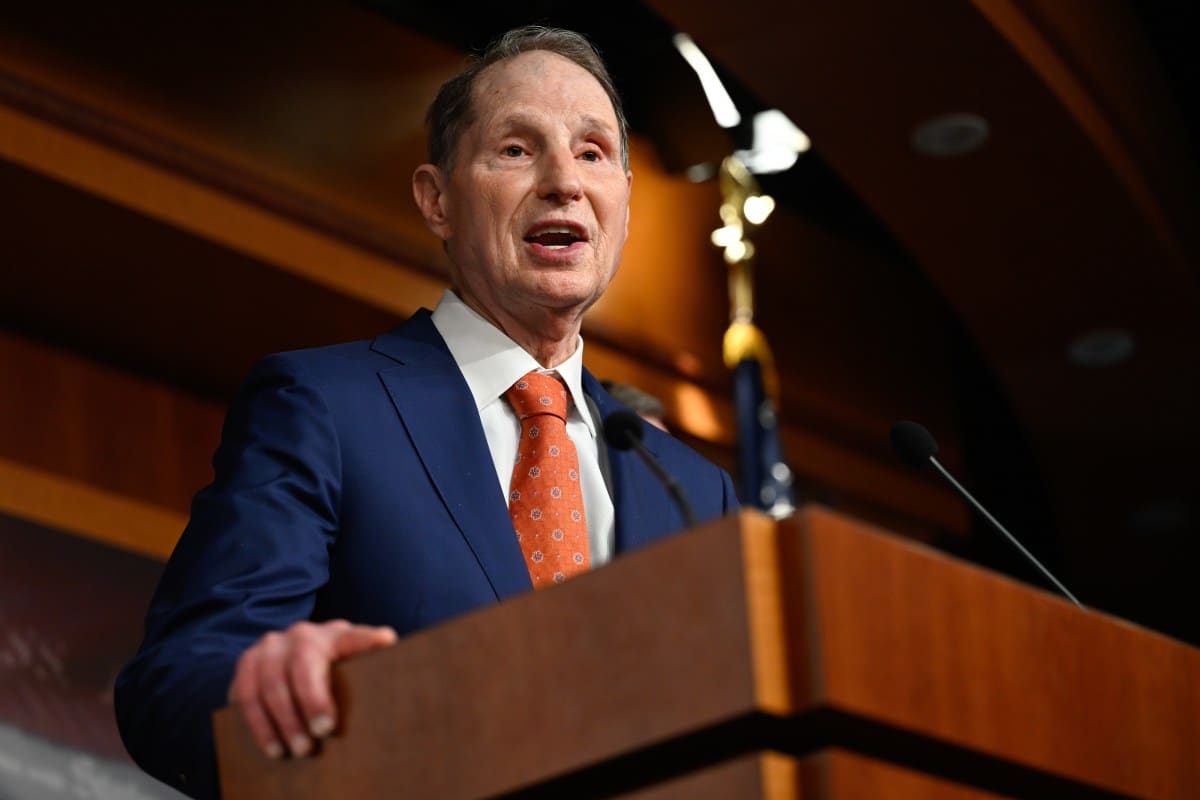
Senator Ron Wyden has formally requested that the Government Accountability Office investigate how federal law enforcement uses offensive cyber capabilities against American targets. The Oregon Democrat's letter, sent late last week, marks one of the most detailed congressional attempts to force transparency around a practice that has operated largely in shadow for more than twenty years.
The request targets four agencies: the Federal Bureau of Investigation, the Drug Enforcement Administration, Immigration and Customs Enforcement's investigative arm, and the Secret Service. Wyden's central argument is straightforward. While wiretap and call-record surveillance are subject to annual public reporting requirements, no equivalent disclosure framework exists for hacking operations. The public has no systematic way to know how often these tools are used, under what legal standards, or with what safeguards.
At DailyTechWire, we've tracked the creep of commercial spyware into law enforcement arsenals across the region and in Washington. What distinguishes this moment is not the technology itself, which has been available for years, but the growing recognition that oversight has failed to keep pace with capability.
What Wyden Wants Investigated
The senator's letter lays out three core areas for the GAO to examine. First, whether agents have misused hacking tools for unauthorized or personal purposes, and what technical controls exist to prevent such abuse. Second, how agencies acquire, store, and secure these capabilities, including whether they participate in the vulnerabilities equities process, a government mechanism meant to weigh disclosure of software flaws against operational advantage. Third, how courts are informed when warrants are sought for hacking operations, and whether judges receive adequate notice about collateral risk to bystanders.
The emphasis on acquisition security is not abstract. Wyden cited the case of Peter Williams, a former executive at defense contractor L3Harris, who illicitly sold advanced intrusion tools to a Russian intermediary. Those tools later surfaced in operations by Russian intelligence against Ukrainian targets and in cryptocurrency theft campaigns attributed to Chinese threat actors. The incident underscores a structural problem: once offensive tools leave controlled environments, they become unpredictable strategic liabilities.
The GAO, an independent congressional watchdog, has broad authority to audit executive branch operations. Wyden's request calls for an unclassified report with findings and recommendations, a format designed to ensure public access to at least the contours of what the audit uncovers.
A Practice Older Than Most Realize
Federal use of offensive cyber tools is not new. The earliest documented deployment dates to 1999, when FBI agents investigating illegal gambling and loan sharking in Philadelphia encountered encrypted files on a suspect's machine. Nicodemo Scarfo, a figure in organized crime, had used Pretty Good Privacy software to lock a file believed to contain incriminating evidence. Unable to break the encryption, agents installed a keystroke-logging program on the computer to capture his passphrase. The operation succeeded, the file was decrypted, and a legal precedent was quietly set.
Since then, the practice has expanded in both scale and sophistication. Tools that once required physical access now operate remotely. Capabilities that were bespoke are now available off the shelf from a growing market of vendors. Yet the legal and oversight architecture has remained largely static. Congress receives no routine accounting of how often these tools are deployed, what legal thresholds govern their use, or how often operations affect unintended parties.
Wyden's letter notes that the Department of Justice and the FBI have repeatedly declined congressional requests for greater transparency across multiple administrations. The pattern suggests a structural reluctance rather than a partisan stance. Agencies argue that operational security demands secrecy; lawmakers counter that secrecy without accountability invites abuse.
Why Oversight Matters Now
The stakes have shifted. Offensive cyber tools are no longer the exclusive province of intelligence agencies with narrow mandates and heavy classification. They are now routine in domestic law enforcement, used in investigations that range from terrorism to narcotics to financial crime. The tools themselves have become more powerful, capable of extracting vast troves of data from devices, activating cameras and microphones, and mapping social networks.
At the same time, the vendor ecosystem has globalized. Companies in Israel, Italy, and elsewhere sell capabilities that rival or exceed those developed in-house by government agencies. The result is a diffuse, largely opaque supply chain in which tools change hands, vulnerabilities are stockpiled, and the line between legitimate law enforcement and authoritarian surveillance blurs.
The Williams case is instructive. A single insider with access to advanced tools was able to divert them into hostile hands, with consequences that rippled across continents. The episode raises uncomfortable questions about vetting, access controls, and the broader security posture of agencies that acquire and deploy these capabilities.
Wyden's request also touches on a procedural gap. When agents seek a warrant for a wiretap, the legal standard and the scope of intrusion are relatively well understood by judges. Hacking operations, by contrast, can have unpredictable scope. A tool designed to target one device may inadvertently compromise others on the same network. A vulnerability exploited in one investigation may be discovered and weaponized by adversaries in another context. Whether courts receive adequate briefing on these risks is unclear, and Wyden wants the GAO to find out.
The Path Ahead
Whether the GAO takes up the request remains to be seen. The office has broad discretion but finite resources, and congressional requests compete for attention. If the audit proceeds, it will likely take months to complete, and the resulting report may be heavily redacted to protect operational details.
Still, the letter signals a shift in congressional appetite for deference. For years, requests for transparency on surveillance and hacking tools have been met with assurances that internal oversight is sufficient. Wyden's move suggests that assurance is no longer enough. The demand is for independent verification, public accounting, and enforceable safeguards.
The broader question is whether oversight mechanisms designed for an earlier era of surveillance can adapt to the realities of offensive cyber operations. Wiretaps and pen registers are targeted, bounded, and largely passive. Hacking is invasive, dynamic, and carries systemic risk. The legal frameworks that govern the former may not be adequate for the latter, and the transparency regimes certainly are not.
If the GAO audit moves forward, it will be one of the first comprehensive outside looks at how federal law enforcement has integrated offensive cyber tools into routine investigative practice. The findings may not be comfortable, but they will be necessary. In an environment where capability has raced ahead of accountability, sunlight is overdue.