VinFast Prices Its Smallest EV at $7,100 as Vietnam's Car Market Opens Up
The Vietnamese automaker's VF2 targets first-time buyers in a market where two-wheelers still dominate, even as Hanoi tightens rules on gasoline motorcycles.
A Sub-$7,500 Play for Vietnam's Streets
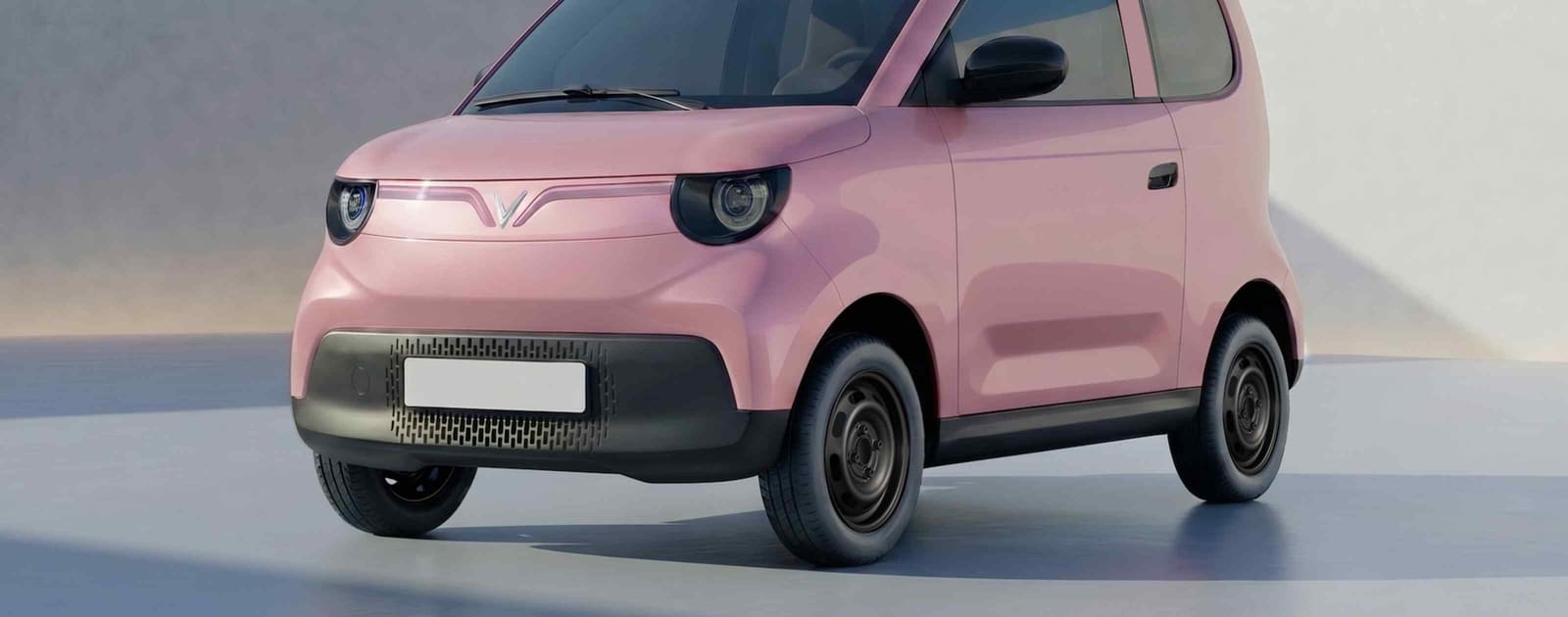
VinFast has introduced the VF2 at 188 million dong - roughly $7,148 - making it the automaker's most affordable electric vehicle to date. The move targets a segment that barely exists in Vietnam: the everyday car buyer who has historically opted for motorcycles and scooters due to cost and urban density.
At DailyTechWire, we've tracked VinFast's evolution from a domestic upstart to an international player with ambitious North American expansion plans. The VF2 represents a different gamble - one rooted in the fundamentals of Vietnam's domestic economy, where per capita income sits around $4,200 and car penetration remains among the lowest in Southeast Asia. Hanoi's streets are still overwhelmingly two-wheeler territory, but policy is beginning to shift the calculus.
The Regulatory Tailwind
Hanoi has been gradually tightening restrictions on gasoline-powered motorcycles, creating a window for electric alternatives. While enforcement has been phased and politically sensitive - motorcycles remain the primary transport mode for millions - the direction is clear. Cities across Asia, from Jakarta to Bangkok, are grappling with similar air quality and congestion pressures, and Vietnam's capital is no exception.
The VF2's price point positions it as a potential substitute not just for used internal combustion cars, but for households considering whether to upgrade from two wheels to four. That's a fundamentally different value proposition than the premium EVs VinFast has pushed in the U.S. and European markets, where the company has struggled with volume and profitability.
Mass Market Economics and Manufacturing Scale
Achieving a $7,100 sticker price in an emerging market requires ruthless cost discipline. Battery chemistry, cell sourcing, and localization of component supply chains all factor into the equation. VinFast's parent, Vingroup, has vertical integration across real estate, retail, and now energy infrastructure, which could provide some margin cushion - but the unit economics of a sub-$7,500 EV are tight anywhere in the world.
China's EV makers have demonstrated that scale and government support can push entry-level electric cars below $10,000, and VinFast is likely drawing on similar playbooks. The question is whether domestic demand can ramp fast enough to justify the production investment, or whether VinFast will need to export the VF2 to markets like Indonesia, the Philippines, or even India to hit volume targets.
Regional Context and the Two-Wheeler Transition
Vietnam's car market is underpenetrated by design as much as by income. Urban density, narrow streets, and decades of policy that favored motorcycles have kept car ownership rates low. But rising incomes and shifting aspirations are beginning to change the landscape. Across Southeast Asia, the transition from two-wheelers to four-wheelers typically accelerates once GDP per capita crosses $5,000 to $6,000 - a threshold Vietnam is approaching in major urban centers.
VinFast's timing coincides with this inflection point, but the company faces competition not just from established automakers like Toyota and Honda, but from Chinese brands that have flooded ASEAN markets with competitively priced EVs. BYD, Geely, and others have been aggressive in Thailand and Indonesia, and Vietnam is a logical next target.
Infrastructure and Adoption Challenges
Affordability alone won't drive adoption. Charging infrastructure remains sparse outside Hanoi and Ho Chi Minh City, and range anxiety is a real concern for buyers considering an EV as their primary vehicle. VinFast has invested in charging networks, but the density and reliability of those networks will be critical to converting interest into sales.
There's also the question of financing. Most Vietnamese car buyers rely on loans, and interest rates for EVs - still perceived as higher-risk collateral - can be prohibitive. Government incentives, tax breaks, or subsidized lending programs could tip the scales, but those policies are inconsistent across provinces and subject to political winds.
What This Means for VinFast's Broader Strategy
The VF2 is a hedge. While VinFast continues to burn cash on its U.S. operations - where the company has faced production delays, quality concerns, and weak demand - the domestic market offers a more forgiving environment. Brand loyalty to Vingroup is strong in Vietnam, and consumers are more willing to take a chance on a local player.
But the domestic strategy also exposes VinFast to a different set of risks. Margins on a $7,100 car are razor-thin, and any stumble in production efficiency or component costs could turn the VF2 into a loss leader. The company will need to sell tens of thousands of units just to cover tooling and platform development, and there's no guarantee that Vietnamese buyers - many of whom are extremely price-sensitive - will choose an EV over a cheaper used sedan or a new motorcycle.
For the broader Southeast Asian EV landscape, the VF2 is a signal. If VinFast can crack the sub-$7,500 segment and make the unit economics work, it opens the door for electric mobility to move beyond the urban elite and into the mass market. That's the transition every EV maker is chasing in emerging Asia, and VinFast's experiment in its home market will be closely watched by competitors and policymakers alike.