US Regulators Pull Plug on HoverAir's Snap-Together Drone Days After Launch
Zero2Infinity's modular camera-drone hybrid loses FCC clearance seventy-two hours into crowdfunding, exposing new battlefront in Chinese hardware restrictions
The Seventy-Two-Hour Window
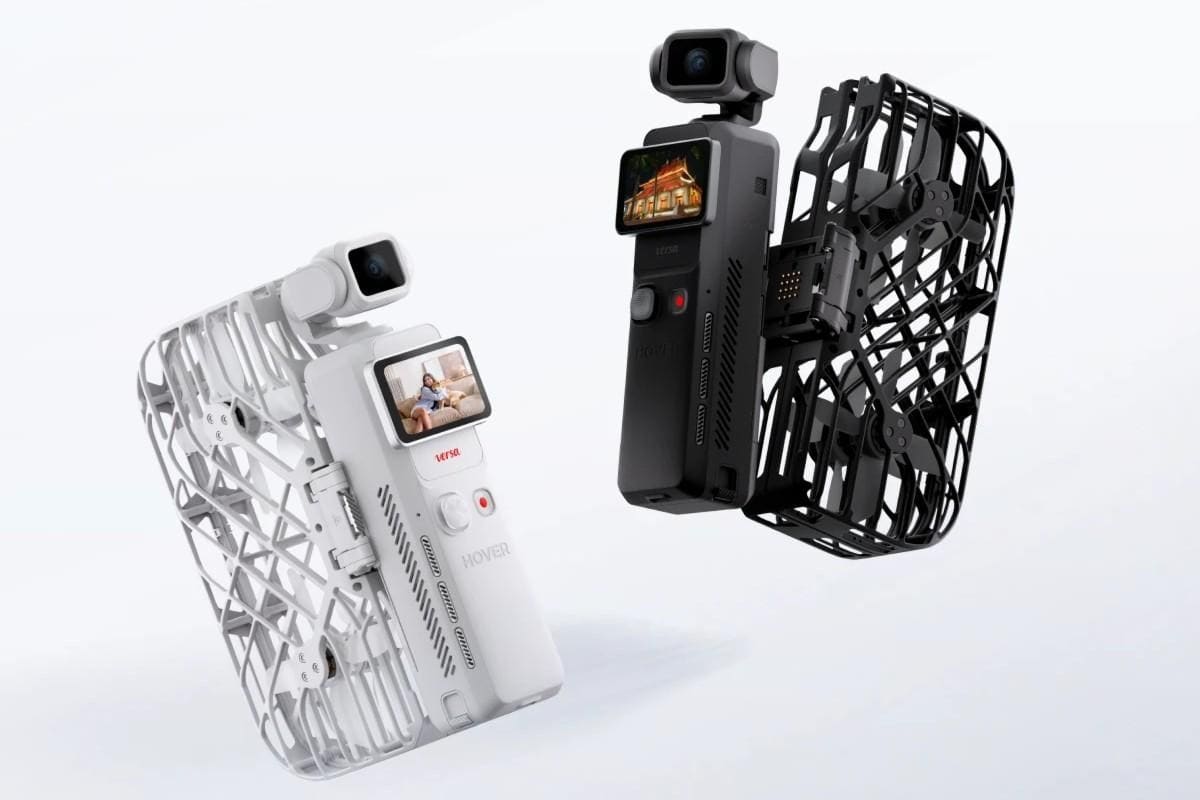
HoverAir launched the Versa on Indiegogo with a pitch that sounded irresistible to anyone who's ever juggled a gimbal and a quadcopter: a palm-sized camera that clips into modular propeller arms, transforming from steadycam to autonomous drone in seconds. Within seventy-two hours, the company stopped accepting orders from US customers. The flight kit - the part that makes it fly - will not ship to American addresses.
The official explanation uses the word "logistics." HoverAir told backers that regulatory holdups around the Flight Kit component prevented US fulfillment. But a check of the Federal Communications Commission's equipment authorization database tells a different story: the entry that once covered the Versa's radio hardware has vanished.
At DailyTechWire, we've tracked the widening net of export controls and agency-level restrictions across consumer electronics for eighteen months. This is the fastest we've seen a product pulled from the US market after a public launch - and it suggests that regulatory scrutiny now happens in near real time, possibly triggered by crowdfunding campaigns themselves.
What Made the Versa Different
Most camera drones are drones first. The Versa inverted that hierarchy. The core module is a 4K stabilized camera weighing roughly 120 grams, small enough to mount on a selfie stick or chest harness. Snap the propeller frame onto the body and the same device becomes a tracking drone capable of orbit shots, follow-me modes, and preset flight paths.
Zero2Infinity, the Shenzhen-based parent of the HoverAir brand, built its reputation on the original HoverAir X1, a compact follow-cam that gained traction among trail runners and rock climbers who wanted aerial footage without carrying a Phantom-sized rig. The Versa was meant to extend that modularity: one purchase, two form factors, lower barrier to entry.
The design required dual FCC certifications - one for the camera's Bluetooth and Wi-Fi radios, another for the 2.4 GHz and 5.8 GHz links used in drone mode. That dual filing may have drawn the kind of interagency attention that a standalone camera or a conventional quadcopter would not.
The Expanding Perimeter
Washington's drone restrictions began with DJI. In 2020, the Commerce Department placed the company on the Entity List over alleged ties to surveillance programs in Xinjiang. Two years later, the FCC added DJI and several other Chinese manufacturers to its Covered List, prohibiting new equipment authorizations for devices deemed a national-security risk.
The Versa's disappearance from the FCC database indicates that HoverAir - or its hardware - may have crossed into Covered List territory, either through direct designation or through component-level entanglement. It is also possible that the agency flagged the Versa during routine review and requested additional documentation that Zero2Infinity could not or would not provide.
What makes this case unusual is the timing. Most Covered List additions happen after sustained pressure from Congress or after an investigation spanning months. The Versa went from crowdfunding live to orders-halted in three days. That tempo implies one of two scenarios: either Zero2Infinity knew the regulatory status was uncertain and launched anyway, hoping for a green light that never came, or the FCC acted with unprecedented speed in response to the campaign's visibility.
The Collateral Cost to Modularity
The Versa is not a strategic asset. It is a 120-gram camera with snap-on propellers. But modularity itself - hardware that can be reconfigured across use cases - appears to complicate regulatory classification. A camera is a camera until you add flight capability; then it becomes a drone subject to different rules, different certifications, and in the current environment, different political exposure.
This creates a perverse incentive structure for hardware startups. Building a single-purpose device with locked-down firmware is safer from a compliance perspective than building a flexible platform. The more modes a product can switch between, the more certification hoops it must clear and the more surface area it offers to regulators looking for reasons to intervene.
Zero2Infinity is now in the position of shipping a product to US backers that does half of what was promised. The camera module will arrive; the flight kit will not. Backers who wanted a modular system are left with a handheld gimbal and no upgrade path. Backers who wanted a drone are left with nothing they can use.
What the Industry Is Watching
The Versa's fate matters beyond one product line. If FCC equipment authorization can be revoked - or silently delisted - within days of a public launch, the entire go-to-market calculus for hardware startups shifts. Crowdfunding campaigns typically happen before mass production locks in. If a company cannot rely on FCC certification remaining valid through the campaign and fulfillment window, the risk of stranded inventory and refund liability becomes unmanageable.
We are also seeing the first signs of a two-tier consumer electronics market. Products from Chinese manufacturers increasingly launch in Europe, Southeast Asia, and Latin America while skipping or delaying US availability. The Versa will still ship to backers in Canada, the UK, and Australia. American customers are the ones carved out.
That bifurcation has long-term consequences for US consumers' access to emerging categories. Modular drones, AI-powered cameras, and low-cost LiDAR systems are being iterated faster in Shenzhen than in Silicon Valley. If those iterations cannot enter the US market without running a regulatory gauntlet that changes week to week, American buyers will experience innovation on a lag - or not at all.
Unanswered Questions
Zero2Infinity has not issued a detailed public statement. HoverAir's updates to backers have used vague language around "logistics" and "remaining updates," language that does little to clarify whether the block is temporary, negotiable, or permanent. The FCC has not published a notice explaining the delisting.
This opacity is itself a problem. Hardware companies need predictable rules. Buyers need to know whether a product they back will actually ship. Right now, neither group has that certainty. The Versa is the latest case, but it will not be the last. Every modular device, every cross-border collaboration, every startup that sources components or assembly from China now operates in a regulatory environment where approval can evaporate faster than a product can reach customers' hands.