LG Energy Pulls China's EVE Into US Trade Fight Over Cylindrical Battery IP
Washington's trade commission opens probe into third-ranked storage cell maker as Korean giant claims intellectual property breach in competitive battery segment
A Trade Complaint That Signals Broader Supply Chain Realignment
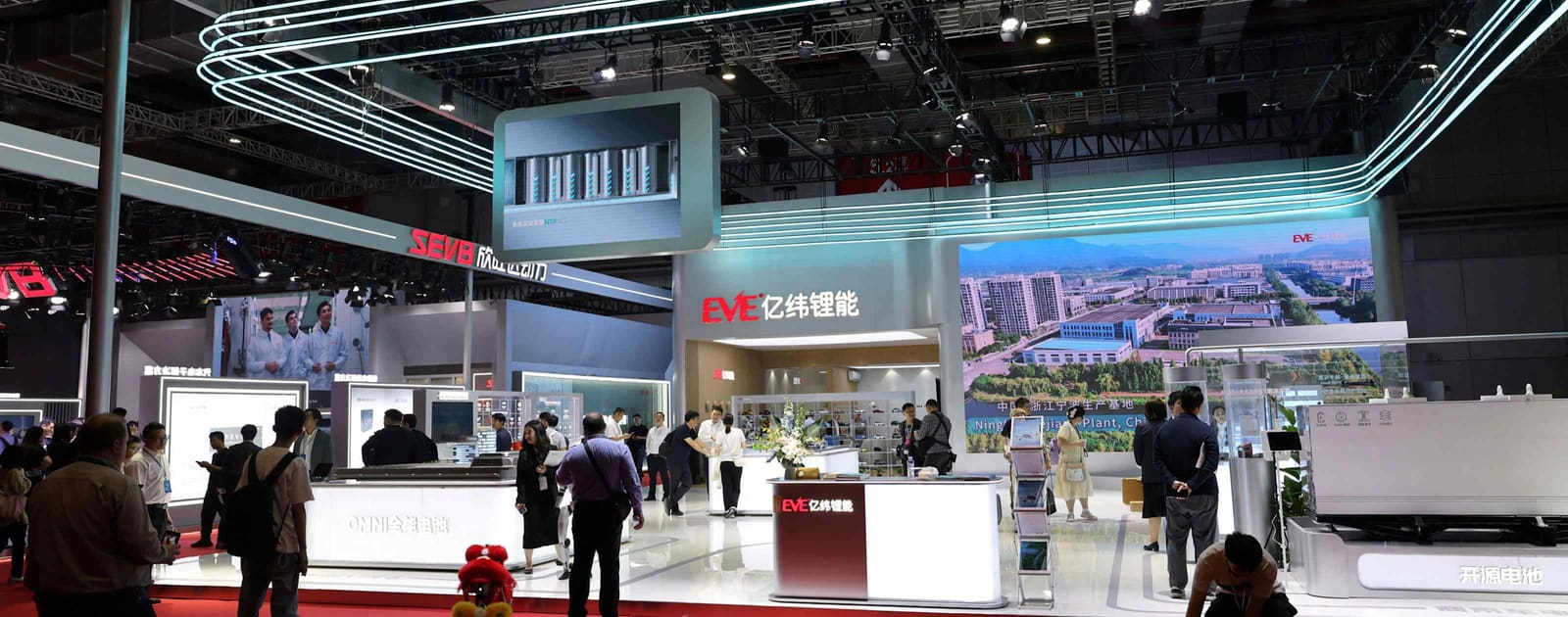
The US International Trade Commission has launched a formal investigation into EVE Energy, one of China's largest lithium battery manufacturers, following allegations from LG Energy Solution that the Shenzhen-based company violated intellectual property rights tied to cylindrical battery cell designs. The probe, announced in late August 2026, puts a spotlight on a segment of the battery market that has grown strategically important as energy storage systems scale globally.
EVE Energy ranked third worldwide in battery energy storage cell shipments during the first half of 2026, a position that reflects both China's manufacturing dominance and the company's ability to compete with established Korean and Japanese players. The Korean complaint specifically targets cylindrical cells, a form factor that has seen renewed attention from automakers and grid-scale storage developers for its thermal management advantages and manufacturing cost profile.
At DailyTechWire, we've tracked how patent disputes in the battery sector have become a proxy for broader geopolitical friction. This case is not simply about technical infringement; it is about control over supply chains, manufacturing footprints, and the terms on which Asian battery makers access the lucrative North American market.
Why Cylindrical Cells Matter Now
Cylindrical battery cells, often associated with Tesla's 4680 format and similar designs, offer a different engineering trade-off than the pouch or prismatic cells that dominate much of the electric vehicle and storage markets. They enable simpler thermal management through their geometry, can be manufactured on legacy production lines with modifications, and allow modular scaling in large battery packs. These characteristics have made them attractive to both automotive and stationary storage developers seeking cost reduction without sacrificing energy density.
LG Energy's decision to file a complaint suggests that it views EVE's cylindrical cell production as a competitive threat that crosses into protected design territory. The Korean firm has invested heavily in next-generation cell formats and holds a portfolio of patents covering electrode architecture, thermal interfaces, and manufacturing processes. If the ITC finds merit in the claims, it could result in import bans or tariffs on EVE's products entering the United States, a market where demand for energy storage is accelerating due to renewable integration and grid resilience mandates.
For EVE, the stakes are significant. The company has positioned itself as a supplier to both domestic Chinese projects and international clients, leveraging lower production costs and vertical integration in materials sourcing. An adverse ITC ruling would force EVE to either redesign its products, seek licensing agreements, or exit certain market segments in North America altogether.
The ITC as Gatekeeper in Tech Trade
The International Trade Commission occupies a unique role in US trade policy, with the authority to block imports it deems infringing on American-held or licensed intellectual property. Unlike tariffs, which are blunt instruments applied across categories, ITC investigations are targeted and can move quickly once a complaint is filed. The commission's rulings carry the force of exclusion orders, enforceable at US ports and borders.
In the battery sector, the ITC has become a venue of choice for established manufacturers seeking to defend market position against lower-cost Asian competitors. Previous cases have involved LG Chem, SK Innovation, and others in disputes over separator films, cathode chemistries, and cell assembly methods. The outcomes have ranged from settlements involving technology transfers to outright import bans, with significant downstream effects on supply contracts and pricing.
This latest probe arrives as Washington continues to tighten controls on Chinese technology imports through a combination of export restrictions, investment screening, and subsidy rules embedded in the Inflation Reduction Act. Battery manufacturing sits at the intersection of energy security, industrial policy, and technology competition, making it a natural flashpoint.
Regional Implications and Supply Chain Pressures
The complaint also highlights the competitive dynamics within Asia's battery industry. South Korean manufacturers, led by LG Energy, Samsung SDI, and SK On, have long held advantages in chemistry innovation and quality control, but face cost pressures from Chinese rivals who benefit from integrated supply chains and government support. As automakers and utilities diversify their supplier bases to hedge geopolitical risk, the battle for contracts has intensified.
EVE's rise in energy storage shipments reflects a broader trend: Chinese battery makers moving upmarket, targeting not just domestic demand but also export opportunities in Europe, Southeast Asia, and North America. The company's third-place ranking in the first half of 2026 is a testament to its ability to scale production and meet the technical specifications required by international clients.
Yet that growth trajectory now faces headwinds. The ITC investigation will take months to resolve, during which time potential customers in the United States may hesitate to commit to EVE's products, wary of supply disruptions or legal entanglements. Even if EVE prevails or settles, the reputational and operational costs of the dispute will linger.
What This Means for Battery Buyers and Policy
For companies procuring batteries, whether for electric vehicles, grid-scale storage, or industrial applications, the LG-EVE dispute underscores the fragility of cross-border supply chains in a world of competing regulatory regimes. Buyers must now weigh not only cost, performance, and delivery timelines, but also the legal and geopolitical risks embedded in their supplier relationships.
Policymakers in Asia and beyond are watching closely. If the ITC sides with LG, it may embolden other Korean and Japanese firms to pursue similar complaints, creating a cascade of investigations that reshape the competitive landscape. Conversely, a ruling in EVE's favor, or a settlement that allows continued access, would signal that the barriers to entry in the US market remain navigable for Chinese firms despite broader trade tensions.
The cylindrical cell dispute is, in many ways, a microcosm of the broader technology decoupling underway between the United States and China. Intellectual property claims become tools of industrial strategy, and trade commissions become arbiters of market access. For battery makers, the lesson is clear: innovation alone is not enough. Legal positioning, supply chain diversification, and diplomatic maneuvering are now equally essential to securing a foothold in the global energy transition.