Why Britain's Treasury CTO Search Signals a Wider Public-Sector Tech Talent Crisis
A £77,000 salary cap for one of Whitehall's most demanding technology roles underscores the structural challenge governments face when competing for engineering leadership in an era of cloud, AI, and enterprise-system migration.
A Pay Ceiling in a High-Stakes Environment
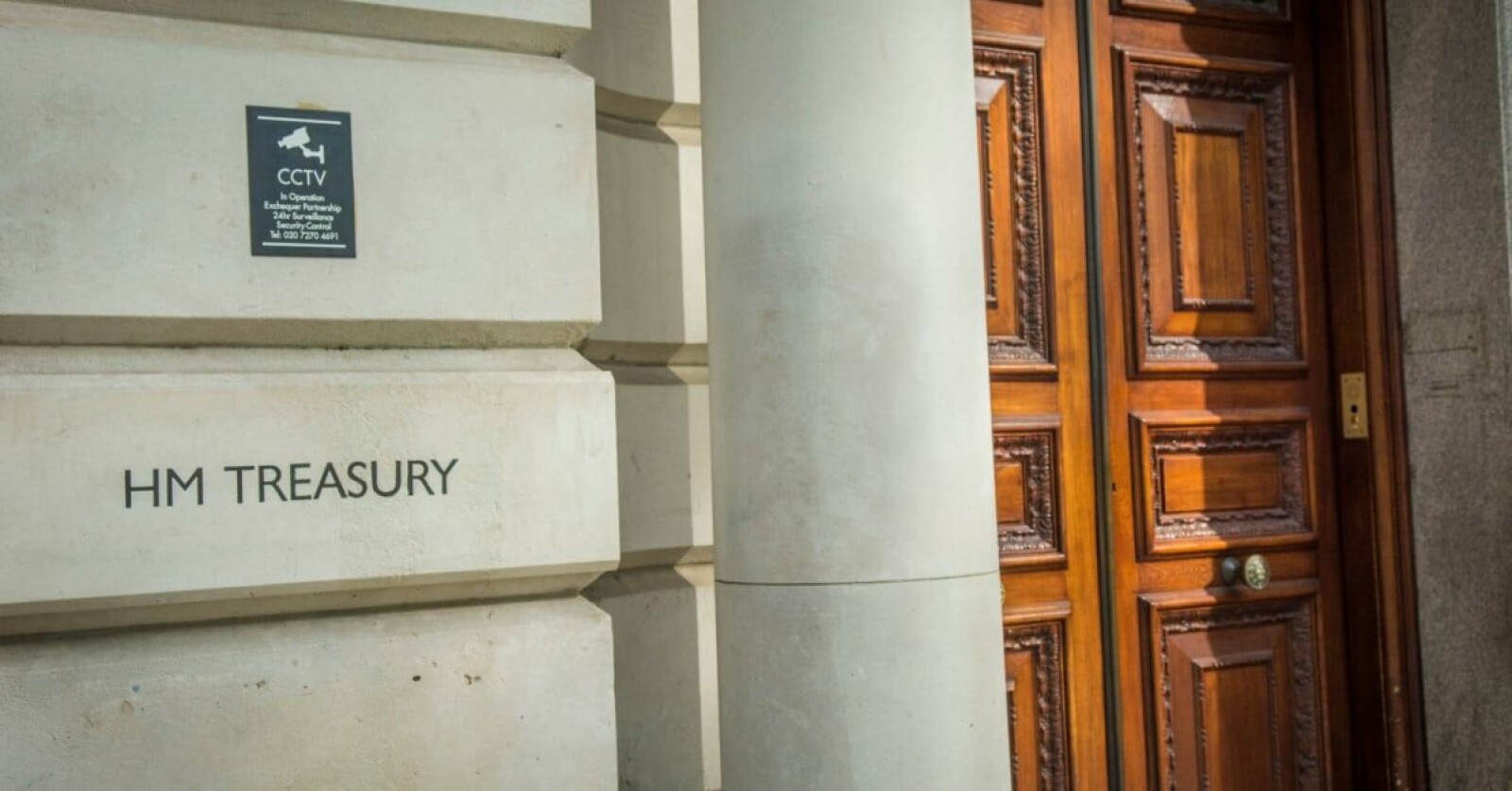
His Majesty's Treasury has opened recruitment for a chief technology officer, with a salary band of £69,820 to £77,000. The figure sits well below the remuneration that elite graduates can command in their first year at major technology vendors, let alone what experienced technical executives earn in private industry. The role, which can be based in London, Darlington, or Norwich, comes with a civil-service pension that carries an employer contribution approaching 30 percent, but the total package still trails market rates by a wide margin.
At DailyTechWire, we have tracked similar hiring struggles across ministries in Singapore, Seoul, and Canberra over the past eighteen months. The pattern is consistent: governments advertise senior technology positions at pay scales designed for generalist civil servants, then struggle to attract candidates who can architect cloud infrastructure, negotiate with hyperscale vendors, and advise cabinet-level officials on AI strategy. Britain's Treasury search crystallizes that tension, because the department sits at the heart of fiscal policy and its technology decisions ripple across Whitehall.
The successful candidate will oversee digital services for several thousand users, including ministers, senior officials, and analysts who depend on secure, resilient platforms to steer economic policy, control public spending, and pursue growth targets. These are users who do not tolerate downtime or sluggish performance, and who operate in an environment where public expectations for service quality rise even as budgets tighten.
A Microsoft Monoculture and a Multi-Tower Operating Model
According to the Treasury, the organization runs a predominantly Microsoft-based technology ecosystem. Microsoft 365, Azure, and associated security and endpoint tools form the backbone, delivered through a largely outsourced, multi-tower operating model. The incoming CTO will lead internal technical staff while coordinating work across multiple strategic suppliers - a governance challenge that requires both deep architectural knowledge and commercial acumen.
The role includes defining technology strategy, standards, and architecture, all within a mandate to deliver value for money to taxpayers. That mandate is not abstract: it means justifying every Azure subscription, every security-tool license, and every consulting engagement in an environment where parliamentary committees scrutinize IT spending line by line.
The multi-tower model, common in large enterprises, splits infrastructure, applications, security, and service management across separate vendors. Coordinating those towers demands a CTO who understands contract structures, service-level agreements, and the political dynamics of vendor lock-in. It is a role that blends engineering judgment with procurement strategy, and the salary on offer reflects neither skill set at prevailing market rates.
The Oracle-Workday Decision Looming in December
What the job advertisement does not mention - but which will land on the new CTO's desk within months - is a high-stakes enterprise-system decision. The Treasury must choose by December whether to migrate its finance and human-resource systems from Oracle Fusion to Workday, or to remain on Oracle and diverge from the government's broader £1.7 billion shared-services strategy, which the Treasury itself approved.
That decision carries technical, financial, and political weight. Workday adoption aligns with cross-government standardization efforts, which promise economies of scale and interoperability. Staying on Oracle Fusion avoids migration risk and preserves institutional knowledge, but it isolates the Treasury from the shared-services platform that other departments will use. Either path involves years of implementation work, integration with Azure services, data migration, and retraining thousands of users.
The CTO will be the technical voice in that decision, responsible for assessing vendor roadmaps, cloud-integration capabilities, total cost of ownership, and the resilience of each platform under peak load. The stakes are high: a failed migration can derail budget cycles and erode trust in digital transformation across Whitehall. The individual who makes that call will do so on a salary that many mid-level software engineers in London would decline.
AI Ambitions Without the Compensation to Match
The job advertisement lists artificial intelligence among the technologies the CTO is expected to champion. That expectation is typical of government digital-strategy documents in 2026, but it underscores the gap between ambition and resources. Building or procuring AI capabilities - whether for document analysis, fraud detection, or policy simulation - requires expertise in machine learning operations, data governance, model risk management, and the ethical frameworks that govern public-sector AI use.
Those skills command premium salaries in the private sector. A senior machine-learning engineer at a London fintech startup can expect total compensation well above £150,000; a head of AI infrastructure at a cloud vendor or bank earns significantly more. The Treasury's salary band reflects a civil-service pay structure that has not kept pace with the market for specialized technical talent, and no amount of pension contribution or mission-driven messaging can close that gap for candidates who can choose among multiple offers.
The result is a structural disadvantage: the Treasury may attract candidates motivated by public service or seeking stability, but it will struggle to compete for the engineers and architects who have built and scaled AI platforms in production environments. The risk is that the department ends up relying even more heavily on external consultants and vendor-managed services, which may deliver short-term capability but erode internal technical capacity over time.
Trusted Adviser to Ministers, on a Permanent-Secretary Budget
The job description emphasizes that the CTO must serve as a trusted technical adviser to ministers and senior officials, both within the Treasury and across other departments. That expectation is reasonable: technology decisions at this level shape economic policy, regulatory frameworks, and the government's ability to deliver services digitally. A CTO who cannot translate technical trade-offs into language that cabinet ministers understand, or who lacks the credibility to challenge vendor sales pitches, will fail in the role regardless of engineering skill.
Yet the advisory dimension makes the salary constraint even more striking. The CTO will sit in meetings with permanent secretaries, ministers, and vendor executives who earn multiples of £77,000. The asymmetry is not merely symbolic; it signals how the civil service values technical expertise relative to policy or administrative seniority. In Singapore, the government has created separate career tracks and pay bands for technology specialists precisely to address this problem. In Britain, the Treasury CTO will operate within a structure designed for generalists.
The challenge is compounded by the pace and complexity of the work. The Treasury is described as a fast-paced, policy-driven organization, and the technology environment must keep up with ministerial priorities that shift in response to economic data, political cycles, and external shocks. The CTO will be expected to operate at pace, which in practice means making architecture decisions, resolving vendor disputes, and managing incidents while ministerial demands change week to week.
What This Hire Reveals About Government Digital Strategy
The Treasury's CTO search is a single data point, but it reflects broader structural issues in how governments approach digital talent. Across Asia and Europe, ministries are advertising senior technology roles at salaries that trail private-sector benchmarks by thirty to fifty percent. The gap is widest in capital cities with thriving technology sectors - London, Singapore, Seoul - where candidates can walk into higher-paying roles without the constraints of civil-service bureaucracy.
Some governments have responded by creating fast-track digital services teams with separate pay scales, modeled on the UK's Government Digital Service or the US Digital Service. Those teams can move quickly and attract strong talent, but they often operate in parallel to traditional IT departments, creating coordination challenges and resentment among permanent staff. Other governments have doubled down on outsourcing, shifting technical leadership to system integrators and cloud vendors. That approach buys capability in the short term but leaves ministries dependent on external firms for strategic decisions.
The Treasury's choice to advertise the CTO role at civil-service pay scales suggests it has not yet resolved that dilemma. The department may hope that the prestige of the role, the pension, and the opportunity to shape policy will compensate for the salary gap. That calculus may work for a subset of candidates - those mid-career, those prioritizing stability, or those with independent wealth - but it will exclude many of the engineers and architects who have built the cloud and AI systems that the government now wants to deploy.
The December Deadline and the Talent Pipeline
Whoever accepts the Treasury CTO role will inherit a packed agenda. The Oracle-Workday decision alone will consume significant bandwidth in the second half of the year, requiring vendor demos, cost modeling, risk assessments, and stakeholder alignment across multiple departments. At the same time, the CTO will need to define a technology strategy that accommodates AI experimentation, strengthens cybersecurity posture, and delivers measurable improvements in service performance - all while managing a multi-tower outsourcing arrangement and advising ministers on digital policy.
The timeline is unforgiving, and the salary reflects a civil-service structure that has not adapted to the realities of the technology labor market in 2026. The result is a role that demands executive-level judgment, deep technical expertise, and political savvy, offered at a compensation level that would struggle to fill a senior engineering position at a mid-sized software firm.
For observers of government digital transformation, the Treasury's CTO search is a reminder that policy ambitions must be matched by talent strategies. Whitehall can draft digital strategies, fund cloud migrations, and mandate AI adoption, but those initiatives will falter if the people responsible for executing them are underpaid, overstretched, and competing for resources with better-funded private-sector peers. The £77,000 salary cap is not merely a hiring constraint; it is a signal of how seriously the government takes technical leadership in an era when technology underpins every dimension of economic policy.